Throughout its history, the Celtic Football Club's crests have reflected its Irish heritage, Catholic roots and strong sense of community, while evolving to meet the demands of different eras.
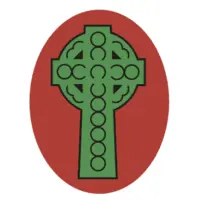
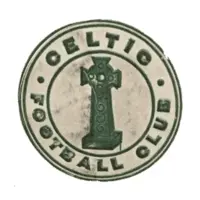
In the club’s early years, Celtic used a variety of symbols rather than a single standardised badge. One of the earliest emblems featured a green Celtic Cross, a symbol deeply connected to faith, community and the club’s origins within Glasgow’s Irish Catholic immigrant population. The cross reflected the charitable mission upon which Celtic was founded and remained an important element of the club’s identity.
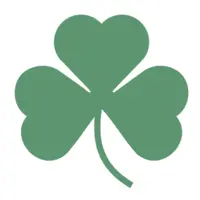
As the club developed, attention shifted towards the clover leaf or shamrock. Long associated with Ireland, the shamrock symbolised the club’s Irish heritage and became increasingly prominent in Celtic’s visual identity. Beyond its national significance, the clover was traditionally associated with faith, hope and love, while also serving as a reference to the Holy Trinity.
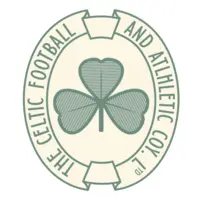
Throughout the twentieth century, various versions of the shamrock crest appeared on club materials, programmes and merchandise. Some designs featured a simple green clover, while others incorporated lettering and decorative elements. These badges helped establish the shamrock as the defining symbol of Celtic Football Club.
A special crest was introduced in 1988 to celebrate the club’s centenary. This commemorative badge combined two of Celtic’s most important symbols: the Celtic Cross and the clover. The design honoured both the club’s religious and cultural heritage while celebrating one hundred years since its foundation in 1888. The centenary crest became closely associated with one of the most memorable periods in the club’s history, culminating in Celtic winning the Scottish league and cup double during its centenary season.
The most significant redesign arrived in 1995 with the introduction of the modern Celtic crest. The new badge featured a distinctive four-leaf clover enclosed within a circular frame. Unlike the traditional shamrock, the four-leaf design provided a unique and instantly recognisable symbol for the club while retaining strong connections to its Irish heritage.
The modern logo uses a clean, lightweight sans-serif typeface and a minimalist design philosophy. The circular format creates a balanced and timeless appearance, while the striped four-leaf clover remains the focal point. The simplicity of the design has contributed to its longevity and helped establish Celtic as one of football’s strongest global brands.
The club’s famous green and white colours remain central to the badge’s identity. These colours have been associated with Celtic since its earliest years and are recognised worldwide as symbols of the club. Combined with the distinctive four-leaf clover, they create one of the most iconic visual identities in football.
Since its introduction in 1995, the crest has remained largely unchanged, a testament to the success of the design. It successfully combines modern branding principles with historical symbolism, reflecting both Celtic’s traditions and its global stature.
Celtic FC Club History
Celtic Football Club is one of the most famous and successful football clubs in the world. Founded in 1888 by Brother Walfrid, a Marist Brother and Catholic priest, the club was established with a purpose that extended far beyond football. Its original mission was to raise funds to alleviate poverty among Glasgow’s Irish immigrant community, particularly in the East End of the city. This charitable foundation remains a defining part of Celtic’s identity and heritage.
The idea for Celtic was conceived in 1887 at St. Mary’s Church in Glasgow’s Calton district. Brother Walfrid envisioned a football club that could unite the local Irish community while generating income for charitable causes. Within six months, the club had been formed and played its first match, marking the beginning of a remarkable footballing journey.
The club quickly became a symbol of pride for Glasgow’s Irish Catholic population and adopted the nickname “The Bhoys,” a title that remains synonymous with Celtic supporters around the world. Over the following decades, Celtic grew from a local charitable initiative into one of the most recognisable institutions in world football.
Celtic’s home is Celtic Park, affectionately known as “Paradise.” The stadium was first constructed in 1892 on the site of a former brickworks and was largely built through the efforts of volunteers. Over time, Paradise developed into one of football’s most iconic venues. Renowned for its atmosphere, passion and noise, Celtic Park is frequently regarded as one of the most intimidating and impressive stadiums in Europe and is home to one of football’s most devoted fanbases.
Success came quickly for Celtic. The club won its first Scottish League Championship in 1893 and soon established itself as one of the dominant forces in Scottish football. Throughout the twentieth century, Celtic accumulated numerous league titles and domestic cups, becoming one of the most successful clubs in British football history.
The greatest period in Celtic’s history came under legendary manager Jock Stein. In 1967, Celtic achieved one of football’s most remarkable accomplishments by becoming the first British club to win the European Cup. The famous “Lisbon Lions” defeated Inter Milan 2–1 in Lisbon, with every member of the team having been born within a short distance of Glasgow. During the same season, Celtic also won the Scottish League Championship, Scottish Cup, Scottish League Cup and Glasgow Cup, completing a historic clean sweep of trophies.
Celtic’s influence extends far beyond Scotland. The club enjoys a vast international following, particularly among communities with Irish heritage, and has developed one of the largest supporter bases in world football. The green-and-white hoops are recognised globally and remain one of the most iconic kits in the sport.
The club’s fiercest rivalry is with Rangers. Matches between the two sides are known as the Old Firm derby and are among the most famous fixtures in world football. Rooted in sporting competition as well as historical, cultural and religious traditions within Glasgow, the rivalry has shaped Scottish football for more than a century. Although the fixture was temporarily interrupted between 2012 and 2016 following Rangers’ financial collapse and demotion through the Scottish league system, the rivalry quickly resumed and remains one of the defining spectacles of the game.