Passa al contenuto

Historical Crests FK Partizan Belgrade

Name: FK Partizan Belgrade
Nickname(s): Crno-beli (The Black-Whites)
Founded: ​1945
Stadium: Partizan Stadium
Capacity: 29,775

1945-1947
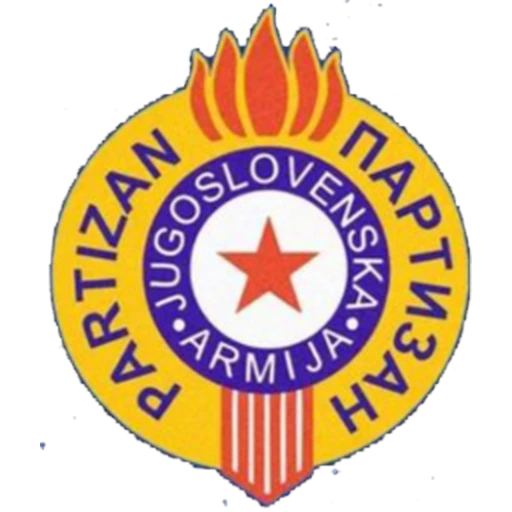
1947-1950
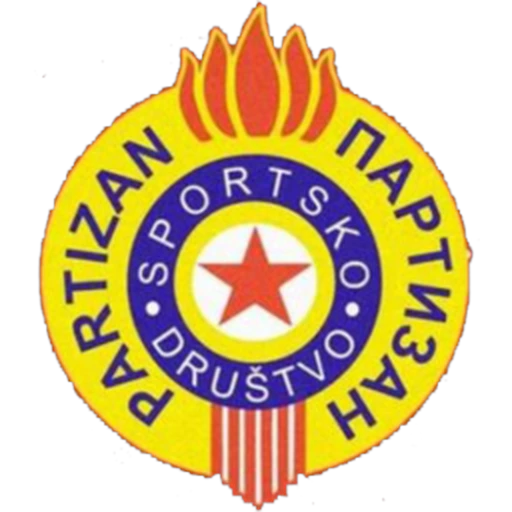
1950-1955
1955-1958
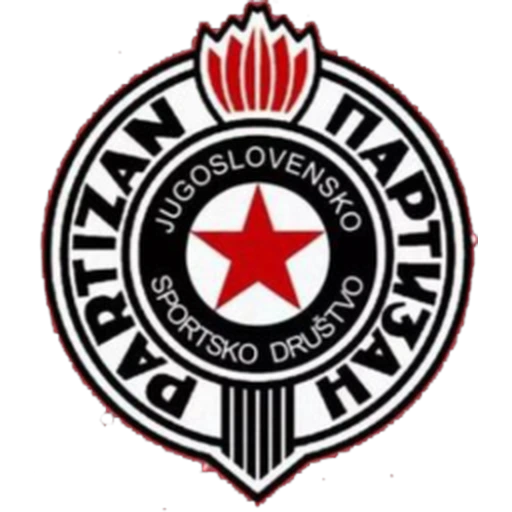
1958-1992
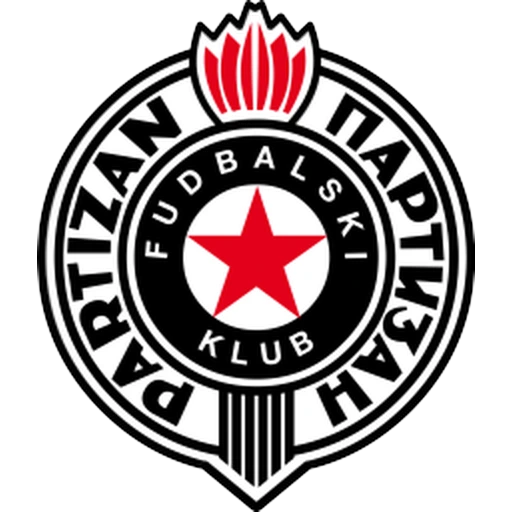
1992-2008
2008-2018
2018-Present

FK Partizan Belgrade Crest History
The crest of FK Partizan Belgrade has evolved alongside the club's remarkable history while consistently preserving its connection to the Yugoslav Partisan movement and its famous black-and-white colours. Although the design has been modernised several times since the club's foundation in 1945, the iconic red star has remained the central element of Partizan's identity.
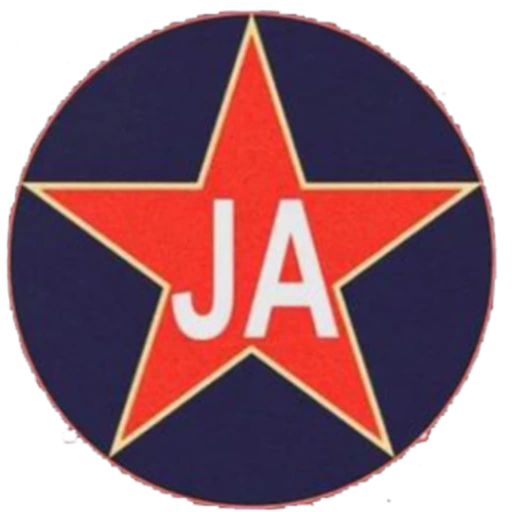
The club's first emblem, used between 1945 and 1947, was a simple red five-pointed star bearing the initials "JA" (Jugoslovenska Armija – Yugoslav Army). The badge reflected Partizan's origins as the football club of the Yugoslav People's Army shortly after the Second World War.
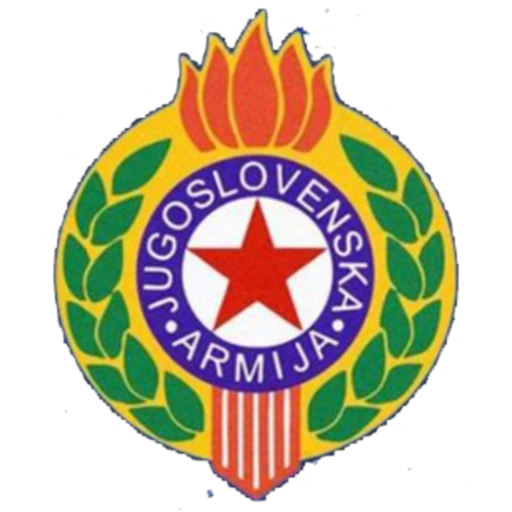
In 1947, Partizan adopted a more elaborate crest featuring the red star surrounded by a blue ring bearing the words "Jugoslovenska Armija", framed by laurel branches and topped with a stylised red flame. This design symbolised victory, military heritage and the club's close association with the army.
During the 1950s, the badge underwent several refinements as the club gradually transitioned from a military institution to a civilian sports society. The wording surrounding the central star changed to "Partizan Jugoslovenska Armija" and later "Partizan Sportsko Društvo," while the overall circular design and the symbolic flame were retained.
A major redesign arrived in 1958, introducing the distinctive black-and-white circular crest that would become synonymous with FK Partizan. The modern badge featured the red star at its centre, surrounded by the club's name and supported by a stylised black-and-white shield beneath the flame. This version accompanied Partizan through many of its greatest domestic and European successes.
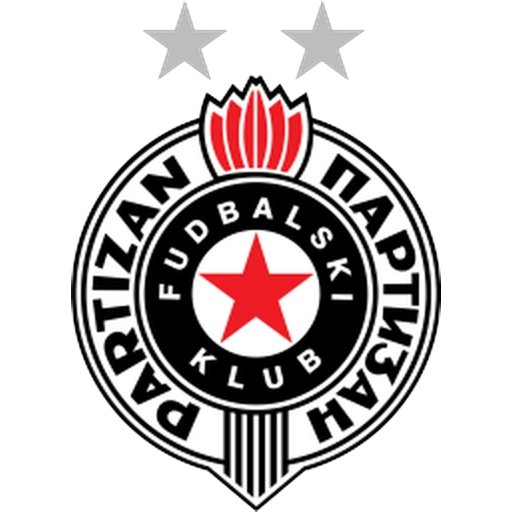
Following the breakup of Yugoslavia, the crest was updated in 1992 to replace references to Yugoslavia with the words "Fudbalski Klub", while preserving the famous red star, black-and-white colour scheme and flame. This ensured continuity with the club's rich history while reflecting the new political reality.
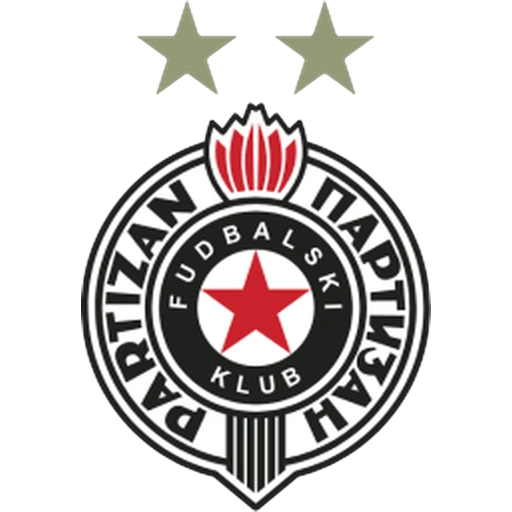
In 2008, two silver stars were added above the crest to commemorate the club's 20 Serbian league championships, marking another milestone in Partizan's history. A decade later, in 2018, the stars were changed to grey, creating the version that remains in use today.
FK Partizan Belgrade Club History
Founded in 1945, FK Partizan Belgrade is one of Serbia's most successful and historic football clubs. Established in the aftermath of the Second World War as part of the Yugoslav Sports Association Partizan, the club was originally affiliated with the Yugoslav People's Army. Named after the Yugoslav Partisans who fought during the war, Partizan quickly became one of the dominant forces in Yugoslav football. Wearing its traditional black and white colours, the club earned the nicknames "Crno-beli" (The Black-Whites) and "Parni Valjak" (The Steamroller) for its relentless style of play.
Partizan was a founding member of the Yugoslav First League in 1946 and rapidly established itself among the country's leading clubs. Throughout the following decades, the club won numerous national championships and domestic cups, developing a fierce rivalry with Red Star Belgrade in what became known as the Eternal Derby (Večiti derbi), one of the most intense football rivalries in Europe.
The club achieved its greatest European success in 1965–66, becoming the first club from Eastern Europe to reach the European Cup Final. After defeating teams such as Manchester United on their way to the final, Partizan narrowly lost 2–1 to Real Madrid in Brussels. Despite the defeat, the achievement remains one of the greatest moments in Serbian and Yugoslav club football history.
Throughout the 1970s, 1980s and 1990s, Partizan remained one of Yugoslavia's strongest clubs, winning multiple league titles and producing generations of outstanding footballers. Following the breakup of Yugoslavia, the club continued to dominate Serbian football, regularly qualifying for European competitions and maintaining its reputation as one of the country's premier clubs.
Partizan has long been recognised as one of Europe's finest developers of young talent. The club's renowned youth academy has produced world-class players including Savo Milošević, Predrag Mijatović, Stevan Jovetić, Aleksandar Mitrović, Stefan Savić, Dušan Vlahović, Adem Ljajić, and many others who have enjoyed successful careers across Europe's top leagues.
A historic milestone came in 2003, when Partizan became the first Serbian club to qualify for the UEFA Champions League group stage under the competition's modern format. Since then, the club has been a regular participant in the UEFA Champions League, UEFA Europa League, and UEFA Europa Conference League, consistently representing Serbian football on the European stage.
Partizan's greatest rivalry is with Red Star Belgrade in the legendary Eternal Derby, a fixture renowned for its extraordinary atmosphere and passionate supporters. Matches against Vojvodina, Radnički Niš, and OFK Beograd are also traditional encounters in Serbian football, although none approach the intensity of the rivalry with Red Star.