Historical Crests Le Mans FC
Name: Le Mans FC
Nickname(s): Les Sang et Or (The Blood and Golds)
Founded: 1985
Stadium: Stade Marie-Marvingt
Capacity: 25,000
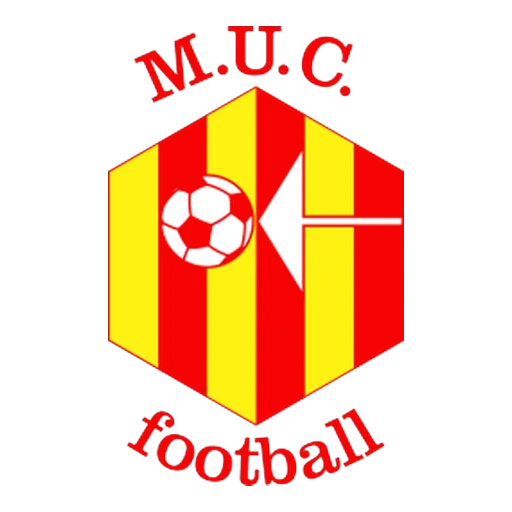
1985-1995
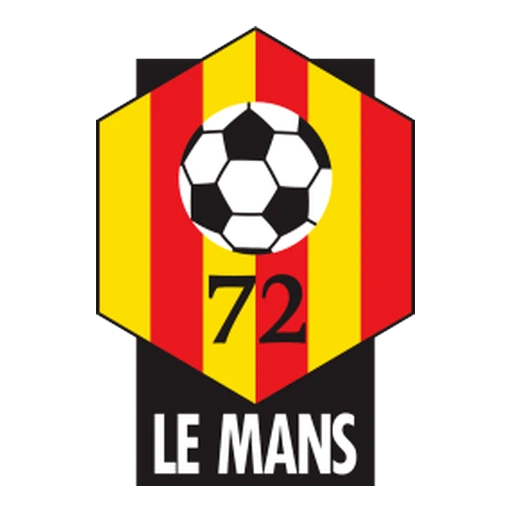
1995-2007
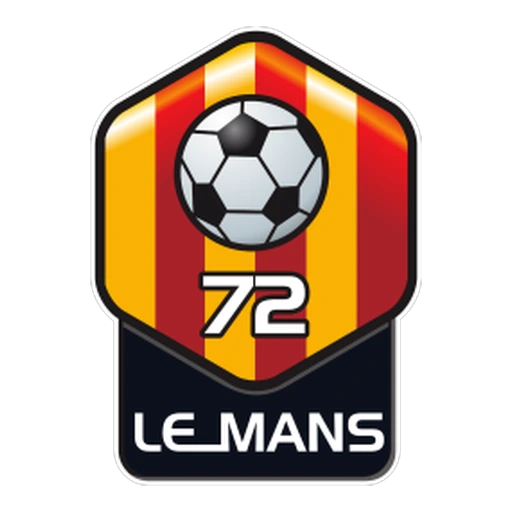
2007-2010
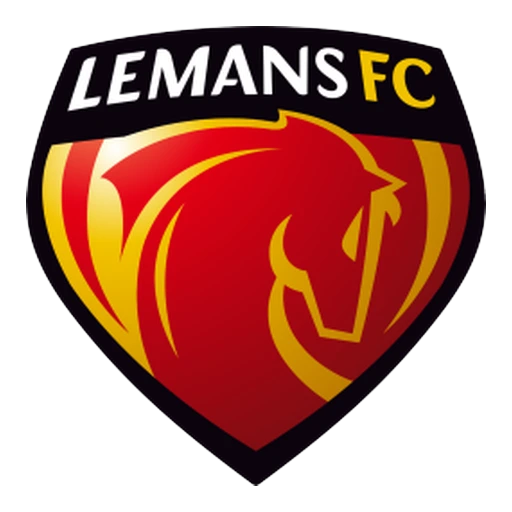
2010-Present
Le Mans FC Crest History
The first crest of Le Mans Union Club 72 (MUC 72), introduced in 1985, reflected the club's creation following the merger of Union Sportive du Mans and Stade Olympique du Maine. The badge took the form of a red-and-yellow hexagon inspired by the colours of the city of Le Mans. The initials M.U.C. appeared above the word football, while a football was incorporated into the letter U, creating a simple identity that emphasised the club's new beginning.
In 1995, the club adopted a more modern shield-shaped crest. The red-and-yellow vertical stripes remained, but a large football was placed at the top above the number 72, representing the Sarthe department. The words Le Mans appeared in a black panel at the base, giving the badge a stronger and more recognisable football identity while preserving the club's traditional colours.
A refined version followed in 2007. The overall shape was retained, but the design became sleeker with rounded edges, improved shading and updated typography. The football and 72 remained central features, while the Le Mans inscription was modernised to create a more polished and contemporary appearance suited to the club's years in Ligue 1.
When the club officially changed its name from MUC 72 to Le Mans FC in 2010, a completely new crest was introduced. The new shield abandoned the football and departmental number in favour of a stylised horse's head, paying tribute to Le Mans' worldwide association with horse breeding and racing, as well as the city's broader sporting heritage. The club's name appears across a black banner at the top, while the traditional blood and gold colours remain dominant.
Le Mans FC Club History
Founded in 1985, Le Mans Union Club 72 (MUC 72) was created through the merger of Union Sportive du Mans and Stade Olympique du Maine, bringing together the city's two leading football clubs under one banner. The new club adopted the red and yellow colours of the city of Le Mans and began competing in Division 3, playing its home matches at the historic Stade Léon-Bollée. In 2010, the club officially changed its name to Le Mans FC, marking the beginning of a new chapter in its history.
After several years of steady progress, Le Mans reached the second division in 1998 under coach Thierry Goudet. The club soon established itself as one of France's most competitive teams outside the top flight and narrowly missed promotion before finally securing a place in Ligue 1 by winning the 2003 Ligue 2 championship. Between 2004 and 2010, Le Mans spent six seasons in the French top division, achieving its highest-ever league finish of ninth in 2005–06. During this period, the club reached the Coupe de la Ligue semi-finals on three occasions and became known for its attractive style of play.
Le Mans also earned an outstanding reputation for developing talented players. Future international stars such as Didier Drogba, Gervinho, Didier Ovono, Marko Baša, Romaric, and Stéphane Sessègnon either began or significantly advanced their careers at the club before moving to some of Europe's biggest leagues. This focus on player development became one of Le Mans' defining characteristics throughout the 2000s.
The club's fortunes changed dramatically after relegation from Ligue 1 in 2010. Financial difficulties surrounding the construction of the new stadium and mounting debts led to administrative problems, culminating in liquidation in 2013. Le Mans lost its professional status and was forced to restart in the Division d'Honneur, the sixth tier of French football. Despite this setback, the club gradually rebuilt itself through successive promotions, returning to Ligue 2 in 2019 before continuing its long-term recovery.
The revival continued under president Thierry Gomez, with the club stabilising financially and investing in its future. Le Mans earned promotion back to Ligue 2 in 2025, and one year later secured a remarkable return to Ligue 1, completing one of the most impressive recoveries in modern French football.
Le Mans FC's principal rivalry is with Stade Lavallois in the Maine Derby, reflecting the long-standing sporting rivalry between the neighbouring departments of Sarthe and Mayenne. Matches against Angers SCO also carry regional significance due to the close geographical proximity of the two clubs.
Le Mans FC Pins
Your Dynamic Snippet will be displayed here... This message is displayed because you did not provide enough options to retrieve its content.