Stadium:ORLEN Stadion(formerly Stadion Kazimierza Górskiego)
Capacity:15,004
1947-1950
1950-1955
1955-1963
1955
1963-1965
1965-1992
1997-2001
2001-2002
2002-2006
2006-Present
Wisla Plock S.A. Crest History
The club's first crest reflected its origins as a works team associated with the local power plant. The emblem featured industrial elements, including a gearwheel and lightning bolt, symbolising electricity production and the club's close connection to the city's post-war industry.
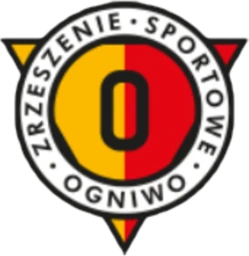
In 1950, following the reorganisation of Polish sport under the communist system, the club adopted the name Ogniwo Płock. A new circular crest was introduced, displaying the letter "O" within a red-and-yellow centre surrounded by the words "Zrzeszenie Sportowe Ogniwo." Like many Polish clubs of the era, the badge reflected the nationwide sporting associations established by the state.
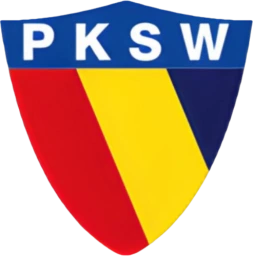
Another organisational change followed in 1955, when the club became PKS Wisła Płock. The new crest abandoned the circular design in favour of a simple shield featuring the initials PKSW above the club's traditional red, yellow and blue colours. During the same year, a short-lived Sparta emblem was also used as part of another temporary sporting reorganisation before the club returned to the PKS identity.
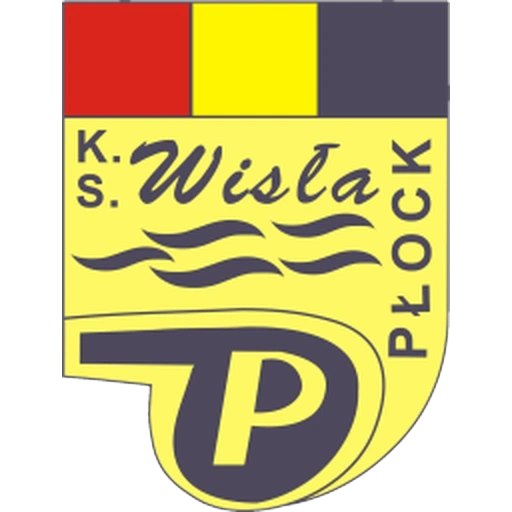
The modern era of the club began in 1963, when the name Wisła Płock was officially adopted. The first Wisła crest combined the club name with flowing blue waves representing the Vistula River (Wisła), while the large "P" referred to the city of Płock. This identity was refined again in 1965, introducing a cleaner blue-and-white badge that remained the club's symbol for almost three decades and became closely associated with Wisła's rise through the Polish football pyramid.
During the late 1990s, the club entered a new commercial era following investment from the local oil industry. Between 1997 and 2002, the football team competed under the names Petro Płock and later Orlen Płock, reflecting sponsorship by Petrochemia Płock and PKN Orlen. Although the club name changed, these logos primarily served as corporate identities rather than traditional football crests.
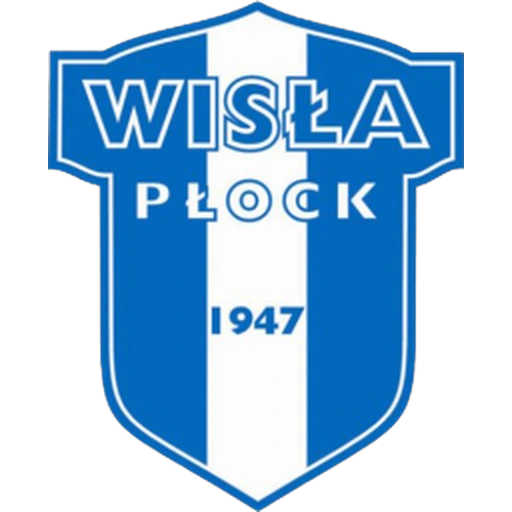
In 2002, following the return to the historic name Wisła Płock, the club unveiled a completely new crest. The badge adopted a modern blue shield featuring a broad white vertical stripe, the club name across the top and the initials SSA, reflecting the club's legal status as a sports joint-stock company. The design represented a fresh beginning while preserving Wisła's traditional blue-and-white colours.
A subtle refinement followed in 2006, when the initials SSA were replaced by the founding year 1947, creating the crest that remains in use today. By emphasising the club's origins rather than its corporate structure, the redesign strengthened Wisła Płock's historical identity while maintaining the clean and modern shield introduced four years earlier.
The current crest combines tradition and simplicity. Featuring the club's classic blue-and-white colours, the founding year 1947, and the unmistakable shield shape introduced in the early 2000s, it reflects both Wisła Płock's industrial heritage and its enduring connection to the city on the banks of the Vistula River.
Wisla Plock S.A. Club History
Founded in 1947 as Elektrownia Płock, Wisła Płock began as the football team of the local power plant, reflecting the industrial character of the city in post-war Poland. During the following decades, the club underwent several name changes—including Ogniwo Płock, Sparta Płock and PKS Wisła Płock—as part of the nationwide reorganisation of Polish sport under the communist system. Despite these changes, the club gradually established itself as the leading football team in Płock.
The name Wisła Płock was officially adopted in 1963, taking inspiration from the Vistula River (Wisła), which flows through the city. Throughout the following decades, the club became a regular competitor in Poland's second division, working steadily towards promotion to the country's top flight.
A historic milestone came in 1994, when Wisła Płock earned promotion to the Ekstraklasa for the first time. Although the club's initial stay in the top division was brief, it marked the beginning of a period of rapid development. Strong financial backing from the local oil company Petrochemia Płock, later PKN Orlen, transformed the club into one of Poland's emerging football powers.
During this period, the club competed under the names Petro Płock and later Orlen Płock, enjoying the most successful era in its history. Wisła won the Polish Cup in 2006, defeating Zagłębie Lubin, and followed this triumph by lifting the Polish Super Cup later the same year. The club also qualified for the UEFA Cup, representing Poland in European competition and facing several well-established continental opponents.
Following the return to the historic name Wisła Płock in 2002, the club gradually re-established its traditional identity while continuing to compete regularly between the Ekstraklasa and the I Liga. Promotions and relegations characterised much of the following decade, but Wisła remained one of Poland's best-supported provincial clubs and continued to benefit from strong backing by PKN Orlen, whose headquarters are based in Płock.
In recent years, Wisła has consolidated its position as a competitive club in Polish football. The opening of the modern ORLEN Stadion has provided the club with one of the country's finest football facilities, while continued investment in youth development has strengthened its long-term ambitions.
Wisła Płock's biggest rivalry is with Legia Warszawa, a fixture often referred to as the Mazovian Derby, reflecting the clubs' shared location within the Masovian region.