Stadium:Estádio Cidade de Coimbra (Coimbra City Stadium)
Capacity:30,210
1887-1912
1912-1924
1924-1927
1927-1928
1928-1974
1974-1977
1977-1979
1979-1980
1980-1982
1982-1984
1984-Present
AA Coimbra Crest History
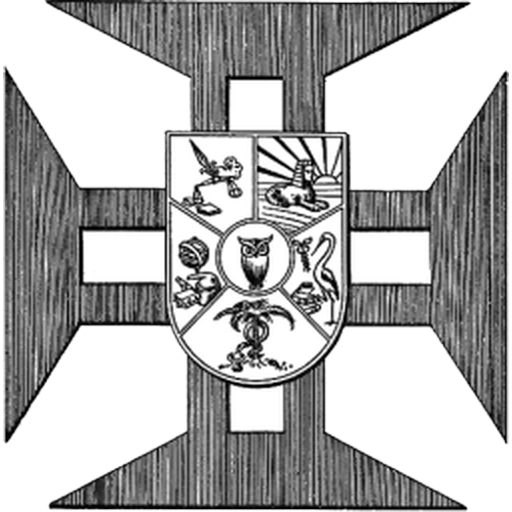
The earliest emblem associated with Associação Académica de Coimbra reflected the club's origins within the University of Coimbra. Between 1887 and 1912, the association used the university's coat of arms placed on the Cross of the Order of Christ, symbolising its close ties to Portugal's oldest university and its rich academic tradition.
When the football section was established in 1912, the club adopted a circular badge featuring the Goat (Cabra), the traditional symbol of Coimbra's students. A simplified version of this emblem followed in 1924, before the club briefly introduced an elegant AAC monogram in 1927, representing the initials of Associação Académica de Coimbra.
In 1928, Académica unveiled what would become the foundation of its visual identity: a distinctive diamond-shaped crest combining the stylised AAC initials with the iconic University Tower (Torre da Universidade). The black-and-white design reflected the traditional academic attire worn by Coimbra's students and quickly became one of the most recognisable emblems in Portuguese football.
During the following decades, the badge underwent several minor redesigns while retaining its characteristic diamond shape. Between 1974 and 1980, the lettering and proportions were refined several times to create a cleaner, more modern appearance without altering the club's identity. Two special commemorative versions were also introduced in the early 1980s, incorporating landmarks such as the Mondego River, the Santa Clara Monastery and the Ponte de Santa Clara, celebrating the city's historic heritage.
In 1984, the club returned to a refined version of the classic 1928 design. The current crest once again features the stylised AAC initials alongside the University Tower within the traditional black-and-white diamond. Only subtle graphical improvements have been made since then, ensuring the emblem remains instantly recognisable while adapting to modern branding standards.
AA Coimbra Club History
Founded in 1887, Associação Académica de Coimbra is one of the oldest and most historic sporting institutions in Portugal. Established as the official sports association of the University of Coimbra, the club developed alongside the country's oldest university and has always maintained a unique identity rooted in academic tradition. Although football was officially introduced in 1912, Académica's sporting heritage stretches back to the nineteenth century, making it one of the pioneers of Portuguese football.
During the first half of the twentieth century, Académica became a regular fixture in Portuguese football and established itself as one of the country's most respected clubs. Known as "Briosa" and "Os Estudantes" (The Students), the club gained admiration for its attacking style of play, its emphasis on sportsmanship and its close connection to university life. Many players combined football with academic studies, creating a distinctive culture unlike any other club in Portugal.
The club enjoyed its first major success in 1939, winning the Taça de Portugal for the first time. Throughout the following decades, Académica remained a competitive force in the Primeira Divisão, frequently challenging Portugal's traditional powers and earning a reputation as one of the country's most respected clubs. During the 1960s and 1970s, the team regularly competed in the top flight and became renowned for producing talented players who later represented the Portuguese national team.
Following periods of promotion and relegation in the late twentieth and early twenty-first centuries, Académica experienced a resurgence under coach Pedro Emanuel. In 2012, the club lifted the Taça de Portugal for the second time by defeating Sporting CP 1–0 in the final, securing qualification for the 2012–13 UEFA Europa League. The triumph remains one of the greatest moments in the club's modern history and reaffirmed Académica's place among Portugal's historic football institutions.
The club's traditional rivalry with União de Coimbra, together with matches against regional opponents, reflects its enduring importance within Portuguese football and the city of Coimbra.