Nickname(s):Die Roten (The Reds), Die Schwaben (The Swabians)
Founded:1899
Stadium:MHP Arena (formerly Neckarstadion, Gottlieb-Daimler-Stadion and Mercedes-Benz Arena)
Capacity:60,469
1893
1897-1912
1912-1949
1949-1994
1994-1998
1998-2014
2014-Present
VfB Stuttgart Crest History
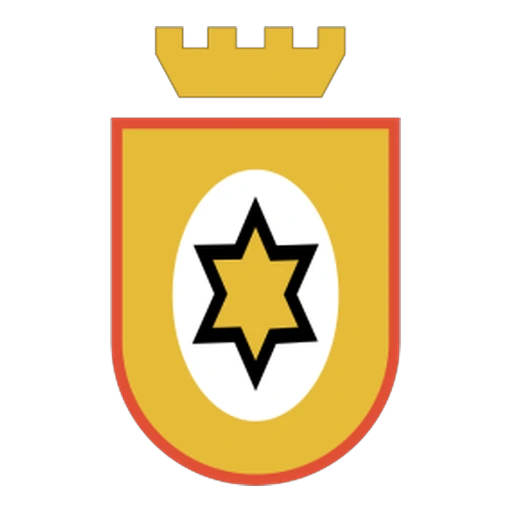
Founded in 1893 as Fußballverein Stuttgart, the club's earliest crest reflected the sporting traditions of the late nineteenth century. The original emblem featured a crowned shield containing a black eight-pointed star, symbolising the club's ambition and independence. Although simple in appearance, it established one of the first visual identities in the history of Stuttgart football.
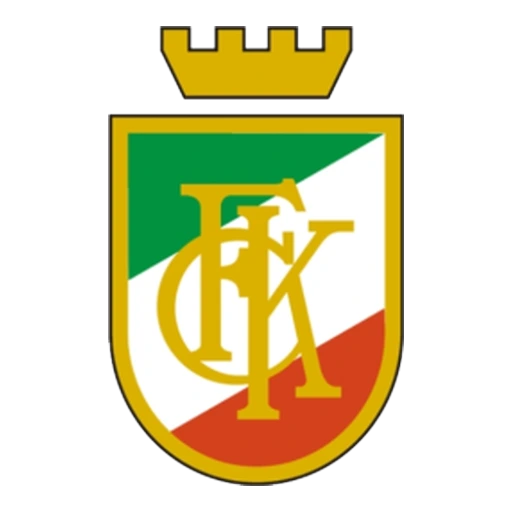
In 1897, the club adopted a more elaborate shield incorporating the intertwined initials "FV" in gold against a background of green, white and red. This badge reflected the identity of Fußballverein Stuttgart before its eventual merger with Kronen-Club Cannstatt, and remained in use during the club's formative years.
Following the merger that created Verein für Bewegungsspiele Stuttgart 1893 (VfB Stuttgart) in 1912, the club introduced a completely new emblem based on the historic coat of arms of Württemberg. The crest consisted of a yellow shield displaying three black stag antlers (Hirschstangen), one of the oldest heraldic symbols of the region. By abandoning monograms in favour of regional heraldry, VfB established an identity that closely connected the club to Swabia and the Kingdom of Württemberg.
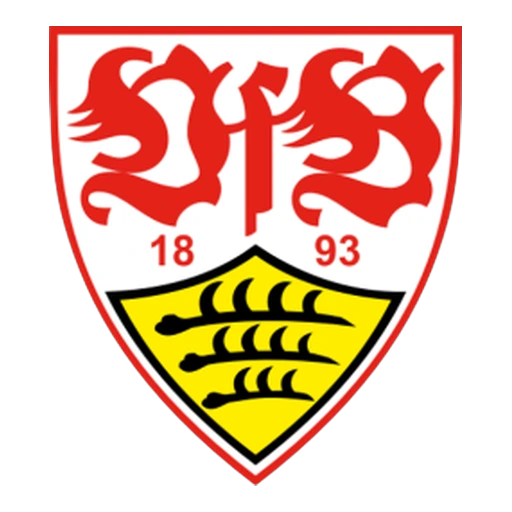
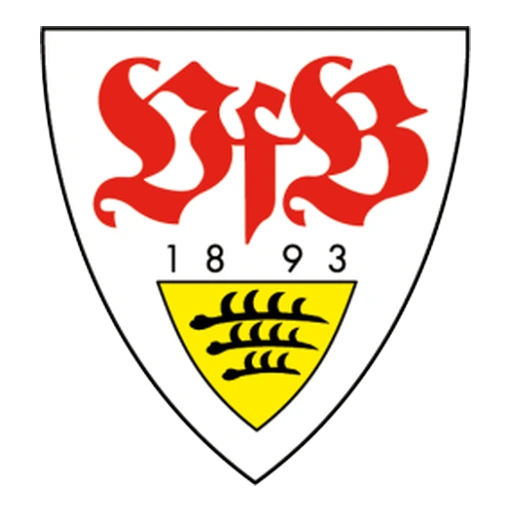
A major redesign arrived in 1949, when VfB combined the traditional Württemberg antlers with the distinctive red "VfB" monogram inside a white shield. The founding year, 1893, was split on either side of the lower shield, while the yellow field containing the antlers remained at the base. This design successfully united the club's initials with its regional heritage and quickly became one of the most recognisable crests in German football.
In 1994, the crest underwent a subtle modernisation. The shield was streamlined, the typography refined and the outlines simplified to create a cleaner appearance while preserving the familiar arrangement of the red "VfB" lettering above the Württemberg antlers. These adjustments improved reproduction across modern media without altering the club's traditional identity.
A further refinement followed in 1998, when the shield adopted softer proportions and the word "Stuttgart" was added beneath the monogram, emphasising the club's connection to the city. The antlers were redrawn with cleaner lines, creating a more contemporary look while retaining the historic symbolism that had defined the club for decades.
In 2014, VfB Stuttgart returned to a design closely inspired by the classic 1949 crest. The city name was removed, restoring the cleaner historic composition, while the outlines, colours and proportions were refined to produce a sharper and more balanced appearance. The redesign reflected the club's desire to reconnect with its traditions while maintaining a modern visual identity.
The current crest represents a careful refinement of more than a century of club history. Featuring the iconic red "VfB" monogram above the Württemberg stag antlers, it successfully combines Stuttgart's regional heritage with one of the most enduring and recognisable identities in German football.
VfB Stuttgart Club History
Founded on 9 September 1893, VfB Stuttgart traces its origins to Fußballverein Stuttgart 1893, a club originally devoted to rugby before football gradually became its primary sport. In 1912, Fußballverein Stuttgart merged with Kronen-Club Cannstatt, creating Verein für Bewegungsspiele Stuttgart 1893 (VfB Stuttgart). The merger united two of Württemberg's leading sporting clubs and laid the foundations for one of Germany's most successful football institutions.
VfB quickly established itself as a leading force in southern German football, winning numerous regional championships before emerging as a national contender. The club claimed its first German Championship in 1950, defeating Kickers Offenbach in the final, and successfully defended the title in 1952. During the same era, Stuttgart also lifted the DFB-Pokal in 1954 and 1958, making the 1950s one of the most successful decades in the club's history.
As one of the 16 founding members of the Bundesliga in 1963, VfB Stuttgart became a permanent fixture in Germany's top division. Although league titles proved difficult to secure in the following decades, the club remained consistently competitive and developed a reputation for producing talented players through its renowned youth academy.
A golden period arrived in the 1980s under coach Helmut Benthaus, when Stuttgart won its third German Championship in 1984. The club also reached the UEFA Cup Final in 1989, narrowly losing to Napoli, led by Diego Maradona. Further domestic success followed in 1992, when the legendary Christoph Daum guided Stuttgart to its fourth Bundesliga title with a team featuring stars such as Guido Buchwald, Maurizio Gaudino and Fritz Walter.
The late 1990s and 2000s saw VfB continue to compete at the highest level while becoming one of Germany's leading developers of young talent. Players including Philipp Lahm, Sami Khedira, Mario Gómez, Kevin Kurányi and Timo Werner all emerged from the club's academy or enjoyed key stages of their development in Stuttgart. The club captured its fifth German Championship in 2007 under coach Armin Veh, with a youthful side led by Gómez completing one of the most memorable title-winning campaigns in Bundesliga history.
The following decade brought periods of instability, including relegations in 2016 and 2019, but VfB responded on both occasions with immediate promotion back to the Bundesliga. By combining experienced players with another generation of academy graduates, Stuttgart re-established itself as one of Germany's most exciting clubs. The 2023–24 season marked a remarkable resurgence, as the club finished Bundesliga runners-up and qualified for the UEFA Champions League, reaffirming its place among Germany's elite.
Its fiercest rivalry is with Karlsruher SC in the Baden–Württemberg Derby, while matches against SC Freiburg also carry regional significance. Encounters with Bayern Munich, Borussia Dortmund and Eintracht Frankfurt have become major Bundesliga fixtures, reflecting Stuttgart's long-standing status as one of Germany's traditional football powers.