Nickname(s):Esmeraldino(The Emerald),Verdão(The Big Green)
Founded:1943
Stadium:Estádio Hailé Pinheiro(Serrinha)
Capacity:14,525
1943-1950
1943
1950-1960
1960-1983
1983-1999
1999-2000
2000-2001
2001-2009
2009-2012
2012-2013
2015-Present
Goiás EC Crest History
The crest history of Goiás Esporte Clube is characterised by a remarkable evolution from traditional monograms to the highly recognisable stylised G that has defined the club for most of its history. Throughout these changes, Goiás has remained faithful to its distinctive green and white colours, which have become inseparable from the club's identity.
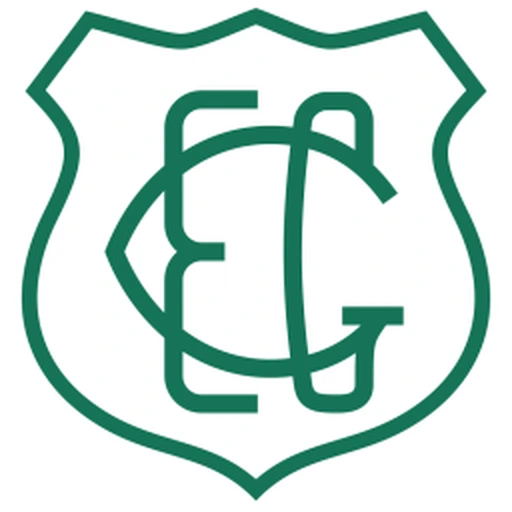
The original 1943–1950 crest used a traditional white shield outlined in green. Inside was an elaborate intertwined monogram formed from the club's initials. Its decorative appearance reflected the heraldic style commonly found among Brazilian football clubs during the first half of the twentieth century.
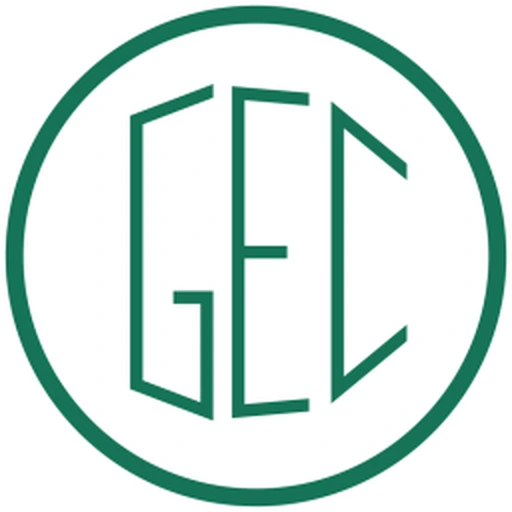
An alternative design from 1943 abandoned the shield in favour of a simple circular badge. The letters GEC were arranged vertically and intertwined inside a green ring. Although apparently short-lived, this design represented an early attempt to simplify the club's visual identity.
Between 1950 and 1960, Goiás introduced the symbol that would ultimately become the defining feature of its identity. A large geometric G appeared inside a circular design, constructed through contrasting green and white sections. This marked a decisive move away from the complicated initials of the club's earliest badges.
From 1960 to 1983, the emblem was simplified even further. The surrounding circular structure disappeared, leaving only a bold standalone green G. Its thick geometric construction created a particularly modern appearance and made the club immediately identifiable through a single letter.
The 1983–1999 crest returned the G to a circular composition. A green centre was surrounded by a white ring edged in green, while negative space formed the horizontal section of the letter. This version combined the simplicity of the standalone symbol with a more conventional badge structure.
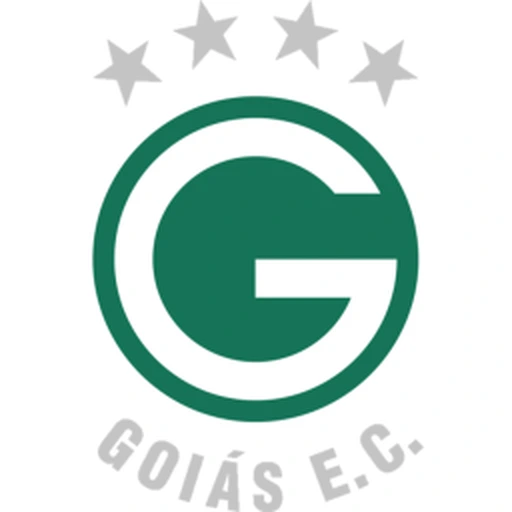
During 1999–2000, the emblem became considerably more elaborate. The central G remained, but the words GOIÁS E.C. were added beneath it and a group of stars appeared above. For the first time in decades, additional elements accompanied the club's otherwise minimalist symbol.
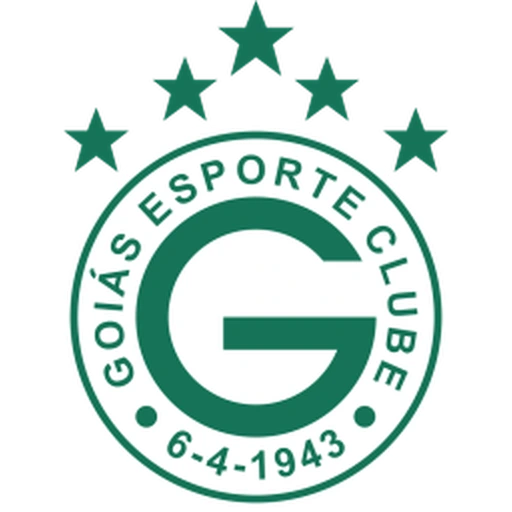
The 2000–2001 redesign established the basic structure of the modern Goiás badge. The G was placed inside a circular crest surrounded by the full name GOIÁS ESPORTE CLUBE, while the foundation date 6-4-1943 appeared along the bottom. Five stars were positioned above the roundel.
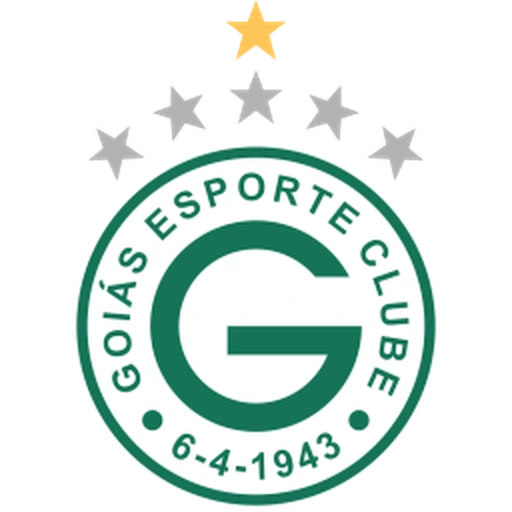
Between 2001 and 2009, the same circular badge was retained but the stars were redesigned. A prominent gold star appeared alongside four silver stars, while the central G, club name and foundation date remained unchanged.
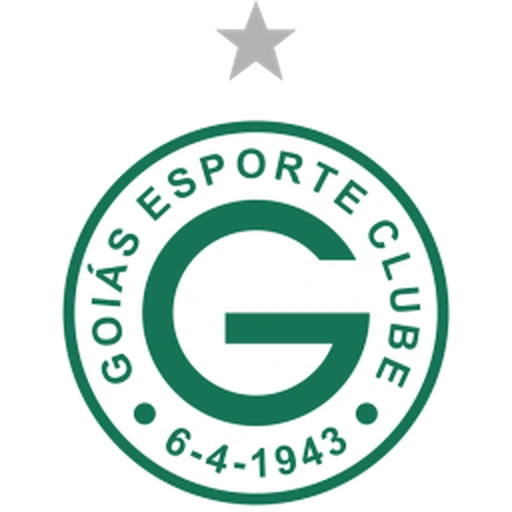
From 2009 to 2012, the decoration was simplified considerably. Only a single silver star remained above the badge, giving the crest a cleaner appearance while preserving the established circular structure.
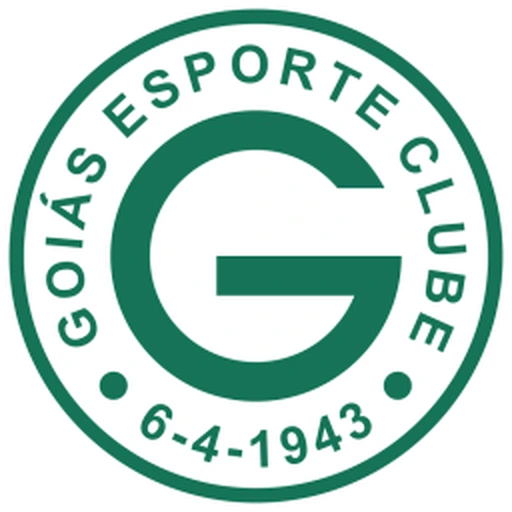
The 2012–2013 version removed the star entirely. The central green G became the undisputed focus of the emblem, surrounded by the club's full name and foundation date in a clean green-and-white roundel.
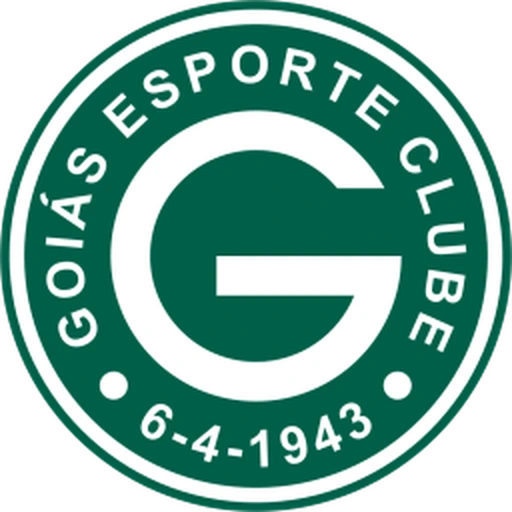
Since 2013, Goiás has used a refined version of this design. The central area is filled with a deeper green, allowing the distinctive G to emerge through white negative space, while GOIÁS ESPORTE CLUBE and 6-4-1943 remain around the outer ring. The stronger contrast gives the badge a cleaner and more contemporary appearance.
Goiás EC Club History
Goiás Esporte Clube was founded on 6 April 1943 in Goiânia, the capital of the state of Goiás. The club was created by a small group of friends who wanted to establish a new football team in the rapidly developing city. Green and white were adopted as the club colours, eventually giving rise to the nickname Esmeraldino, referring to the emerald-green identity that has become synonymous with Goiás.
The club's early years were relatively modest. Goiás initially operated with limited financial resources and competed against better-established teams in the state. During the 1950s and early 1960s, however, the club gradually strengthened its organisation and playing squad, laying the foundations for what would become the most successful football club in Goiás state.
A major breakthrough came in 1966, when Goiás won its first Campeonato Goiano. The title began a period in which the club increasingly dominated state football. Further championships followed, and Goiás developed into one of the principal sporting institutions of central Brazil.
The rise of Goiás also intensified its rivalry with Vila Nova, another major club from Goiânia. Their encounters became known as the Clássico Goiano and developed into the most important football rivalry in the state. The contrast between the green of Goiás and the red of Vila Nova became one of the defining features of football culture in Goiânia.
During the 1970s, Goiás began establishing itself on the national stage. The club became a regular participant in Brazil's leading national competitions and increasingly represented the state of Goiás against the traditional powers from Rio de Janeiro, São Paulo, Minas Gerais and Rio Grande do Sul.
Goiás continued to grow during the 1980s, combining success in the Campeonato Goiano with increasingly competitive performances nationally. The club's ability to develop players and assemble competitive teams despite operating outside Brazil's traditional football centres became an important part of its reputation.
One of the club's most important national achievements came in 1990, when Goiás reached the final of the Copa do Brasil. The Esmeraldino defeated several opponents on its way to the final before losing the title to Flamengo. Although Goiás finished as runner-up, the campaign demonstrated that the club could compete successfully at national level.
The 1990s and early 2000s brought further periods of success and occasional relegations and promotions between Brazil's national divisions. Goiás won the Campeonato Brasileiro Série B in 1999, returning to the top flight and beginning one of the strongest periods in the club's history.
Goiás became particularly competitive in Série A during the first half of the 2000s. The peak came in 2005, when the club finished third in the Campeonato Brasileiro Série A. This outstanding campaign earned Goiás qualification for the Copa Libertadores for the first time.
The club made its Libertadores debut in 2006 and performed impressively in the group stage before being eliminated by Estudiantes de La Plata in the round of 16. Participation in South America's most prestigious club competition represented an important milestone for both Goiás and football in Brazil's Central-West region.
Another historic international campaign came in 2010, when Goiás reached the final of the Copa Sudamericana. Despite struggling domestically and suffering relegation from Série A during the same season, the club produced an extraordinary continental run. Goiás faced Argentina's Independiente in the final, winning the first leg 2–0 in Goiânia before losing the return match in Buenos Aires. With the aggregate score level, the title was decided by penalties, where Independiente prevailed.
Goiás responded to its domestic difficulties by rebuilding and won the Campeonato Brasileiro Série B again in 2012, securing another return to Série A. The following season brought another significant cup run, with the club reaching the semi-finals of the 2013 Copa do Brasil.
The following decade was characterised by movement between Série A and Série B, but Goiás continued to maintain its position as one of the strongest clubs in the Central-West of Brazil. Promotions repeatedly demonstrated the club's ability to recover from relegation and return to the national top flight.