Nickname(s):Los Xeneizes (The Genoese), Azul y Oro(The Blue and Gold)
Founded:1905
Stadium:Estadio Alberto J. Armando(La Bombonera)
Capacity:54,000
1911-1914
1915-1922
1922-1932
1932-1955
1955-1960
1960-1970
1970-1986
1986-2007
2007-2009
2009-2011
2011-2012
2012-2025
2014-Present
2025
CA Boca Juniors Crest History
The crest history of CA Boca Juniors reflects the development of one of the most recognisable identities in world football. Although the design has changed considerably since the early twentieth century, blue and gold have remained the defining colours, while the shield and the initials CABJ gradually became the permanent symbols of the club.
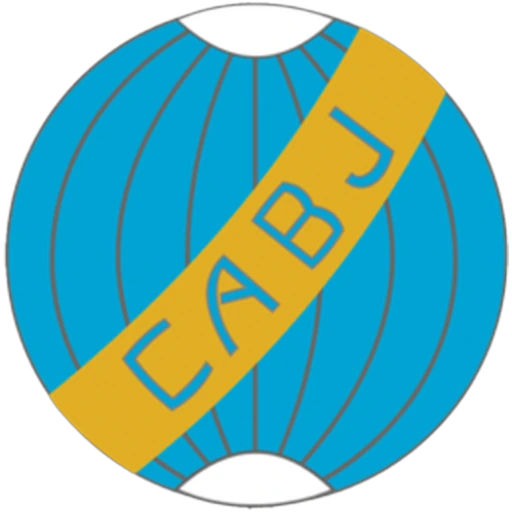
Between 1911 and 1914, Boca Juniors used a highly unusual circular emblem resembling a traditional football. The badge was predominantly blue, with a broad gold diagonal band carrying the initials “CABJ”, representing Club Atlético Boca Juniors. This early design already established the blue-and-gold combination that would become inseparable from the club.
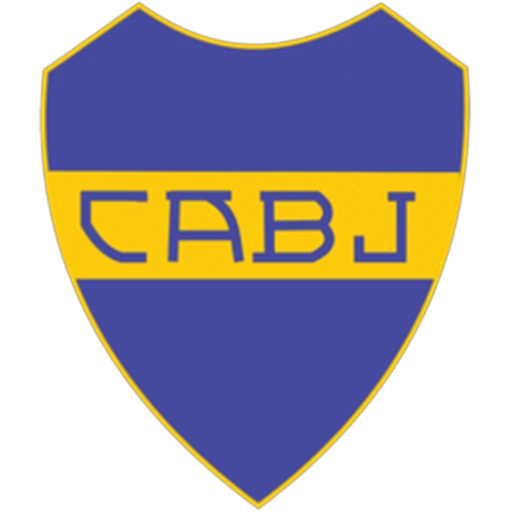
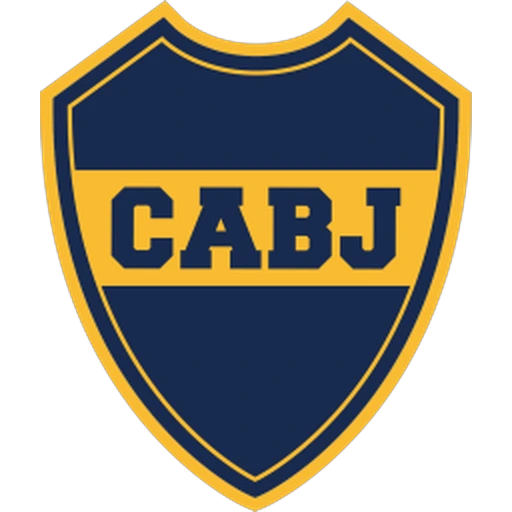
In 1915, Boca adopted a shield for the first time. The new crest featured a dark-blue field crossed horizontally by a broad gold band containing the stylised initials CABJ. This simple composition established the basic shield format that would influence almost every subsequent Boca Juniors emblem.
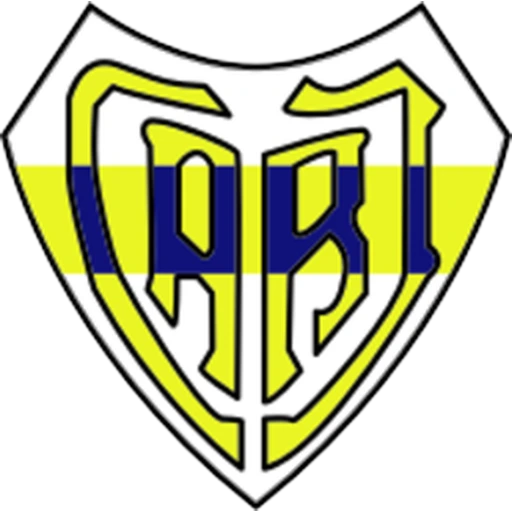
A radically different design appeared in 1922. The shield remained, but the familiar horizontal band disappeared. Instead, large intertwined CABJ initials dominated the centre, rendered in blue and gold against a white background. It was one of the most elaborate monograms in Boca's crest history.
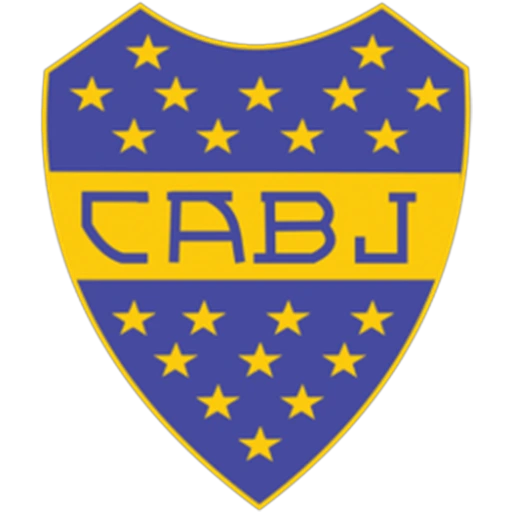
In 1932, Boca introduced one of the most important developments in its visual identity: gold stars. The traditional blue shield and gold central band returned, with CABJ across the middle, while numerous stars filled the upper and lower sections. The stars represented championships won by the club and would eventually become one of the defining characteristics of Boca's badge.
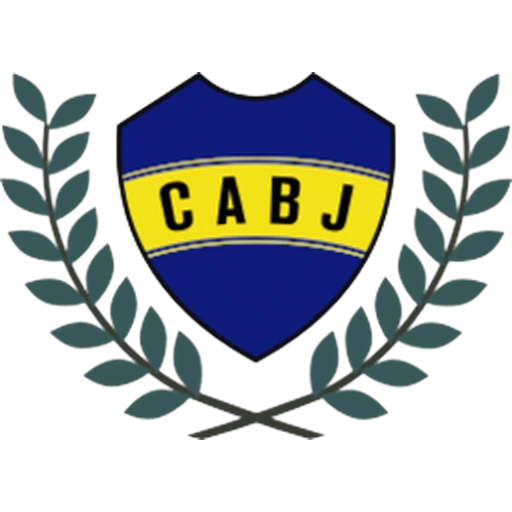
The 1955 crest represented another major departure. A smaller blue-and-gold shield containing CABJ was surrounded by a decorative laurel wreath. The design gave the badge a more ceremonial appearance, but it remained in use for only a relatively short period.
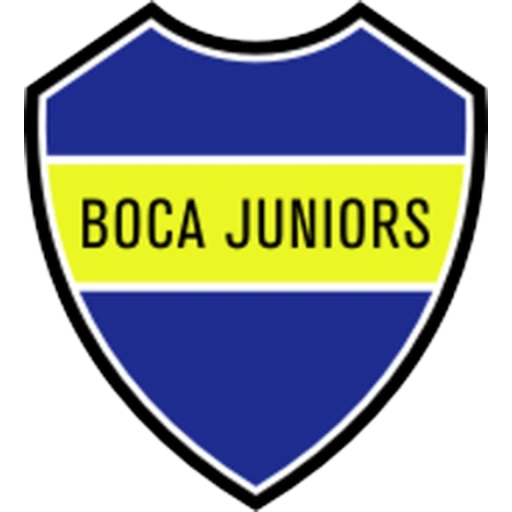
In 1960, Boca returned to a much simpler shield. The crest featured a dark-blue field with a broad yellow horizontal band carrying the full name “BOCA JUNIORS.” The stars and CABJ initials disappeared, producing one of the cleanest designs in the club's history.
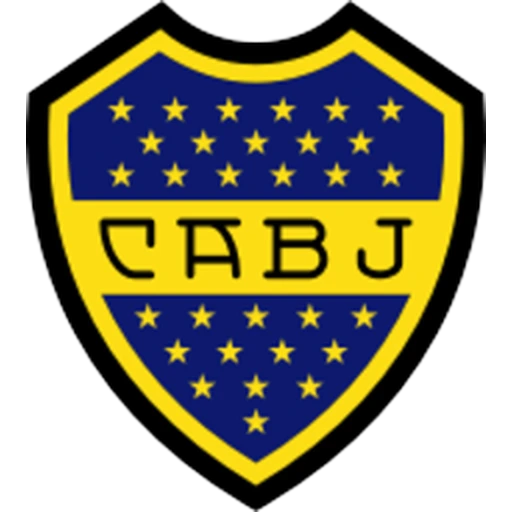
The 1970 redesign restored both the CABJ initials and championship stars. A blue shield with a yellow central band displayed CABJ, while gold stars occupied the areas above and below. A heavy black-and-yellow border gave the crest a particularly strong appearance.
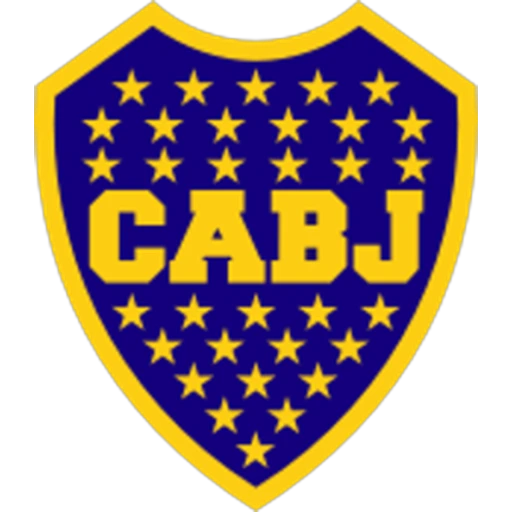
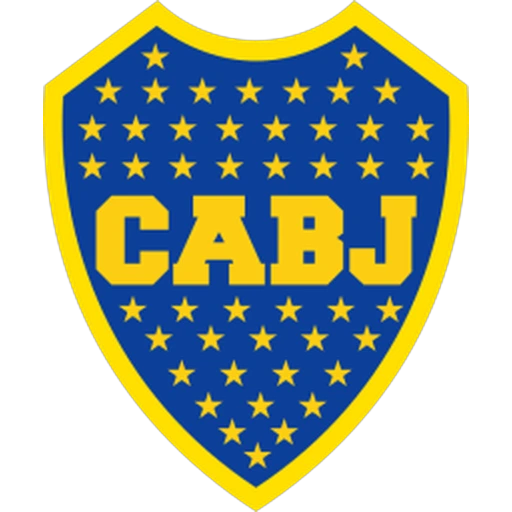
In 1986, the badge was modernised significantly. The black border was removed in favour of a brighter gold outline, while the CABJ lettering became larger and heavier. The number of stars increased to reflect additional honours won by Boca Juniors. This version established the basic appearance most strongly associated with the club during its highly successful late twentieth-century and early twenty-first-century period.
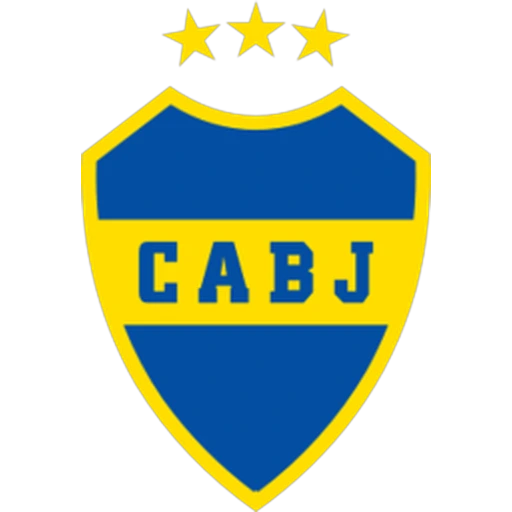
A very different emblem appeared between 2007 and 2009. The stars inside the shield were removed entirely and replaced by three gold stars above the crest. The interior consisted simply of a blue field and a yellow horizontal band containing CABJ. The three external stars symbolised Boca's three Intercontinental Cup victories, highlighting its status as a multiple world champion.
In 2009, Boca returned to the traditional star-filled shield. The three external stars disappeared, while numerous small gold stars once again surrounded the large CABJ initials inside the blue field.
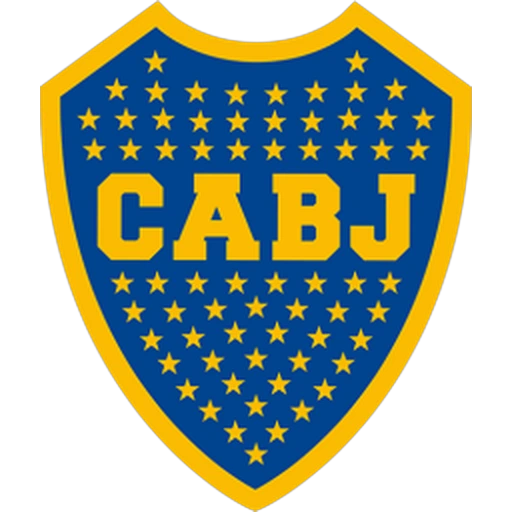
Minor refinements followed in 2011, particularly to the shade of blue, gold border, lettering and arrangement of the stars. The fundamental composition remained unchanged.
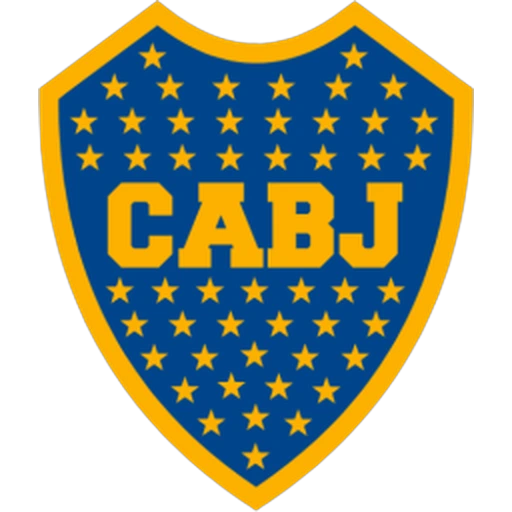
The 2012–2025 version further standardised the design. It featured a deep-blue shield surrounded by a strong gold border, large CABJ initials in the centre and numerous gold stars distributed across the background. Each star traditionally represented an official title recognised by the club, meaning that the number increased as Boca accumulated further honours.
A special commemorative crest appeared in 2025 to celebrate Boca Juniors' 120th anniversary. Based on a simplified historic shield, the design was accompanied by commemorative ribbons displaying “120 Aniversario” and the dates 1905–2025. Rather than replacing the regular identity permanently, it celebrated the club's 120 years of history.
In 2026, Boca Juniors introduced a striking simplification of its crest. The numerous championship stars that had characterised the badge for decades were removed. The new design returned to the fundamental elements of Boca's identity: a dark navy-blue shield, gold outline and large gold CABJ initials.
The 2026–Present crest therefore represents both a modernisation and a return to tradition. Its minimalist appearance recalls some of Boca's earlier twentieth-century badges while eliminating the visual complexity created by an ever-growing number of championship stars.
CA Boca Juniors Club History
Founded in 1905, Club Atlético Boca Juniors is one of the most successful and internationally recognised football clubs in Argentina and South America. Based in the working-class neighbourhood of La Boca in Buenos Aires, the club is famous for its blue-and-gold colours, passionate supporters and iconic stadium, La Bombonera.
Boca Juniors was founded on 3 April 1905 by a group of young men from La Boca, a neighbourhood heavily populated by Italian immigrants, particularly from Genoa. This heritage produced the nickname “Los Xeneizes” (The Genoese), derived from the Genoese word for people from Genoa.
The club experimented with several colours during its earliest years before adopting blue and gold in 1907. According to club tradition, the colours were inspired by the flag of the first ship to enter the harbour after the founders decided to use the colours of its flag. The vessel was Swedish, leading Boca to adopt the blue and yellow of Sweden.
Boca joined the Argentine Football Association competitions in 1913 and quickly developed into one of the country's leading clubs. During the amateur era, Boca won numerous championships and built a rapidly expanding supporter base that extended well beyond La Boca.
When professional football was introduced in Argentina in 1931, Boca immediately established itself among the dominant teams, winning the inaugural professional league championship. Further titles followed during the 1930s and 1940s, establishing the club as one of Argentina's major football institutions.
An essential part of Boca's identity arrived in 1940 with the inauguration of the Estadio Alberto J. Armando, universally known as La Bombonera. Its steep stands and enclosed design created an exceptionally intense atmosphere, and the stadium became one of the most famous football grounds in the world.
The club's defining rivalry is with River Plate. Their meetings are known as the Superclásico, one of world football's most famous rivalries. Both clubs originated in La Boca before River eventually moved to northern Buenos Aires. Their contrasting identities, enormous supporter bases and long competition for domestic and international honours transformed the fixture into one of Argentina's greatest sporting events.
Boca's international reputation grew considerably during the 1970s. Under coach Juan Carlos Lorenzo, the club won consecutive Copa Libertadores titles in 1977 and 1978. Boca also defeated Borussia Mönchengladbach to win the 1977 Intercontinental Cup, establishing itself as a major force beyond South America.
Another extraordinary period began around the turn of the millennium under coach Carlos Bianchi. Boca won the Copa Libertadores in 2000, followed by victory over Real Madrid in the Intercontinental Cup in Tokyo. Two goals from Martín Palermo helped Boca defeat the European champions 2–1 in one of the most celebrated matches in club history.
Boca won the Libertadores again in 2001 and 2003, with the latter followed by another Intercontinental Cup triumph, this time against AC Milan after a penalty shootout. These achievements established Bianchi's Boca as one of the greatest teams in the club's history.
A further Copa Libertadores title followed in 2007, inspired by outstanding performances from Juan Román Riquelme. The victory gave Boca its sixth Libertadores championship and reinforced its status among the most successful clubs in South American competition.
Many legendary Argentine footballers have represented Boca Juniors. Among the most celebrated are Juan Román Riquelme, Martín Palermo, Roberto Mouzo, Ángel Clemente Rojas, Hugo Gatti, Sebastián Battaglia and Carlos Tevez. Diego Maradona also had a particularly important relationship with Boca, representing the club during two separate periods and openly identifying himself with the Xeneize supporters.
Beyond River Plate, Boca has important rivalries with Argentina's other traditional major clubs, particularly Independiente, Racing Club and San Lorenzo. Collectively, Boca, River, Independiente, Racing and San Lorenzo are historically known as Argentina's “Big Five.” Nevertheless, no rivalry approaches the cultural and sporting significance of the Superclásico against River.
Boca's identity has always extended beyond sporting success. The club became strongly associated with the working-class culture of La Boca, immigration and the port of Buenos Aires. Its supporters are commonly referred to as La 12 (The 12th Player), reflecting the importance Boca places on the passion and influence of its fan base.
Unlike many other major Argentine clubs, Boca Juniors has also achieved the distinction of never having been relegated from Argentina's top division since entering the highest level in 1913.