While the club has used several different badges throughout its history, the wolf has always been the defining symbol of Wolves, reflecting both the club’s nickname and its identity within the city of Wolverhampton.
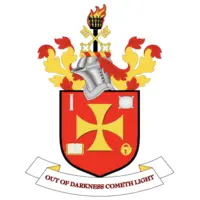
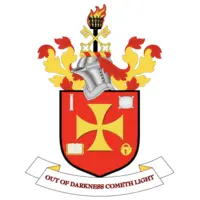
For much of the club’s early history, Wolves used the coat of arms of Wolverhampton City Council as its official emblem.
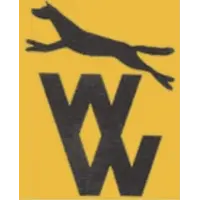
A significant change came in the late 1960s when Wolverhampton Wanderers introduced its own club badge. This design featured a single leaping wolf and marked the first time the club adopted a crest centred entirely around its nickname. The badge created a stronger and more distinctive football identity while moving away from the use of municipal symbols.
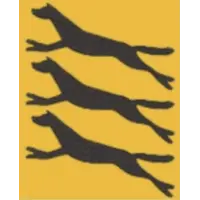
During the mid-1970s, the design evolved into a crest featuring three leaping wolves. This version reflected the club’s continued emphasis on the wolf as its primary symbol and became associated with an important period in the club’s history. Although visually distinctive, the badge remained in use for only a relatively short period.
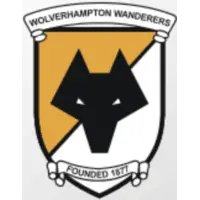
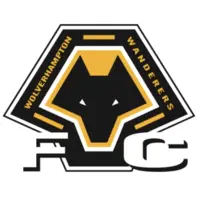
A major transformation arrived in 1979 with the introduction of the famous wolf-head crest. The new badge featured a stylised wolf’s face constructed from bold geometric shapes within a hexagonal outline. The minimalist design was modern, striking and instantly recognisable, quickly becoming one of the most iconic football badges in Britain.
The wolf-head logo proved exceptionally successful and helped establish a strong visual identity for the club. Unlike many football crests that relied on shields, coats of arms or complex heraldic elements, Wolves adopted a simple and memorable design that could be recognised instantly by supporters and neutral fans alike.
In 2002, the club introduced a redesigned version of the wolf-head badge. The updated crest refined the original concept with sharper lines, improved proportions and a cleaner appearance while preserving the essential design that supporters had come to identify with the club. The modernised badge retained the distinctive hexagonal shape and stylised wolf face that had become synonymous with Wolverhampton Wanderers.
Since its introduction, the 2002 crest has remained largely unchanged and has become one of the most recognisable logos in world football. Its simplicity and strong visual impact have helped it stand out among football badges and contributed to the club’s growing international profile.
Wolverhampton Wanderers FC Club History
Wolverhampton Wanderers Football Club was founded in 1877 as St. Luke’s FC by pupils of St. Luke’s School in Blakenhall, Wolverhampton. Following a merger with local club The Wanderers in 1879, the club adopted the name Wolverhampton Wanderers and soon became one of the leading teams in English football.
Wolves were among the twelve founding members of the Football League in 1888, placing the club at the very heart of the development of organised professional football. The club quickly established itself as a major force and reached its first FA Cup Final in 1889, just one year after the creation of the Football League.
Since 1889, Wolves have played their home matches at Molineux Stadium, one of the oldest and most historic grounds in English football. The stadium has witnessed the club’s greatest triumphs and remains one of the most iconic venues in the game.
The club enjoyed success in the early twentieth century, winning the FA Cup for the first time in 1893 and again in 1908. However, the greatest period in Wolves’ history came during the 1950s under legendary manager Stan Cullis.
During this golden era, Wolverhampton Wanderers became one of the strongest teams in Europe. Wolves won the First Division title three times, in 1954, 1958 and 1959, while also lifting the FA Cup in 1949 and again in 1960. The team featured some of the finest players of the era, including Billy Wright, one of England’s greatest captains.
Wolves gained international fame through a series of high-profile floodlit matches against leading European and international clubs. Victories over teams such as Honvéd of Hungary and Spartak Moscow attracted huge attention and led sections of the British press to proclaim Wolves as “Champions of the World.” These matches played an important role in demonstrating the appeal of international club football and indirectly contributed to the creation of the European Cup.
The club continued to enjoy success during the 1970s, winning the League Cup in 1974 and reaching the UEFA Cup Final in 1972. Another League Cup triumph followed in 1980, but the decade also marked the beginning of a difficult period.
The 1980s were among the most challenging years in the club’s history. Financial problems, ownership difficulties and successive relegations saw Wolves fall as far as the Fourth Division. Despite these setbacks, strong support from fans and the local community helped ensure the club’s survival.
A gradual recovery followed throughout the 1990s and 2000s, culminating in promotion to the Premier League in 2003. Although the club experienced further relegations and promotions, Wolves re-established themselves as a significant force in English football following investment from Fosun International in 2016. Under manager Nuno Espírito Santo, the club returned to the Premier League and qualified for European competition once again.
Wolves have long-standing rivalries with several West Midlands clubs. Their fiercest rivalry is with West Bromwich Albion, with matches between the two sides known as the Black Country Derby. The fixture is regarded as one of the oldest and most passionate rivalries in English football. Wolves also share strong rivalries with Aston Villa and Birmingham City.