Historical Crests West Bromwich Albion FC
Name: West Bromwich Albion FC
Nickname(s): The Baggies
Founded: 1878
Stadium: The Hawthorns (West Bromwich)
Capacity: 26,850
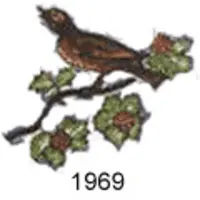
1969-1972
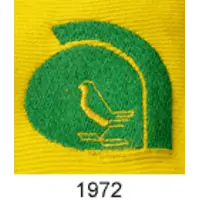
1972-1975
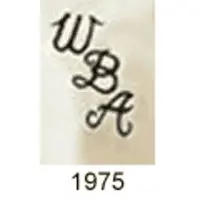
1975-1986
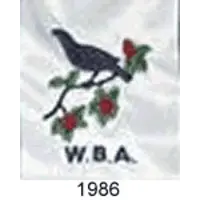
1986-1994
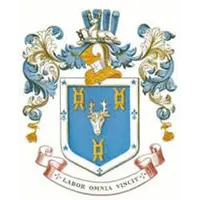
1994-2000
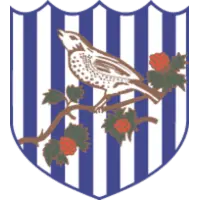
2000-2008
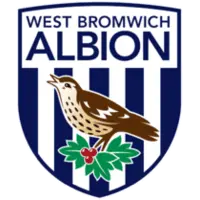
2008-Present
West Bromwich Albion FC Crest History
The defining symbol of West Bromwich Albion FC is the throstle, or song thrush, a bird that has been associated with Albion for well over a century and remains the centrepiece of the club’s crest today.
The origins of the badge date back to the late 1880s when club secretary Tom Smith suggested that a throstle perched on a crossbar should become the club’s emblem. The idea was inspired by a local public house where the players regularly changed before matches. The pub kept a pet thrush in a cage, and the bird became closely associated with the team. Over time, the throstle developed into one of the most recognisable symbols in English football.
The early badge featured the bird sitting on a simple crossbar and quickly became established as Albion’s official emblem. Unlike many clubs that relied on civic coats of arms, West Bromwich Albion developed a unique football-specific identity centred around the throstle.
As the club evolved, so too did the badge. While various versions appeared over the decades, the throstle always remained the dominant feature. Most designs incorporated the club’s traditional blue-and-white striped colours, creating a visual identity that supporters could instantly recognise.
A significant change occurred after Albion moved to The Hawthorns in 1900. At some point following the move, the original crossbar was replaced by a hawthorn branch, a reference to the club’s famous stadium. The addition created a stronger connection between the badge and the club’s home, while preserving the iconic image of the perched throstle.
Throughout the twentieth century, the crest underwent several refinements and modernisations. Different versions altered the shape of the shield, the artistic style of the bird and the arrangement of the stripes, but the fundamental elements remained remarkably consistent. The combination of the throstle, hawthorn branch and blue-and-white striped shield became inseparable from West Bromwich Albion’s identity.
The modern crest continues this tradition. It features a detailed throstle perched on a hawthorn branch against a blue-and-white striped shield, combining all of the key symbols that have defined Albion for generations. The design successfully balances tradition and modernity while maintaining a clear link to the club’s Victorian origins.
West Bromwich Albion FC Club History
West Bromwich Albion Football Club was founded in 1878 by workers from George Salter’s Spring Works, a factory in West Bromwich that manufactured weighing scales and other industrial equipment. Originally formed as a works team, Albion quickly grew into one of the leading clubs in the Midlands and became an important part of English football’s early development.
The club takes its name from the Albion district of West Bromwich and is one of the twelve founding members of the Football League, which was established in 1888. Albion’s involvement in the creation of the Football League places the club among the pioneers of organised professional football.
During the late nineteenth century, West Bromwich Albion established itself as one of England’s strongest teams. The club reached numerous FA Cup Finals and won its first major trophy when it lifted the FA Cup in 1888. Further FA Cup triumphs followed in 1892, 1931, 1954 and 1968, giving Albion a total of five FA Cup victories and cementing its place among England’s historic clubs.
The club’s greatest league success came in 1920 when West Bromwich Albion won the First Division title. That championship remains one of the most significant achievements in the club’s history and established Albion as one of the leading teams of its era.
Since 1900, West Bromwich Albion has played its home matches at The Hawthorns. Situated on one of the highest points in the English Football League, the stadium has become one of the most iconic grounds in the country and remains closely associated with the club’s identity. More than a century after opening, The Hawthorns continues to serve as Albion’s home.
Another major honour arrived in 1966 when the club won the League Cup, adding to an already impressive trophy collection. Throughout the twentieth century, Albion remained a prominent force in English football, regularly competing in the top division and producing numerous talented players.
The club enjoyed another notable period during the late 1970s under manager Ron Atkinson. Featuring players such as Bryan Robson, Laurie Cunningham and Cyrille Regis, Albion became one of the most exciting teams in the country and earned widespread admiration for its attacking football. The side is still remembered as one of the most influential teams in the club’s history.
Like many historic clubs, West Bromwich Albion has experienced periods of promotion and relegation in the modern era. Nevertheless, Albion has remained a regular presence in the top two divisions of English football and continues to be regarded as one of the country's traditional clubs.
The club enjoys support from a number of well-known figures, including legendary musician Eric Clapton, who has long been associated with Albion. The club’s match programme has also earned a reputation as one of the finest produced in English football, reflecting the strong traditions that surround the club.
West Bromwich Albion has several long-standing rivalries with fellow West Midlands clubs. Traditional rivalries exist with Aston Villa and Birmingham City, but the fiercest rivalry is with Wolverhampton Wanderers. Matches between Albion and Wolves are known as the Black Country Derby and are among the oldest and most passionate rivalries in English football.
West Bromich Albion Pin
Your Dynamic Snippet will be displayed here... This message is displayed because you did not provide enough options to retrieve its content.