Historical Crests Villareal CF
Name: Villareal CF
Nickname(s): El Submarino Amarillo (The Yellow Submarine)
Founded: 1923
Stadium: Estadio de la Cerámica (Villareal)
Capacity: 23,008
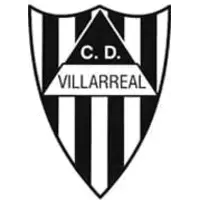
1923-1942

1942-1947
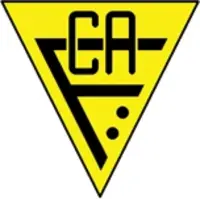
1947-1951
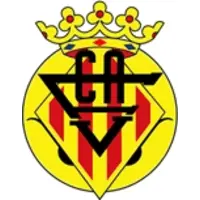
1951-1954
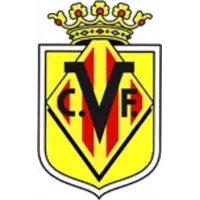
1954-1966
1966-1995
1995-2009
2009-Present
Villarreal CF Crest History
Unlike many of Spain's historic clubs whose badges are rooted in medieval heraldry or civic coats of arms, Villarreal's visual identity evolved directly from the football clubs that preceded the modern organisation.
The club's earliest crest was associated with the original Club Deportivo Villarreal, founded in 1923. This badge featured black-and-white colours, reflecting the kit and identity of the club during its formative years. Club Deportivo Villarreal competed until its dissolution in 1942, although its activities were interrupted by the Spanish Civil War. While relatively simple in design, the crest established the first visual identity associated with organised football in the city of Villarreal.
Following the disappearance of Club Deportivo Villarreal, football in the city continued through a new organisation known as Club Atlético Foghetecaz. Founded in 1942, the club's unusual name was an acronym created from the initials of its founders. As the city's leading amateur football team, Foghetecaz adopted its own crest, which subsequently became the basis of Villarreal's future visual identity. During this period, the club moved away from the black-and-white imagery associated with the earlier organisation and began establishing the symbols that would later define Villarreal CF.
A major turning point occurred in July 1954 when the club's board decided to change the team's name from CAF Villarreal to Villarreal Club de Fútbol. The rebranding reflected a desire to strengthen the club's connection to the city and create a more professional image. For the 1954–55 season, a new crest was unveiled to accompany the name change. This badge introduced several elements that remain central to Villarreal's identity today, including the club initials prominently displayed within a circular design.
The crest underwent further refinement during the 1960s as Villarreal sought a more modern and distinctive appearance. The version introduced for the 1966–67 season established the foundation of the badge that supporters recognise today. The emblem featured the club's initials "CVF" intertwined within a circular motif, surmounted by a royal crown that acknowledged the club's connection to Spanish football traditions. The design also incorporated the club's increasingly established yellow colouring, which would eventually lead to Villarreal becoming known worldwide as El Submarino Amarillo (The Yellow Submarine).
Remarkably, the badge introduced in 1966–67 has remained essentially unchanged ever since. While many clubs have repeatedly redesigned their crests to follow changing branding trends, Villarreal has shown unusual consistency. Minor adjustments have been made to improve colour balance, linework and digital reproduction, but the overall structure, composition and symbolism have remained intact for nearly six decades.
The royal crown remains one of the crest's defining features, sitting above the circular emblem and reinforcing the badge's traditional Spanish character. Beneath it, the intertwined "CVF" initials continue to represent Club Villarreal de Fútbol, creating one of the most distinctive monograms in Spanish football. The yellow background, now inseparable from the club's identity, reflects the colours that have become famous throughout Europe during Villarreal's rise in the twenty-first century.
Villarreal CF Club History
Villarreal Club de Fútbol, S.A.D., is based in the city of Villarreal in the province of Castellón, located within Spain's Valencian Community.
The club was established on 10 March 1923 as Club Deportivo Villarreal. For much of its early history, Villarreal competed in regional and lower-division football, spending decades outside the national spotlight. Football in the city endured interruptions caused by the Spanish Civil War, and the club itself underwent several organisational changes before eventually becoming Villarreal Club de Fútbol in 1954. Throughout these years, Villarreal remained a modest local institution, supported by its community but largely unknown beyond the province of Castellón.
A transformative period began during the 1990s. Under the leadership of businessman Fernando Roig, who became club president in 1997, Villarreal embarked on an ambitious project to establish itself among Spain's elite. The results were immediate. In 1998, Villarreal achieved promotion to La Liga for the first time in its history, marking a historic milestone for both the club and the city.
The club's rise coincided with the arrival of several high-profile players, including Juan Román Riquelme, whose creativity helped transform Villarreal into one of the most entertaining teams in Europe. Under manager Manuel Pellegrini, Villarreal reached the semi-finals of the UEFA Champions League during the 2005–06 season, narrowly missing out on a place in the final. This achievement represented one of the greatest moments in the club's history and announced Villarreal as a serious force on the European stage.
Further domestic success followed. During the 2007–08 season, Villarreal finished second in La Liga, achieving the highest league position in the club's history. Competing against the financial powerhouses of Spanish football, Villarreal demonstrated that careful planning, intelligent recruitment and strong youth development could challenge even the country's biggest clubs.
Despite its success, Villarreal experienced a significant setback in 2012 when the club was unexpectedly relegated to the Segunda División. The demotion came as a shock after more than a decade of sustained progress. However, Villarreal responded immediately, securing promotion back to La Liga at the first attempt in 2013. Since that return, the club has remained a permanent fixture in the top flight and has continued to compete regularly in European competitions.
The crowning achievement in Villarreal's history arrived in 2021 when the club won the UEFA Europa League under manager Unai Emery. Defeating Manchester United in the final, Villarreal secured the first major trophy in its history and completed one of the most remarkable success stories in European football. For a club representing a city of fewer than 60,000 inhabitants, the achievement was extraordinary.
Villarreal is affectionately known as El Submarí Groguet or El Submarino Amarillo (The Yellow Submarine), a nickname inspired by the club's distinctive all-yellow kit. Over time, the Yellow Submarine has become one of the most recognisable identities in European football, symbolising the club's ability to compete successfully despite its comparatively small size and resources.
The club plays its home matches at the Estadio de la Cerámica, one of Spain's most modern football stadiums. The ground has evolved alongside the club's rise and has become a symbol of Villarreal's transformation from a provincial side into a regular participant in European competition.
Villarreal's principal geographic rivalry is with CD Castellón. The rivalry stems from the clubs' shared origins within the province of Castellón and has existed for decades. The club also shares an increasingly significant rivalry with Valencia CF. Encounters between the two sides are known as the Derbi de la Comunitat and reflect their status as the most prominent clubs in the Valencian Community.
Villareal CF Pins
Your Dynamic Snippet will be displayed here... This message is displayed because you did not provide enough options to retrieve its content.