Historical Crests Queens Park Rangers FC
Name: Queens Park Rangers FC
Nickname(s): The Superhoops
Founded: 1882
Stadium: Kiyan Prince Foundation Stadium (London)
Capacity: 18,439
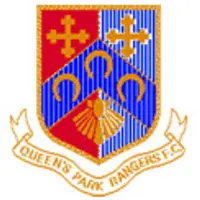
1953-1975
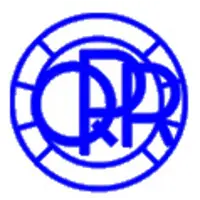
1975-1982
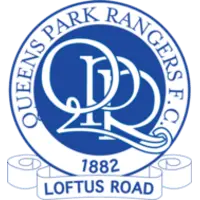
1982-2008
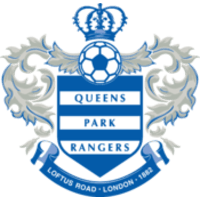
2008-2016
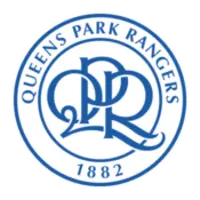
2016-Present
Queens Park Rangers FC Crest History
The first official club emblem was based on the shield from the coat of arms of the former Metropolitan Borough of Hammersmith. This civic design reflected the club’s close association with West London and followed a tradition common among many English football clubs during the early twentieth century, when municipal symbols were often used in place of dedicated football crests.
As football branding became increasingly important, Queens Park Rangers began moving towards a more distinctive club identity. Various versions of the club’s initials appeared on shirts and official materials, helping supporters identify with a badge that was uniquely associated with QPR rather than the local authority.
A major redesign arrived in 1975 with the introduction of a completely new logo. The badge featured a blue-and-white hooped shield incorporating a circular design suggestive of a football, together with the letters “QPR” displayed prominently in a simple and modern style. The crest reflected contemporary design trends while retaining the club’s famous hooped colours.
Further refinement followed in 1982 when the club introduced the format that would become one of the most recognisable badges in its history. The redesigned crest incorporated the club’s foundation year, 1882, and the name of its home ground, Loftus Road. The addition of these elements strengthened the connection between the badge, the club’s heritage and its historic stadium.
The 1982 design remained closely associated with Queens Park Rangers for more than two decades and became familiar to generations of supporters. During this period, the crest accompanied the club through some of the most memorable moments in its history, including top-flight football and domestic cup successes.
In 2008, Queens Park Rangers unveiled a new crest designed to combine elements from throughout the club’s history. The updated badge sought to encapsulate the club’s past, present and future while creating a more modern visual identity. One of the most significant features of the redesign was the reintroduction of the famous blue-and-white hoops, ensuring that the club’s most recognisable symbol once again formed part of its official crest.
Following extensive supporter consultation and a fan vote held during 2015, the club announced that a new crest would be introduced for the 2016–17 season. Supporters were presented with several design options, and almost seventy percent voted in favour of a modernised version of the classic 1982 badge.
The resulting crest was officially unveiled in 2016. The new design returned to the iconic interlocking “QPR” monogram and retained references to the club’s foundation year and Loftus Road. The badge adopted a cleaner and more traditional appearance, drawing inspiration from the club’s most popular historical crests while modernising the artwork for contemporary use. The redesign was widely welcomed by supporters as a return to the club’s traditional identity.
Queens Park Rangers FC Club History
Queens Park Rangers Football Club, commonly known as QPR, traces its origins to 1882 when Christchurch Rangers was formed in the Queen’s Park area of North West London. In 1886, Christchurch Rangers merged with St Jude’s Institute to create Queens Park Rangers, although the club officially recognises 1882 as its foundation year.
During its early years, QPR played at a number of different grounds across West London. The club moved frequently before eventually establishing a permanent home at Loftus Road, which became synonymous with Queens Park Rangers and remains one of the most distinctive stadiums in English football. In 2019, the stadium was renamed the Kiyan Prince Foundation Stadium in honour of former youth player Kiyan Prince, although supporters continue to commonly refer to it as Loftus Road.
For much of its early history, QPR competed in regional leagues before joining the Football League in 1920. The club gradually developed a reputation for attractive football and became firmly established within the professional game.
One of the most successful periods in the club’s history came during the 1960s and 1970s. In 1967, QPR won the League Cup, defeating West Bromwich Albion 3–2 in the first League Cup Final held at Wembley Stadium. The victory remains the club’s first and only major trophy and is one of the defining moments in its history.
Further success followed in the 1975–76 season when QPR came agonisingly close to winning the First Division title. Managed by Dave Sexton and featuring players such as Stan Bowles, Gerry Francis and Don Givens, the club finished second behind Liverpool in what remains the highest league finish in QPR’s history.
The club has spent much of its modern history moving between the top two divisions of English football. QPR were founder members of the Premier League in 1992 and have enjoyed several spells in the top flight, interspersed with periods in the Championship and lower divisions. Despite these fluctuations, the club has maintained a strong identity and loyal support base.
QPR has long-standing rivalries with several London clubs. The most significant rivalries are with Chelsea and Fulham, fellow West London sides with whom the club regularly contests fiercely fought local derbies. Strong rivalries also exist with Brentford, reflecting the close geographical proximity of the clubs and their shared history in West London football.
QPR Pins
Your Dynamic Snippet will be displayed here... This message is displayed because you did not provide enough options to retrieve its content.