The lion has remained at the heart of Middlesbrough’s identity for decades and continues to feature prominently on the club’s modern crest.
The club’s earliest badge was based on the coat of arms of the town of Middlesbrough. To better reflect the club’s colours, the original blue lion from the civic crest was replaced with a red lion. Like many English clubs of the period, Middlesbrough drew heavily on local heraldry, creating a strong connection between the football club and the town it represented.
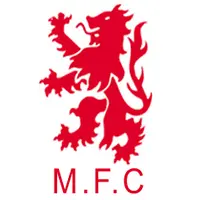
A significant change came in 1973 following the introduction of the famous white band across Middlesbrough’s shirts. The crest was simplified to feature only the red lion with the initials “M.F.C.” displayed beneath it. This cleaner design reflected the more modern football branding trends of the era while retaining the club’s most recognisable symbol.
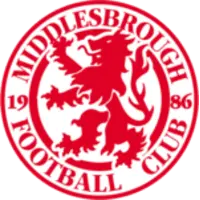
Following the club’s financial collapse and subsequent reformation in 1986, Middlesbrough adopted a new circular badge to mark the beginning of a new chapter in its history. The crest featured the red lion at its centre, surrounded by the words “Middlesbrough Football Club 1986.” The roundel design became one of the most popular badges in the club’s history and was closely associated with the successful years that followed under chairman Steve Gibson.
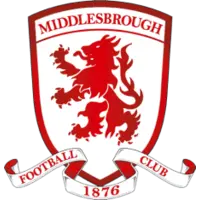
In 2007, Middlesbrough introduced a new crest featuring the lion within a shield. The redesign replaced the date 1986 with “1876,” reflecting the club’s original foundation year rather than its year of reformation. According to the club, the change was intended to emphasise Middlesbrough’s long history and traditions rather than focusing solely on the events of 1986. The shield-shaped badge remained in use for almost two decades and became familiar to a new generation of supporters.
As preparations began for the club’s 150th anniversary, Middlesbrough launched a consultation process with supporters regarding the future of the crest. Following an 18-month fan-led review involving thousands of supporters, the club announced a completely redesigned badge in October 2025, to be introduced permanently from the start of the 2026–27 season.
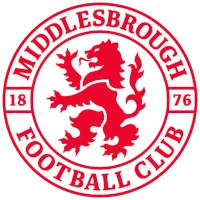
The new 2026 crest marks a return to the popular circular format first associated with the club’s revival in 1986. The badge features the full wording “Middlesbrough Football Club” and prominently displays the foundation year 1876 across the iconic white band. The lion remains central to the design, while a number of subtle details celebrate the club’s heritage and local identity, including references to the River Tees, Roseberry Topping and the famous Ayresome Park gates. The redesign was developed with extensive supporter input and was widely viewed as a return to the traditions many fans felt were missing from the 2007 shield.
To mark the club’s 150th anniversary during the 2026–27 season, Middlesbrough also unveiled a special commemorative gold version of the crest featuring “150 Years” beneath the badge. Following the anniversary celebrations, the club will revert to the traditional red-and-white colour scheme while retaining the new roundel design as its permanent identity.
Middlesbrough FC Club History
Middlesbrough Football Club was formed in 1876 and is one of the oldest professional clubs in English football. Based on Teesside in North Yorkshire, the club developed alongside the region’s industrial growth and became a prominent representative of the North East footballing tradition.
The club turned professional in 1889 and quickly established itself within the Football League. Middlesbrough spent much of the twentieth century competing in the top two divisions of English football and developed a reputation for producing talented players and competitive teams.
Since turning professional, Middlesbrough has played at three principal grounds. The club played at Linthorpe Road from 1882 until 1903 before moving to the iconic Ayresome Park. Ayresome Park served as Middlesbrough’s home for 92 years and witnessed many of the club’s most memorable moments. In 1995, Middlesbrough moved to the modern Riverside Stadium, which remains the club’s home today. The move marked the beginning of a new era and made Middlesbrough one of the first English clubs to relocate to a purpose-built all-seater stadium following the Taylor Report.
Throughout its history, Middlesbrough has been home to several of Britain’s most famous footballers. Players such as Graeme Souness, Bryan Robson and Paul Gascoigne have all represented the club, helping to raise its profile both nationally and internationally. Robson later returned as manager and played a key role in one of the most successful periods in the club’s history.
After decades of fluctuating fortunes, Middlesbrough enjoyed a remarkable revival during the 1990s under chairman Steve Gibson and manager Bryan Robson. The club returned to the Premier League, attracted high-profile signings and reached several domestic cup finals, establishing itself as a competitive force in English football.
The most successful period in Middlesbrough’s history arrived during the 2000s. In 2004, the club won the League Cup by defeating Bolton Wanderers in the final, securing the first major trophy in its history. The victory also earned Middlesbrough qualification for European competition and remains one of the proudest moments in the club’s history.
European success followed shortly afterwards. During the 2005–06 season, Middlesbrough embarked on a memorable UEFA Cup campaign, producing dramatic comeback victories against Basel and Steaua Bucharest before reaching the final. Although the club finished as runners-up after losing to Sevilla, the achievement remains the greatest European run in Middlesbrough’s history.
Middlesbrough’s principal rivalries are with Sunderland and Newcastle United, fixtures that form part of the fiercely contested North East football landscape. A strong rivalry also exists with Leeds United, with matches between the clubs often attracting significant attention from supporters.