Passa al contenuto

Historical Crests Deportivo Toluca FC


Name: Deportivo Toluca Fútbol Club
Nickname(s): ​Los Diablos Rojos (The Red Devils), Los Escarlatas (The Scarlets)
Founded: 1917
Stadium: Estadio Nemesio Díez
Capacity: 30,000

1917-1976
1976-1989
1989-1998
2000-2002
2002-2005
2005-2008
2008-2010
2010-2017
2017-Present

Deportivo Toluca FC Crest History
The crest of Deportivo Toluca has always been centred on the club's distinctive interlocking initials, a symbol that dates back to its foundation in 1917. Although the badge has become considerably more elaborate at different points in its history, the circular monogram and the club's traditional red colour have remained its most consistent elements.
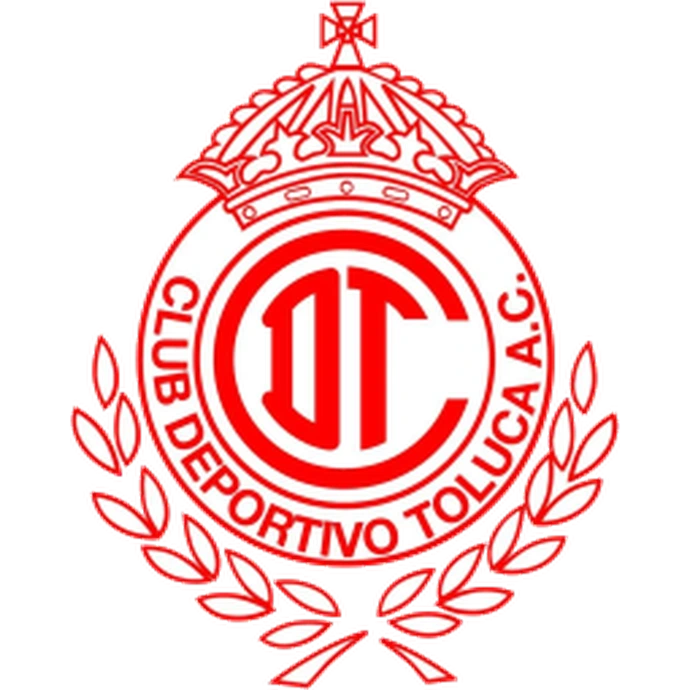
The 1917–1976 crest was exceptionally simple. It consisted almost entirely of the red CDT monogram, formed from the initials of Club Deportivo Toluca and enclosed within a circular design. This symbol established the visual foundation for virtually every crest that followed.
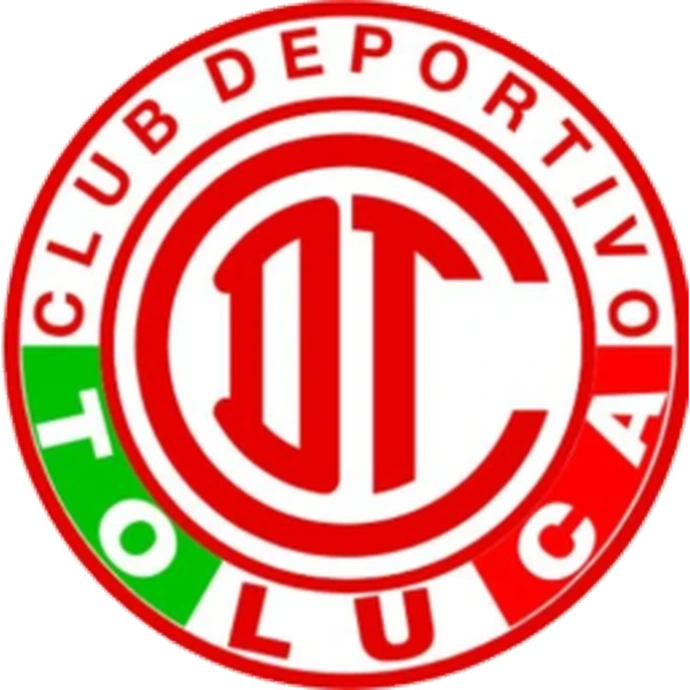
In 1976, the monogram was incorporated into a complete circular badge. The words CLUB DEPORTIVO TOLUCA surrounded the central symbol, while green, white and red details appeared along the lower section, referencing the colours of the Mexican flag.
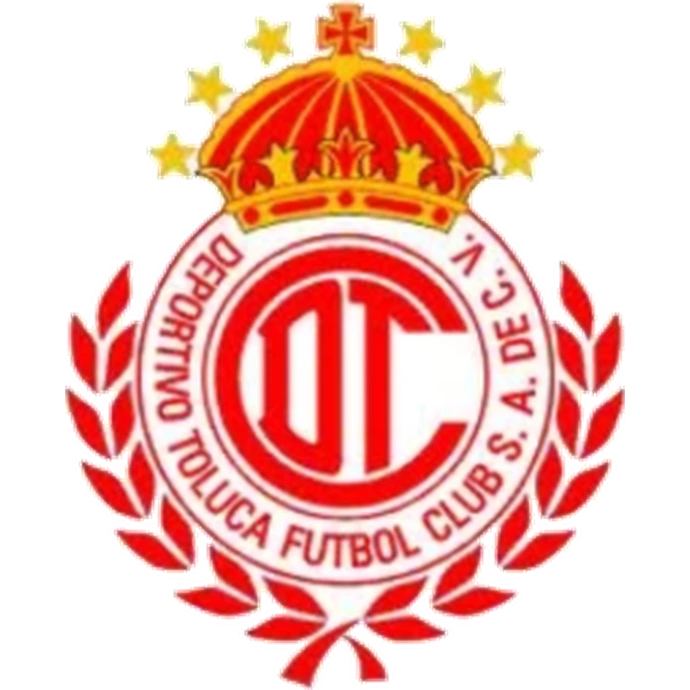
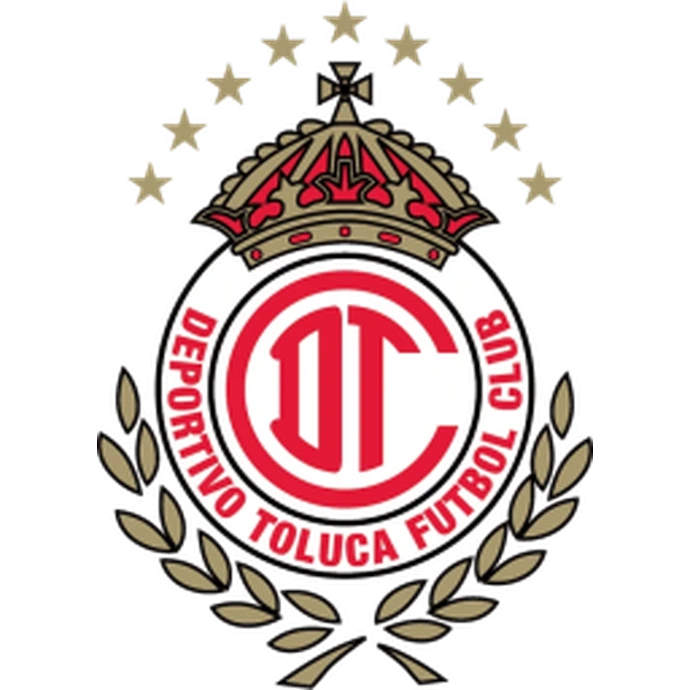
The 1989–1998 crest became considerably more decorative. A crown was placed above the circular emblem and laurel branches surrounded the lower section, giving the badge a more ceremonial appearance while retaining the traditional CDT monogram.
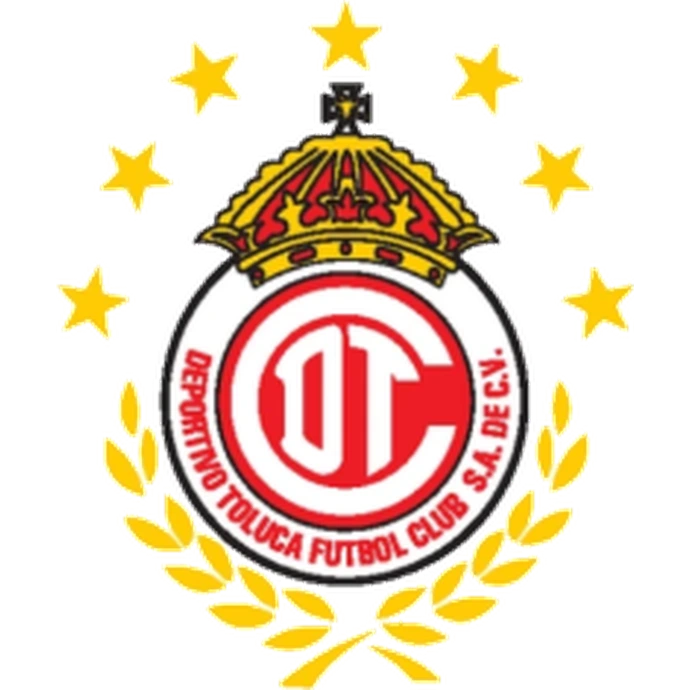
Following Toluca's renewed success at the end of the 1990s, championship stars became an increasingly prominent feature. The 2000–2002 crest combined the crown and laurel branches with stars arranged above the badge to celebrate the club's Mexican league championships.
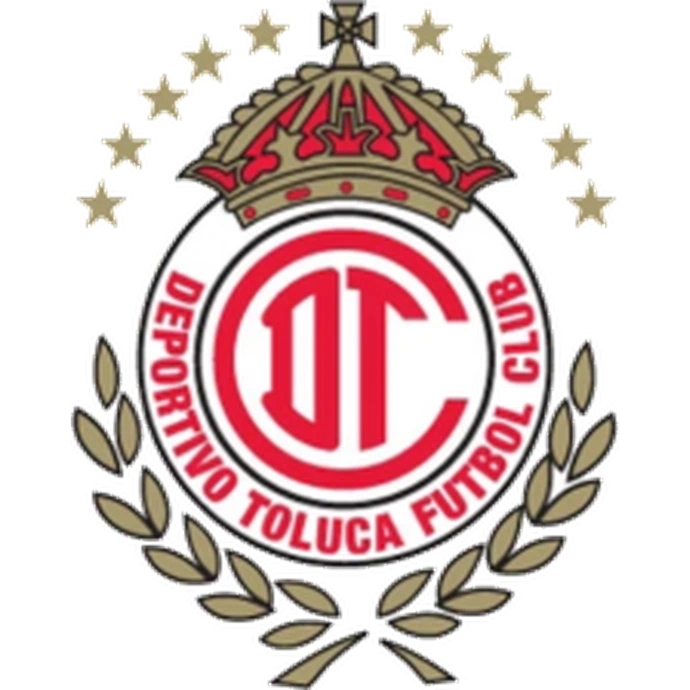
As Toluca continued winning titles during the early 2000s, additional stars were incorporated. The 2002–2005 and 2005–2008 versions therefore became increasingly elaborate, with the championship stars forming an arc around the crown.
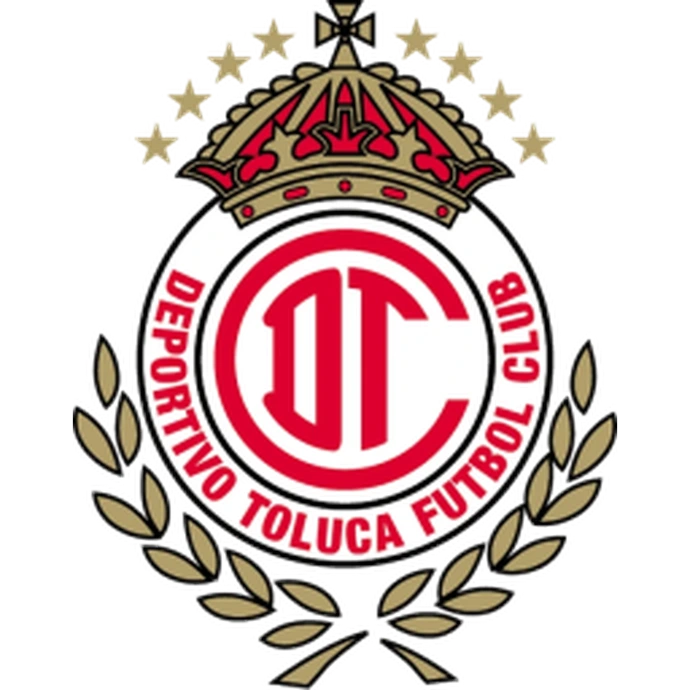
Further league triumphs in Apertura 2008 and Bicentenario 2010 brought Toluca's total to ten Mexican league championships. The 2010–2017 crest consequently displayed ten stars around the upper part of the emblem.
In 2017, as part of the club's centenary, Toluca introduced a major simplification of its visual identity. The crown, laurel branches and championship stars were removed completely, returning attention to the historic monogram.
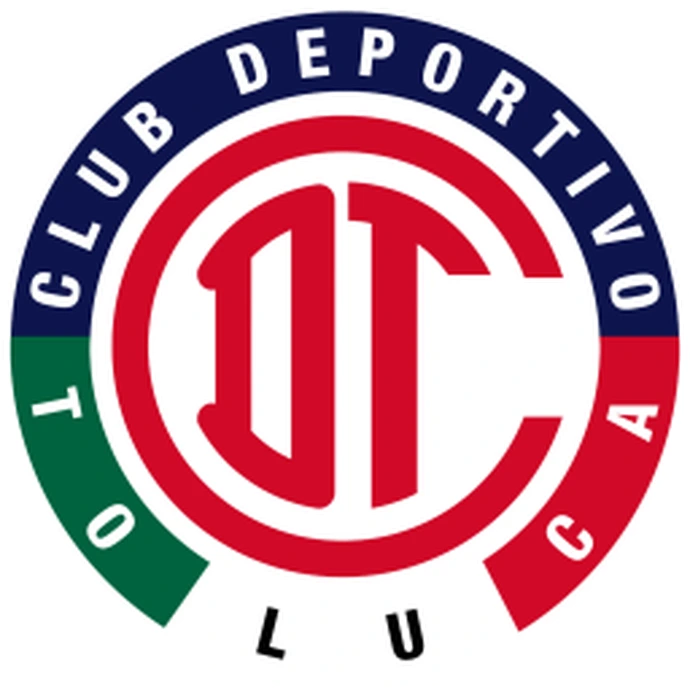
The 2017–present crest is a modern interpretation of the club's earlier circular identity. The red CDT monogram sits at the centre, surrounded by a dark-blue ring carrying the words CLUB DEPORTIVO TOLUCA, with green, white and red sections completing the lower part.

Deportivo Toluca FC Club History
Deportivo Toluca Fútbol Club is a professional football club from Toluca, State of Mexico, founded on 12 February 1917. Over more than a century, the club has developed into one of the most successful institutions in Mexican football and is widely known as Los Diablos Rojos, The Red Devils.
Toluca spent its early decades competing mainly in regional and amateur football. The club's development accelerated after the professionalisation of Mexican football, and in 1953 Toluca earned promotion to the country's top division.
The club quickly established itself at the highest level. Its first major national trophy arrived with the Copa México in 1955–56, followed by the Campeón de Campeones, demonstrating that Toluca was becoming an important force in Mexican football.
Toluca's first great period came during the 1960s. Under coach Ignacio Trelles, Los Diablos Rojos won consecutive Mexican league championships in 1966–67 and 1967–68.
Success extended beyond Mexico. Toluca won the 1968 CONCACAF Champions' Cup, giving the club its first major international title and strengthening its reputation as one of the leading teams of the period.
A third Mexican league championship followed in 1974–75. By this point, Toluca had firmly established itself among the country's traditional successful clubs, although another league title would not arrive for more than two decades.
The club's second great golden era began in the late 1990s. Under coach Enrique Meza, Toluca developed an exciting attacking team led by players such as José Saturnino Cardozo, who became one of the greatest goalscorers in Mexican football history.
Toluca won the Verano 1998 championship, ending a 23-year league-title drought. Further championships followed in Verano 1999 and Verano 2000, giving the club three titles in only five tournaments.
This successful generation transformed Toluca into one of the dominant clubs of the short-tournament era. The combination of attacking football, strong home performances and Cardozo's extraordinary goalscoring made Los Diablos Rojos one of Mexico's most feared teams.
Success continued after the turn of the century. Toluca won the Apertura 2002, followed by another CONCACAF Champions' Cup in 2003, its second continental championship.
Further Mexican league titles arrived in Apertura 2005, Apertura 2008 and Bicentenario 2010. The 2010 triumph gave Toluca its tenth Mexican league championship, confirming the club's position among the most successful teams in the history of the national game.
The years following the tenth championship proved more difficult. Toluca remained regularly competitive and reached several finals, but converting those opportunities into additional championships became challenging.
The club's identity is closely connected with the Estadio Nemesio Díez, located in the centre of Toluca. Originally opened in 1954, the stadium is famous for its compact atmosphere and its location at an altitude of more than 2,600 metres above sea level, traditionally providing Los Diablos Rojos with a significant home advantage.
Toluca's most recognised regional rivalry is with Pachuca, a fixture commonly associated with the rivalry between two historically successful clubs from central Mexico. Matches against major institutions such as América, Cruz Azul and Pumas UNAM have also produced important encounters, particularly during championship playoffs.
The club celebrated its centenary in 2017, marking 100 years since its foundation. The occasion also brought a simplified crest that returned attention to the historic CDT monogram, linking the modern club directly with its earliest identity.