Historical Crests Liverpool FC
Name: Liverpool FC
Nickname(s): The Reds
Founded: 1892
Stadium: Anfield (Liverpool)
Capacity: 53,294
1892
1940s
1950-1955
1955-1968
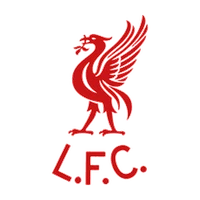
1968-1987
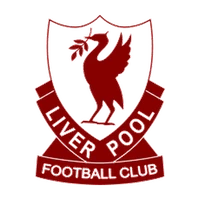
1987-1992
1992-1993
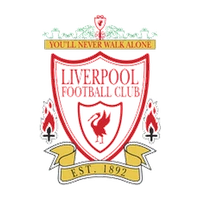
1993-1999
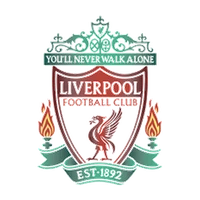
1999-Present
2017-2018 125 Years
Liverpool FC Crest History
The mythical Liver Bird, which has long been the emblem of the city of Liverpool, has appeared on Liverpool FC crests for more than a century and remains the defining feature of the club’s identity today.
A major development came in 1901 when the city’s famous Liver Bird was officially adopted as the club’s badge. The symbol, derived from Liverpool’s coat of arms, reflected the city’s maritime heritage and civic pride. Although it became the club’s official emblem at the beginning of the twentieth century, the Liver Bird was not incorporated onto Liverpool’s playing shirts until 1955.
The introduction of the Liver Bird onto the kit established the symbol as the visual centrepiece of Liverpool FC. Throughout the following decades, various versions of the bird appeared on shirts, often accompanied by the initials “L.F.C.” The simplicity of the design made it instantly recognisable and closely associated with the club’s growing success both domestically and internationally.
A major redesign arrived in 1987 when Liverpool introduced a more modern crest featuring the Liver Bird within a shield. The badge provided a stronger visual identity while retaining the club’s most important symbol. It became associated with one of the most successful periods in Liverpool’s history.
In 1992, to commemorate the club’s centenary, Liverpool unveiled a new crest incorporating several important elements from its heritage. The redesigned badge retained the Liver Bird at its centre while adding a representation of the famous Shankly Gates, which bear the words “You’ll Never Walk Alone.” The inclusion of the gates honoured legendary manager Bill Shankly and strengthened the connection between the crest and the club’s traditions.
A year later, in 1993, twin flames were added on either side of the badge. The flames symbolise the Hillsborough Memorial outside Anfield, where an eternal flame burns in memory of the supporters who lost their lives in the Hillsborough disaster. Their inclusion transformed the crest into not only a symbol of footballing identity but also one of remembrance and respect.
The crest underwent further refinements during the following decades, but its core elements remained unchanged. The Liver Bird, Shankly Gates, club motto and memorial flames combined to create one of the most recognisable and meaningful badges in world football.
Liverpool FC Club History
Liverpool Football Club was founded in 1892 following a dispute between Everton FC and club president John Houlding, who owned Anfield. When Everton moved to nearby Goodison Park, Houlding formed a new club to play at the vacant stadium, creating Liverpool FC. The club officially came into existence on 3 June 1892 and has played its home matches at Anfield ever since.
Liverpool quickly established itself as a force in English football. After joining the Football League in 1893, the club won its first League Championship in 1901 and added a second in 1906. Further league titles followed in 1922, 1923 and 1947, helping to establish Liverpool among the leading clubs in the country.
The most transformative period in the club’s history began in 1959 with the appointment of Bill Shankly. Shankly rebuilt Liverpool from a struggling Second Division side into one of the strongest teams in Europe. Under his leadership, Liverpool won promotion back to the First Division and laid the foundations for decades of success. He also introduced the club’s famous all-red kit and helped create the culture and identity that still defines Liverpool today.
Liverpool’s greatest era arrived during the 1970s and 1980s under Bill Shankly, Bob Paisley, Joe Fagan and Kenny Dalglish. During this period, the club dominated English football and became a European powerhouse, winning numerous league championships and four European Cups. The success established Liverpool as one of the most respected clubs in world football.
The club endured difficult moments as well. In 1985, English clubs were banned from European competition following the Heysel Stadium disaster. Four years later, the Hillsborough disaster profoundly affected the club and the city of Liverpool. The tragedy remains a defining moment in the club’s history and is commemorated through memorials at Anfield and elements of the club crest.
Following a period of relative decline during the 1990s and early Premier League era, Liverpool returned to the top of European football under Rafael Benítez. In 2005, the club won its fifth European Cup by defeating AC Milan in the famous "Miracle of Istanbul" after recovering from a 3–0 half-time deficit.
Another golden period followed under manager Jürgen Klopp. Liverpool won the UEFA Champions League in 2019 and ended a thirty-year wait for a league title by winning the Premier League in 2020. Under Klopp, the club re-established itself among Europe’s elite and added further domestic and international honours.
Following Klopp’s departure in 2024, Arne Slot guided Liverpool to a record-equalling twentieth English league title in 2025, moving the club level with Manchester United in league championships. Liverpool remains one of the most successful clubs in football history, having won twenty league titles, eight FA Cups, ten League Cups and six European Cups.
Anfield has been Liverpool’s home since the club’s formation in 1892. The stadium is famous for its atmosphere, particularly the Kop stand, and is regarded as one of the most iconic venues in world football.
Liverpool’s principal rivalry is with Everton in the Merseyside Derby, a fixture rooted in the circumstances surrounding the club’s creation. A fierce rivalry also exists with Manchester United, while matches against Manchester City, Chelsea and Arsenal have become increasingly significant in the modern era.
Liverpool FC Pin
Your Dynamic Snippet will be displayed here... This message is displayed because you did not provide enough options to retrieve its content.