Historical Crests Hull City AFC
Name: Hull City AFC
Nickname(s): The Tigers
Stadium: KCOM Stadium (Hull)
Hull City AFC Crest History
Founded in 1904, Hull City Association Football Club has used a variety of badges throughout its history, but no symbol has become more closely associated with the club than the tiger. Reflecting the club’s famous nickname, “The Tigers,” the animal has been the central feature of Hull City’s identity for most of the twentieth and twenty-first centuries and remains the defining element of the club’s crest today.
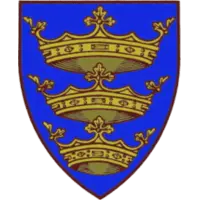
The club’s first official shirt crest appeared in 1935 and featured the familiar three crowns emblem of Kingston upon Hull. The design reflected the club’s close connection to the city and mirrored the civic symbol that had long been associated with Hull.
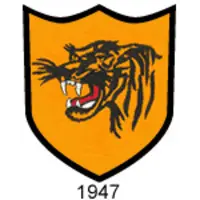
Following that season, the club once again played without a regular badge until 1947, when a new crest was introduced featuring a tiger’s head on an amber-coloured shield. This marked the first appearance of the tiger as the club’s primary symbol and established an identity that would endure for decades.
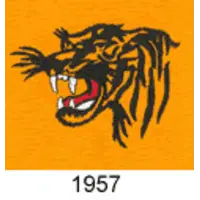
In 1957, the design was simplified to feature only the tiger’s head, creating a cleaner and more distinctive emblem. The tiger quickly became synonymous with Hull City and reinforced the club’s long-established nickname.
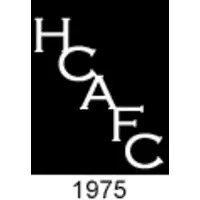
This remained in use until 1975, when the club adopted a minimalist logo consisting of the initials “HCAFC.” The monogram represented a modern departure from the traditional tiger imagery but lasted only four years.
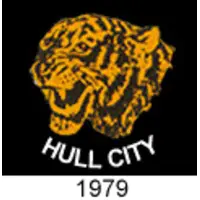
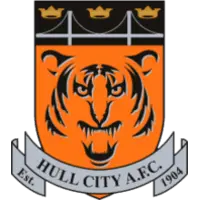
In 1979, Hull City returned to a more traditional identity with a crest featuring a tiger’s head accompanied by the club’s name beneath it.
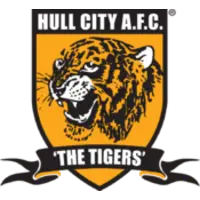
A new crest was introduced in 2001, featuring a tiger’s head within an amber shield. The design incorporated both the club’s name and its nickname, “The Tigers,” creating a strong visual identity that combined modern branding with established tradition. The badge became one of the most recognisable symbols in the club’s history and remained in use for more than fifteen years.
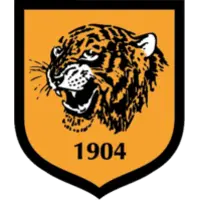
A controversial change arrived in June 2014 when Hull City unveiled a redesigned crest that removed the club’s name entirely, leaving only the tiger. This made Hull one of the few English league clubs without its official name displayed on its badge. The redesign formed part of a wider attempt to emphasise the club’s Tigers identity, though it proved divisive among supporters.
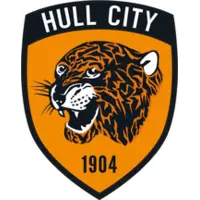
At the beginning of the 2019–20 season, Hull City introduced a new crest. The updated design retained the tiger as the central feature but restored the club’s name to the badge and adopted a revised shield shape. The redesign was generally viewed as a return to a more traditional identity while maintaining a modern appearance.
Today, Hull City’s crest remains firmly centred around the tiger, a symbol that has represented the club for more than seventy years. While the badge has undergone numerous changes in style and presentation, the tiger has remained the enduring emblem of Hull City AFC and a powerful representation of the club’s identity, heritage and connection to the city of Kingston upon Hull.
Hull City AFC Club History
Hull City Association Football Club was founded in 1904 in Kingston upon Hull, a city traditionally known for rugby league rather than association football. Despite being established in one of England’s strongest rugby regions, Hull City gradually developed into the city’s leading football club and became an important part of the sporting identity of East Yorkshire.
The club joined the Football League in 1905 and spent much of its early history competing in the lower divisions of English football. Although Hull regularly challenged for promotion, success at the highest level proved elusive for much of the twentieth century. The Tigers developed a loyal support base and established themselves as a well-supported regional club despite never reaching the top flight during this period.
For 56 years, Hull City played at Boothferry Park, which served as the club’s home from 1946 until 2002. The stadium witnessed many memorable moments and became synonymous with the club’s identity. In 2002, Hull moved to the modern KC Stadium, now known as the KCOM Stadium, providing improved facilities and helping to support the club’s future ambitions.
A remarkable rise through the divisions followed during the 2000s. Under manager Phil Brown, Hull achieved consecutive promotions from League One and the Championship, securing a place in the Premier League for the first time in the club’s history in 2008. The achievement was particularly significant given that Hull had spent more than a century outside English football’s top division.
The club enjoyed several memorable seasons in the Premier League and achieved one of the greatest moments in its history in 2014 when it reached the FA Cup Final for the first time. Hull led Arsenal 2–0 early in the match before eventually losing 3–2 after extra time. Despite the defeat, the cup run secured qualification for the UEFA Europa League, marking Hull City’s first appearance in European competition.
One of the most controversial episodes in the club’s modern history occurred in 2013 when owner Assem Allam proposed changing the club’s name to “Hull Tigers.” The proposal was intended to strengthen the club’s commercial appeal, but it was met with strong opposition from supporters, who argued that it threatened the club’s traditions and identity. Following widespread protests and intervention from football authorities, the proposed name change was ultimately rejected.
Hull City has experienced several promotions and relegations during the twenty-first century, moving between the Premier League, Championship and League One. Despite these fluctuations, the club has remained one of the most prominent football institutions in Yorkshire and continues to compete at a high level within the English league system.
Hull City’s principal rivalry is with Leeds United, a fixture that many supporters regard as the club’s biggest rivalry. Strong rivalries also exist with fellow Yorkshire clubs, particularly Sheffield United and Sheffield Wednesday, reflecting the competitive nature of football within the county.
Today, Hull City remains one of Yorkshire’s most recognisable football clubs. From its beginnings in a rugby-dominated city to reaching the Premier League and an FA Cup Final, the Tigers have built a history defined by perseverance, ambition and strong local support.