Historical Crests FC Schalke 04
Name: FC Schalke 04
Nickname(s): Die Königsblauen (The Royal Blues), Die Knappen (The Miners)
Founded: 1904
Stadium: Veltins Arena
Capacity: 62,271
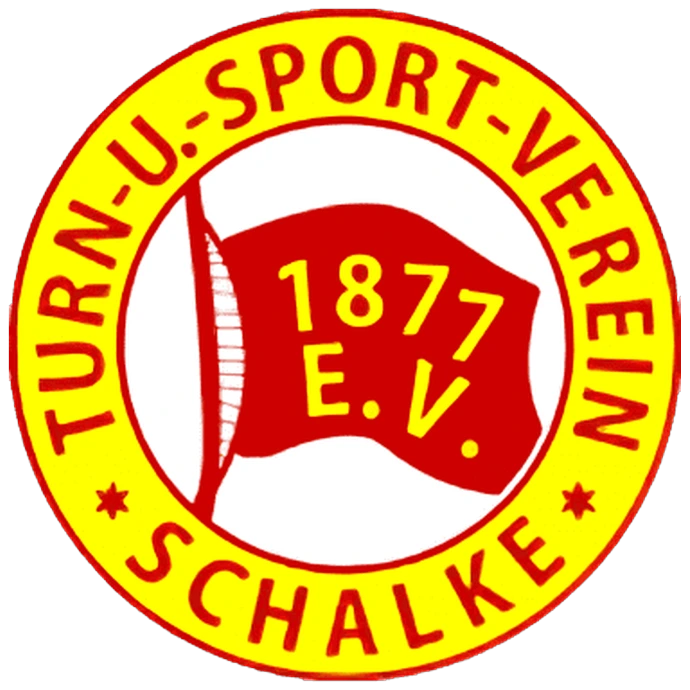
1919-1924
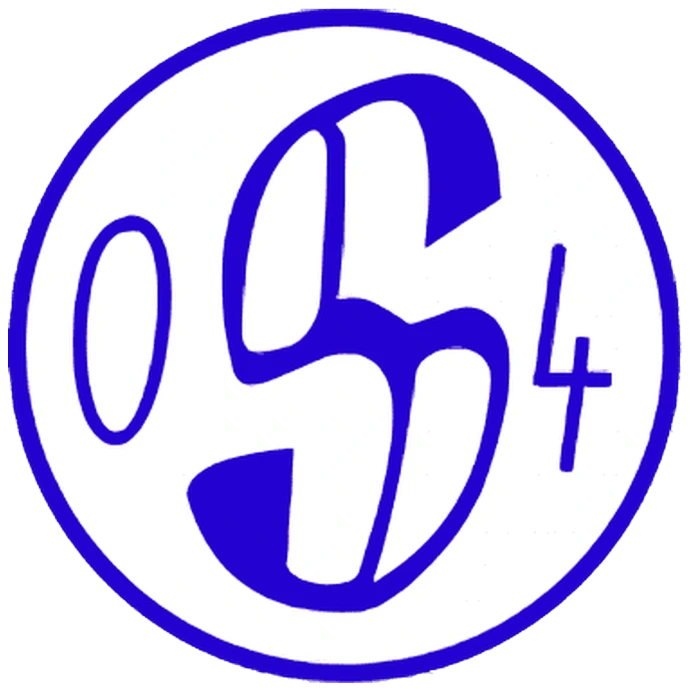
1929-1945
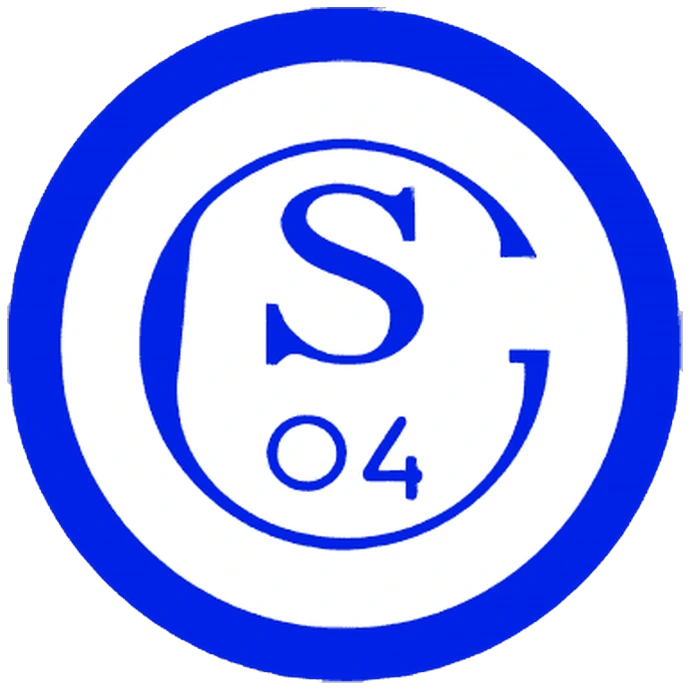
1945-1958
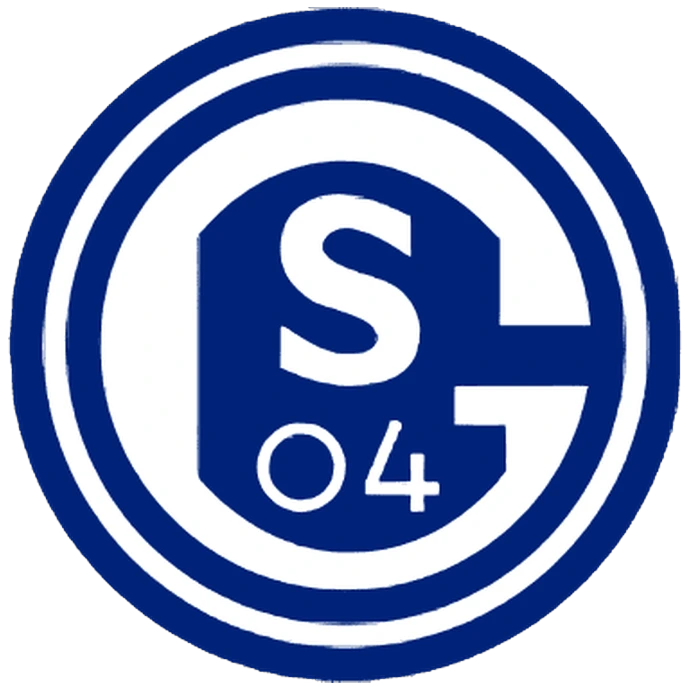
1958-1963
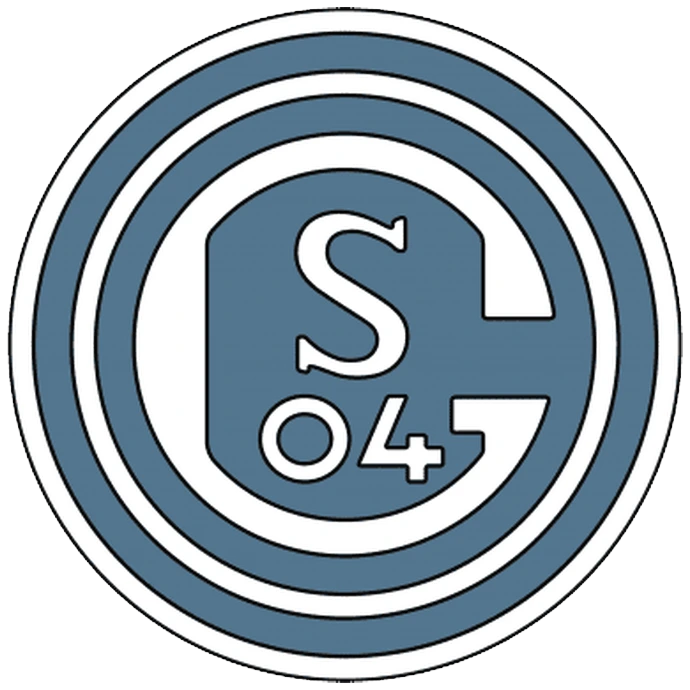
1963-1965
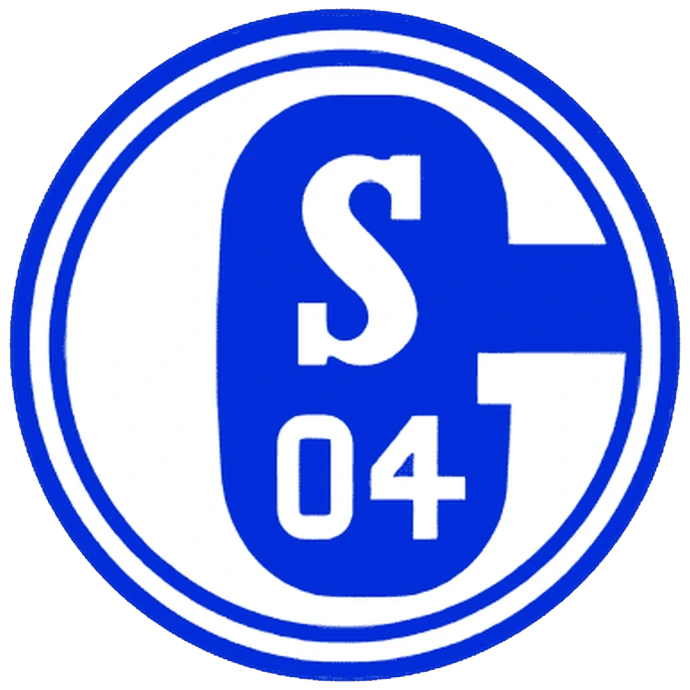
1965-1968
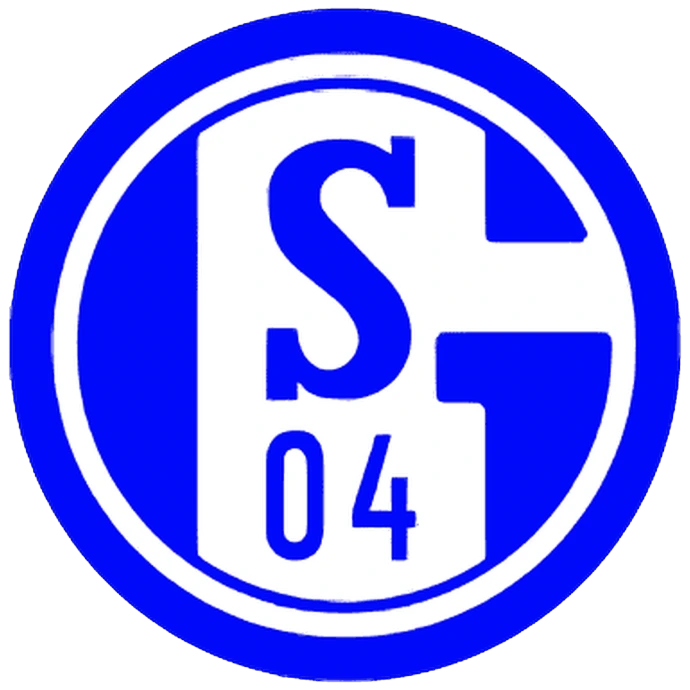
1968-1971
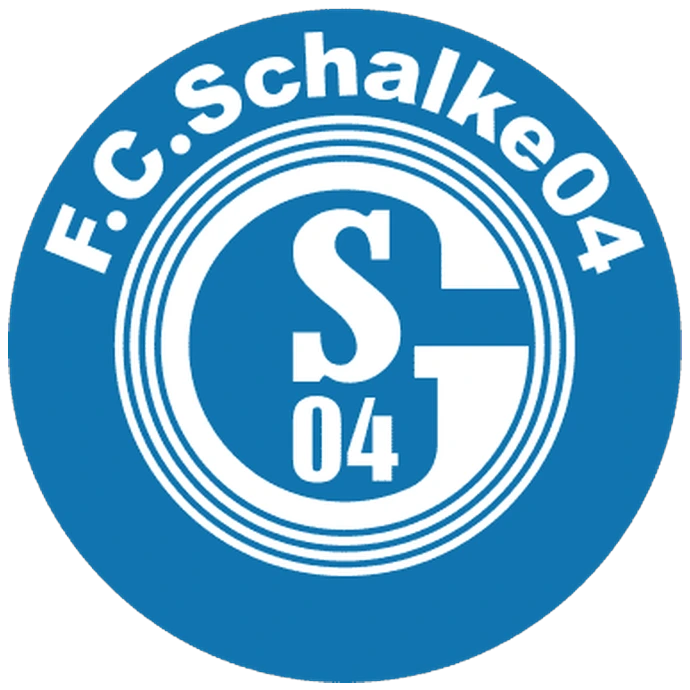
1971-1978
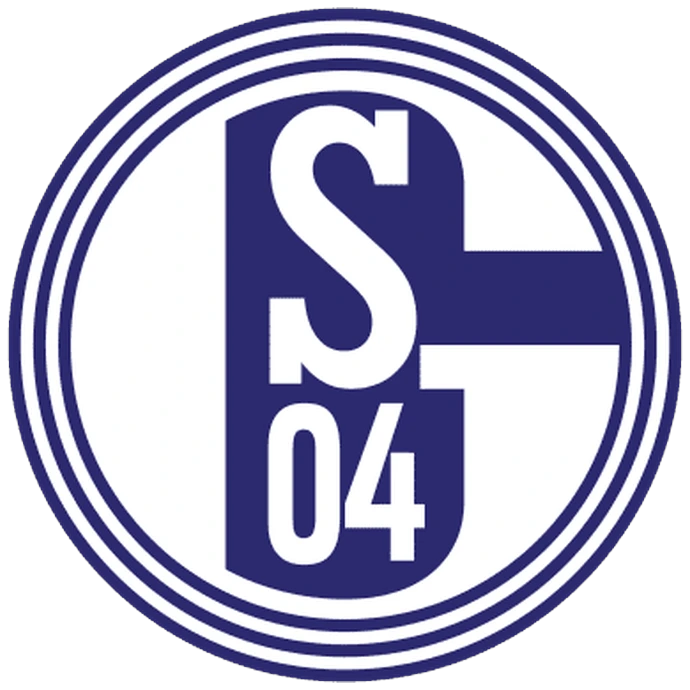
1978-1995
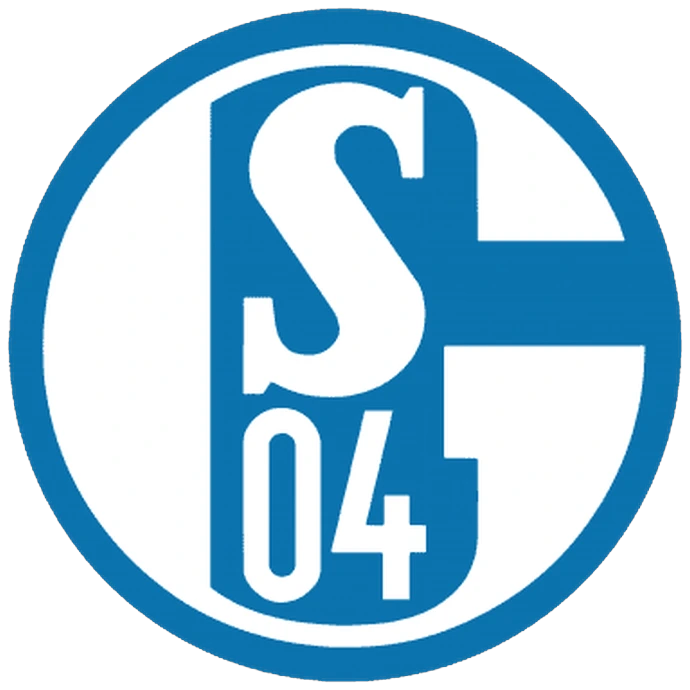
1995-Present
FC Schalke 04 Crest History
In the club’s earliest years, following its foundation in 1904, FC Schalke 04 did not possess an official football crest. Instead, simple monograms featuring the letters "S" or "SG" were occasionally used on club documents and playing shirts, reflecting the club’s identity before football badges became commonplace.
During the 1920s and 1930s, Schalke introduced its first recognisable emblems incorporating the initials "S04" within a circular design. These early crests underwent several refinements but established the visual identity that would remain closely associated with the club throughout its history. The use of the number 04, representing the club’s foundation year of 1904, became a permanent feature of the badge.
Following the Second World War, FC Schalke 04 modernised its visual identity while retaining its traditional royal blue and white colours. Throughout the 1950s and early 1960s, the crest became cleaner and more geometric, with the familiar circular shape and the intertwined S04 monogram becoming increasingly standardised. These refinements helped create one of the most distinctive and recognisable club emblems in German football.
Between the 1960s and the late 1970s, Schalke experimented with several variations of the badge. Some versions introduced additional concentric rings, while others altered the proportions of the S04 monogram or adopted lighter shades of blue. Although these changes modernised the appearance, the club remained committed to its traditional circular design and iconic lettering.
During the late 1970s and 1980s, FC Schalke 04 continued refining the crest by simplifying the typography and improving the balance of the circular emblem. The cleaner design enhanced visibility on playing shirts, printed material and club merchandise while preserving the identity supporters had come to recognise.
The modern Schalke crest emerged during the 1990s. The redesign retained the famous S04 monogram within the blue-and-white roundel while refining the proportions, typography and line weights to produce a sharper and more consistent appearance. The updated logo strengthened the club’s visual identity without abandoning its historic design.
FC Schalke 04 Club History
FC Schalke 04 was founded on 4 May 1904 in the mining district of Schalke, Gelsenkirchen, by a group of local schoolboys. Originally known as Westfalia Schalke, the club adopted the name Football Club Gelsenkirchen-Schalke 04 in 1924 and has since become one of Germany's most historic and passionately supported football clubs. Schalke has played its home matches at the Veltins-Arena since 2001, having previously spent almost eight decades at the legendary Glückauf-Kampfbahn and later the Parkstadion. The Veltins-Arena, with a capacity of over 62,000, is renowned for its retractable roof, sliding pitch and outstanding matchday atmosphere.
The club enjoyed its greatest period of domestic success during the 1930s and 1940s. Playing an innovative style known as the Schalker Kreisel, Schalke dominated German football by winning six German championships between 1934 and 1942. The team also lifted the Tschammerpokal, the predecessor of the DFB-Pokal, in 1937, establishing itself as Germany's most successful club before the Second World War.
Following the war, Schalke remained one of Germany's leading clubs and won the 1958 German Championship, defeating Hamburger SV 3–0 in the final. However, the club struggled to maintain the same level of success after the formation of the Bundesliga in 1963. Although Schalke remained a competitive side, major honours became increasingly difficult to achieve during the following decades.
The club experienced a revival during the late 1990s under manager Huub Stevens. Schalke achieved one of the greatest moments in its history by winning the 1996–97 UEFA Cup, defeating Italian giants Inter Milan on penalties after a dramatic two-legged final. The triumph earned the squad the nickname "Eurofighters" and remains one of the club's proudest achievements.
Further domestic success followed in the early 2000s. Schalke won the DFB-Pokal in 2001, 2002 and 2011, while also regularly qualifying for European competitions. Under manager Ralf Rangnick, the club reached the 2010–11 UEFA Champions League semi-finals for the first time, defeating defending champions Inter Milan in a memorable quarter-final before eventually losing to Manchester United.
In recent years, FC Schalke 04 has experienced both success and adversity. Financial difficulties and inconsistent performances led to relegation from the Bundesliga in 2021, ending more than three decades in Germany's top flight. The club responded by winning the 2. Bundesliga title in 2021–22 to secure immediate promotion, although further relegation followed in 2023. After three seasons in the second tier, Schalke completed another remarkable comeback by winning the 2025–26 2. Bundesliga championship under Miron Muslić, sealing automatic promotion back to the Bundesliga.
Schalke supporters are renowned for their loyalty and unwavering backing. The club's fanbase is among the largest in Germany, with the Nordkurve at the Veltins-Arena creating one of the Bundesliga's most impressive atmospheres. Deeply rooted in the industrial heritage of the Ruhr region, Schalke proudly embraces its identity as the club of the miners, reflected in the nickname "Die Knappen."
The club's fiercest rivalry is with local neighbours Borussia Dortmund, a fixture known as the Revierderby, one of the oldest and most intense rivalries in European football. Schalke also shares strong rivalries with fellow Ruhr clubs including VfL Bochum and Rot-Weiss Essen, reflecting the rich footballing tradition of Germany's industrial heartland.
Schalke 04 Pins
Your Dynamic Snippet will be displayed here... This message is displayed because you did not provide enough options to retrieve its content.