Historical Crests FC Energie Cottbus
Name: FC Energie Cottbus
Nickname(s): Die Lausitzer (The Lusatians)
Founded: 1966 (continuing the football tradition of SC Cottbus, founded in 1963)
Stadium: LEAG Energie Stadion (formerly Stadion der Freundschaft)
Capacity: 22,528
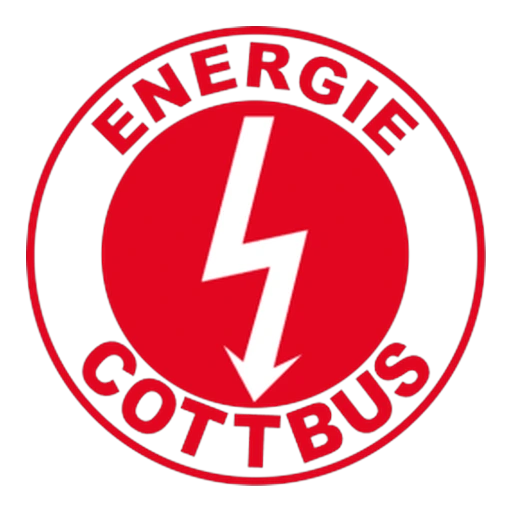
1966-1990
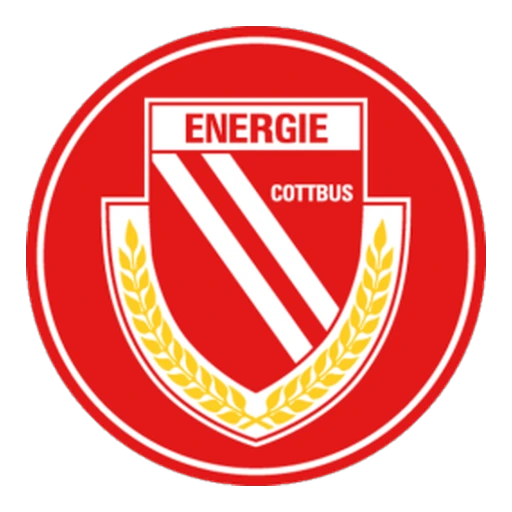
1990-2005
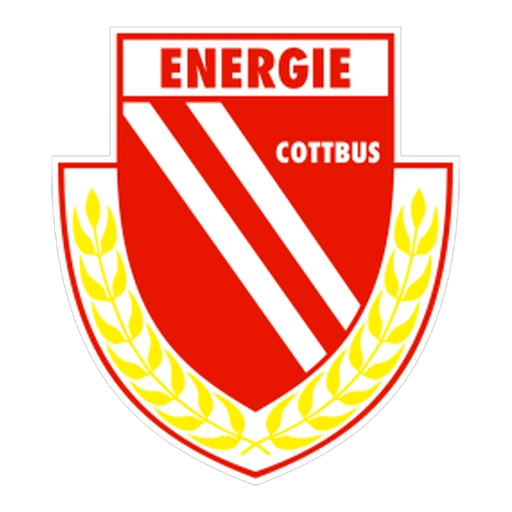
2005-2025
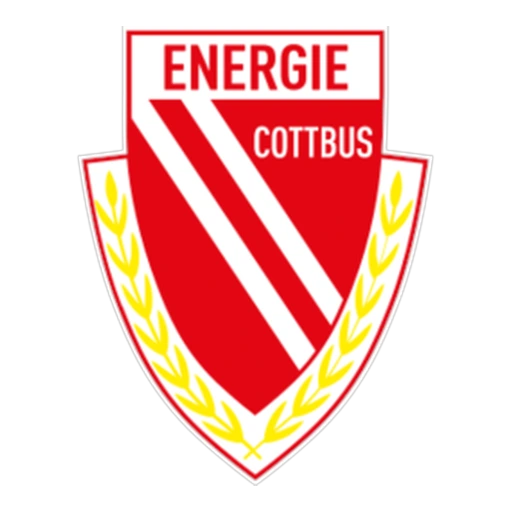
2025-2026
FC Energie Cottbus Crest History
Founded in 1966 as FC Energie Cottbus, the club's first official crest featured a simple circular badge displaying a white lightning bolt on a red background, surrounded by the words "Energie Cottbus". The lightning bolt symbolised the region's lignite mining and energy industry, from which the club took its name, while the bold red-and-white colour scheme established a distinctive identity within East German football.
Following German reunification in 1990, Energie Cottbus introduced a completely redesigned crest reflecting the club's transition into the unified German football system. The new badge featured a red shield with two white diagonal stripes beneath the word "Energie" and the smaller inscription "Cottbus", framed by a golden laurel wreath and enclosed within a circular red border. The redesign created a more traditional football crest while retaining the club's familiar colours.
A significant modernisation arrived in 2005, when the circular border was removed, allowing the shield and laurel wreath to become the central focus of the badge. Cleaner lines, brighter colours and refined proportions gave the crest a more contemporary appearance while preserving the iconic shield, diagonal stripes and wreath that had become closely associated with the club's rise to the Bundesliga.
In 2025, Energie Cottbus introduced a subtle refinement of the modern crest. The outlines were sharpened, the laurel wreath simplified and the proportions adjusted to improve clarity across digital media and contemporary branding. Although the changes were minimal, they produced a cleaner and more balanced design while remaining faithful to the club's traditional visual identity.
The current crest represents a careful evolution of the badge first introduced after reunification. Featuring the distinctive red shield, white diagonal stripes and golden laurel wreath, it successfully combines the club's industrial heritage with a modern design.
FC Energie Cottbus Club History
Founded on 31 January 1966, FC Energie Cottbus was established following the reorganisation of football in East Germany, succeeding SC Cottbus as the city's leading football club. Taking its name from the energy industry that dominated the Lusatia region, particularly its lignite mining and power generation, Energie quickly became a symbol of the industrial heart of south-eastern Brandenburg. From its earliest years, the club established itself as one of the strongest teams in East German football.
Throughout the 1970s and 1980s, Energie Cottbus competed primarily in the DDR-Liga, the second tier of East German football, while occasionally challenging for promotion to the DDR-Oberliga. Although major honours proved elusive during the East German era, the club built a passionate local following and developed a reputation for resilience and strong regional identity.
Following German reunification in 1990, Energie entered the unified German league system and gradually climbed through the divisions under the guidance of legendary manager Eduard Geyer. The club achieved a historic milestone in 1997 by becoming the first former East German club to reach the DFB-Pokal Final after reunification. Although Energie lost 2–0 to VfB Stuttgart in Berlin, the achievement marked the club's arrival on the national stage.
The greatest chapter in the club's history followed soon afterwards. In 2000, Energie Cottbus earned promotion to the Bundesliga for the first time, becoming the first club from the former East Germany to reach Germany's top flight through the unified league system. Despite operating with one of the league's smallest budgets, Energie competed in the Bundesliga for three consecutive seasons before returning in 2006 for a further three-year spell. During this period, the club became renowned for its fighting spirit and for fielding teams composed of players from a remarkable number of different nationalities.
Following relegation in 2009, Energie experienced a steady decline through the German league pyramid, dropping from the 2. Bundesliga to the 3. Liga and later the Regionalliga Nordost. Despite financial challenges and years outside professional football, the club remained one of the most prominent football institutions in eastern Germany, supported by a loyal fanbase throughout the Lusatia region.
The club's fiercest rivalry is with Dynamo Dresden, while matches against Hansa Rostock, 1. FC Magdeburg and Union Berlin also carry considerable historical significance. Regional encounters with FSV Zwickau and BFC Dynamo further reflect Energie's enduring place within the rich footballing tradition of eastern Germany.
Energie Cottbus Pin
Your Dynamic Snippet will be displayed here... This message is displayed because you did not provide enough options to retrieve its content.