Historical Crests 1. FC Köln
Name: 1. FC Köln
Nickname(s): Die Geißböcke (The Billy Goats)
Founded: 1948
Stadium: RheinEnergieSTADION
Capacity: 50,000
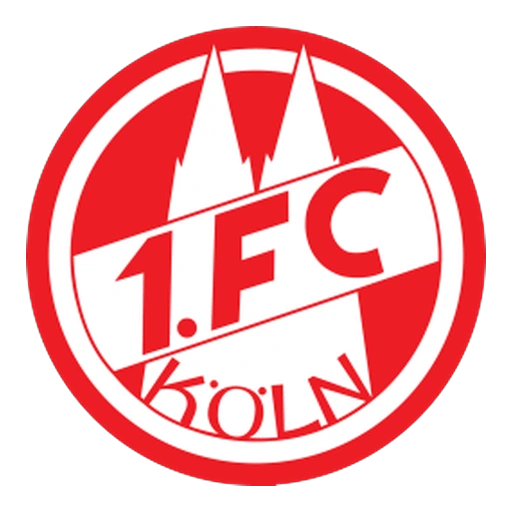
1948-1950
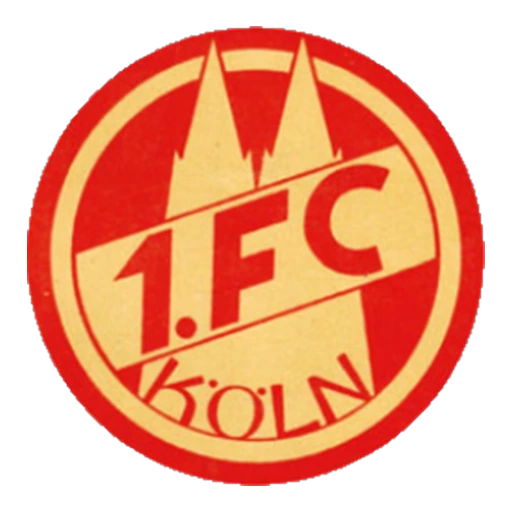
1948-1950 (2)
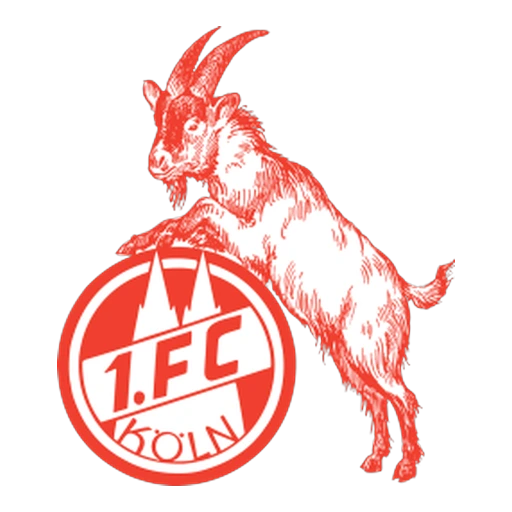
1950-1973
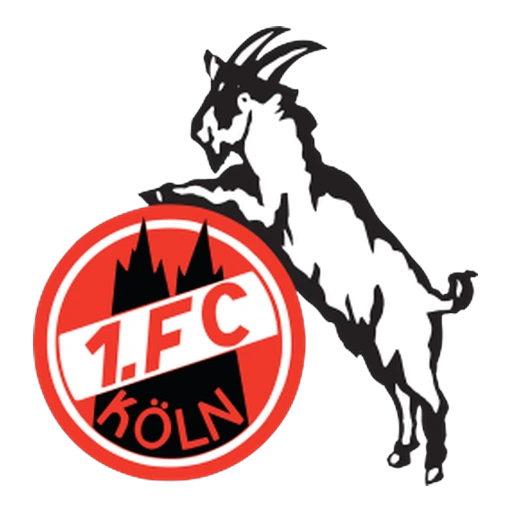
1973-1980
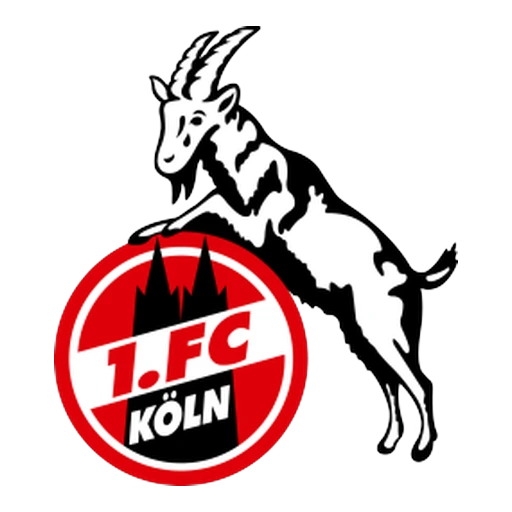
1990-2000
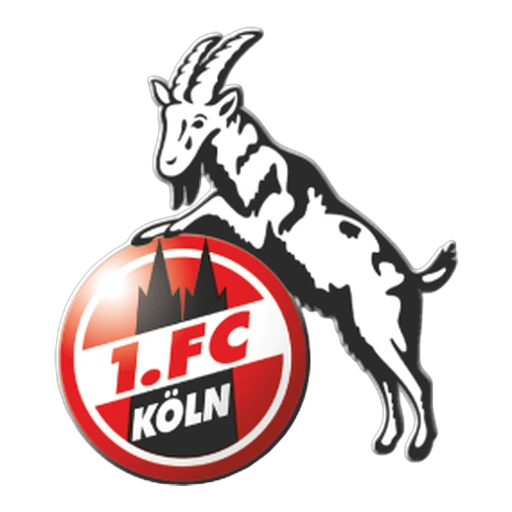
2000-2014
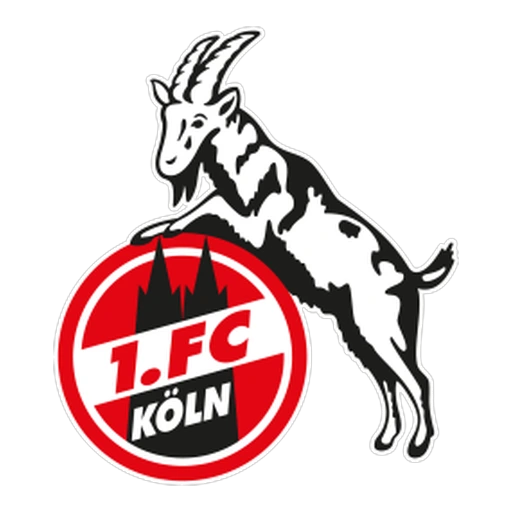
2014-Present
1. FC Köln Crest History
Following the club's formation in 1948 through the merger of Kölner BC 01 and SpVgg Sülz 07, 1. FC Köln adopted a simple circular badge featuring the club's name and traditional red-and-white colours. The original emblem reflected the newly established club's identity but did not yet include the symbols that would later become synonymous with 1. FC Köln.
A defining moment in the club's visual history came in 1950, when circus director Carola Williams presented the club with a live billy goat during Cologne's Carnival celebrations. Named Hennes after legendary player and coach Hennes Weisweiler, the goat quickly became the club's official mascot and inspired the nickname Die Geißböcke ("The Billy Goats"). Shortly afterwards, the goat was incorporated into the club crest, standing proudly above the badge and becoming one of the most distinctive symbols in German football.
Throughout the 1950s and 1960s, the crest evolved into the design that remains instantly recognisable today. The circular badge was combined with the silhouette of the Cologne Cathedral (Kölner Dom), whose twin spires symbolise the club's deep connection to the city. Together with the goat and the club's red-and-white colours, the cathedral established the three defining elements of Köln's visual identity.
In 1973, the club introduced a refined version of the crest featuring cleaner typography, a more detailed illustration of Hennes and a more balanced composition. The cathedral silhouette was sharpened, while the circular badge and overall proportions were modernised to create a clearer and more consistent identity without altering the club's traditional symbolism.
Further refinements followed during the late 1990s and early 2000s as the club adapted its branding for print and digital media. The artwork was simplified, the typography improved and the goat illustration subtly modernised, while preserving the familiar appearance supporters had embraced for decades.
The current crest, introduced in 2014, represents a careful evolution rather than a complete redesign. Minor adjustments to the colours, outlines and proportions improved clarity across modern applications while maintaining the iconic combination of the billy goat, Cologne Cathedral and circular badge. Unlike many clubs that have undergone major visual rebranding, 1. FC Köln has remained committed to preserving one of German football's most enduring and traditional crests.
1. FC Köln Club History
When the Bundesliga was established in 1963, 1. FC Köln became one of its sixteen founding members and immediately made history by winning the league's inaugural championship in the 1963–64 season. Throughout the 1960s and 1970s, the club established itself among Germany's elite, regularly competing for domestic honours while playing an attractive brand of football under legendary figures such as Hennes Weisweiler.
The most successful period in the club's history came during the late 1970s. After lifting the DFB-Pokal in 1977, Köln achieved the first domestic double in club history by winning both the Bundesliga and the DFB-Pokal during the 1977–78 season. Success continued into the 1980s with another DFB-Pokal triumph in 1983, while the club also enjoyed memorable European campaigns, reaching the semi-finals of the European Cup in 1979 and the UEFA Cup in 1986.
Following these successes, 1. FC Köln entered a more challenging period during the 1990s. Financial instability and inconsistent performances led to the club's first-ever relegation from the Bundesliga in 1998. Over the following two decades, Köln experienced several promotions and relegations between the Bundesliga and the 2. Bundesliga, earning a reputation as one of German football's best-supported "yo-yo clubs" while maintaining one of the country's largest and most loyal fanbases.
The club enjoyed a revival during the 2010s under manager Peter Stöger, returning to the Bundesliga and qualifying for the UEFA Europa League in 2017 for the first time in 25 years. Although further relegations followed, Köln repeatedly bounced back, demonstrating the resilience and passion that have long defined the club and its supporters.
Its fiercest rivalry is with Bayer 04 Leverkusen in the Rheinland Derby, while matches against Borussia Mönchengladbach and Fortuna Düsseldorf also rank among the club's most fiercely contested regional encounters.
FC Köln Pins
Your Dynamic Snippet will be displayed here... This message is displayed because you did not provide enough options to retrieve its content.