The crest history of Criciúma Esporte Clube is unusual because it reflects not only stylistic changes but also a major transformation in the club's identity. Originally founded as Comerciário Esporte Clube, the club spent its first three decades predominantly in blue and white before adopting the name Criciúma and eventually the distinctive yellow, black and white identity associated with the Tigre today.
The original 1947–1948 emblem was a circular, globe-like design. Thin blue lines divided the white circle into sections, while the letters CEC, representing Comerciário Esporte Clube, appeared prominently across its centre. It was a simple and highly distinctive first symbol for the newly founded club.
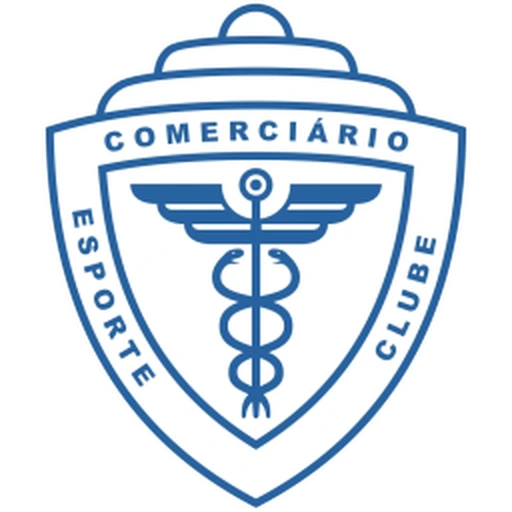
In 1948, Comerciário introduced a much more conventional shield. The 1948–1968 crest featured the full name “Comerciário Esporte Clube” around a blue-and-white shield. At its centre was a caduceus-like commercial symbol, reflecting the club's origins and its association with the commercial community of Criciúma.
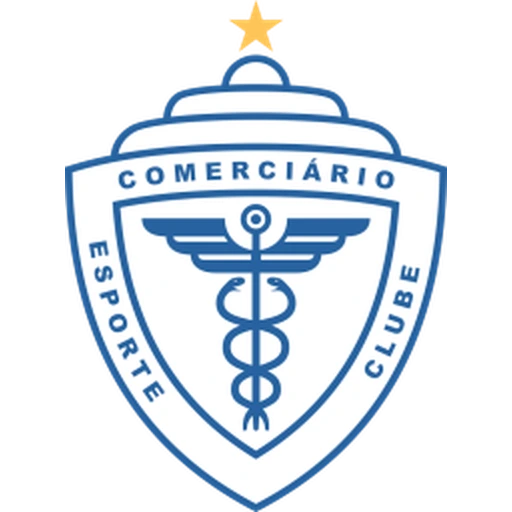
The 1968–1978 version retained essentially the same composition but added a gold star above the shield. The fundamental blue-and-white identity and central commercial symbol remained unchanged.
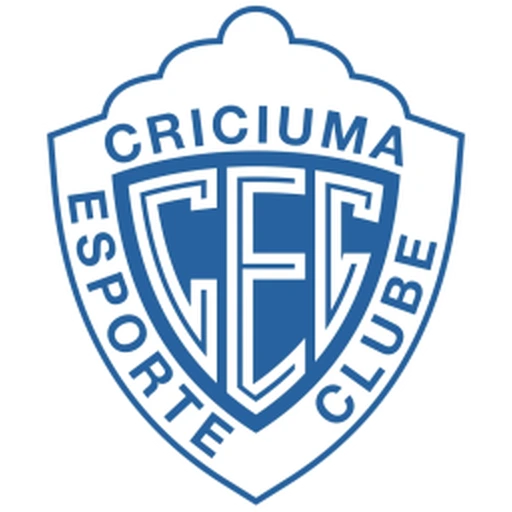
A major turning point came in 1978, when Comerciário was reorganised and renamed Criciúma Esporte Clube. One of the first crests under the new identity replaced the Comerciário name with “Criciúma Esporte Clube” and introduced a large stylised CEC monogram inside the shield. This version, used from approximately 1978 to 1991, maintained the traditional blue-and-white colours despite the change of name.
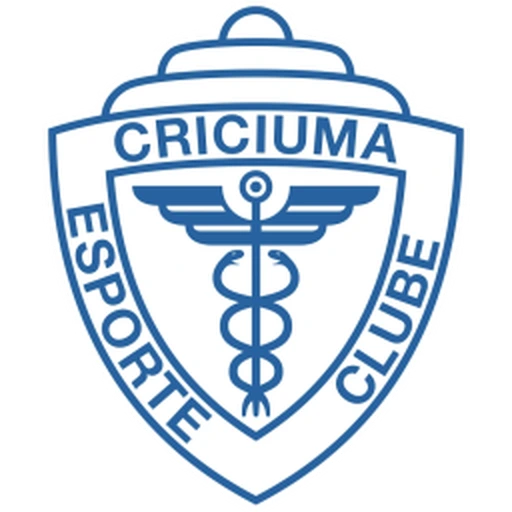
Another 1978 variation retained the older central commercial symbol while replacing the word Comerciário with Criciúma. It therefore served as a visual bridge between the original Comerciário identity and the newly established Criciúma Esporte Clube.
The most dramatic transformation occurred in 1991. Criciúma abandoned the traditional blue-and-white visual identity and adopted the yellow, black and white colours that define the club today. The new 1991–1992 emblem also abandoned the conventional shield. Instead, it featured a geometric arrangement of yellow forms outlined in black, resembling a stylised crown or radiating structure, with “CRICIÚMA E.C.” written underneath. Four black stars appeared above the design.
From 1992 to 2002, the basic new emblem was retained, but the arrangement of the stars was modified. A central gold star was placed above the design, surrounded by four black stars. The gold star became particularly significant following Criciúma's greatest achievement, the 1991 Copa do Brasil, when the club defeated Grêmio to become the first club from Santa Catarina to win the competition.
The 2002–2005 crest simplified the presentation considerably. Only two gold stars appeared above the emblem, while the yellow-and-black geometric symbol and Criciúma E.C. wordmark remained unchanged.
Between 2005 and 2007, the structure remained almost identical, with minor adjustments to the proportions, lettering and placement of the two stars.
The 2007–2025 version introduced three gold stars above the crest. The fundamental design established in 1991 remained intact: four yellow geometric sections outlined in black, separated by white spaces and positioned above the bold CRICIÚMA E.C. name. By this stage, the emblem had become firmly associated with the club's modern identity and its nickname, Tigre.
In 2026, Criciúma introduced a refreshed version of its historic modern crest. The 2026–Present badge retains the familiar geometric structure but uses a brighter yellow, heavier black outlines and a cleaner, more compact appearance. The lettering was updated to “CRICIÚMA EC”, while three black stars now appear above the emblem.
Criciúma EC Club History
Criciúma Esporte Clube was founded on 13 May 1947 in Criciúma, Santa Catarina, originally under the name Comerciário Esporte Clube. The club was created by members of the city's commercial community and initially played in blue and white, colours that remained part of its identity for more than three decades.
Comerciário quickly became an important force in southern Santa Catarina football. Its first major breakthrough came in 1968, when the club won the Campeonato Catarinense, establishing itself among the leading teams in the state. Financial difficulties subsequently affected the club, however, and its football activities were interrupted for several years during the 1970s.
The club was revived in 1978 and renamed Criciúma Esporte Clube, strengthening its identification with the city it represented. During the following decade Criciúma gradually developed into one of Santa Catarina's strongest teams, winning further state championships and beginning to establish a presence in Brazil's national competitions.
An important transformation occurred in the 1980s, when Criciúma adopted the yellow, black and white colours that would become synonymous with the club. This new identity also gave greater prominence to the nickname Tigre (The Tiger) and helped create the distinctive image by which Criciúma is recognised today.
The greatest period in the club's history arrived in the early 1990s under coach Luiz Felipe Scolari. In 1991, Criciúma produced one of the most remarkable achievements in Brazilian football by winning the Copa do Brasil. The club defeated Grêmio in the final, becoming the first club from Santa Catarina to win a major national competition.
Victory in the Copa do Brasil qualified Criciúma for the 1992 Copa Libertadores. Despite being a newcomer to South America's most prestigious club competition, the Tigre performed impressively, advancing to the quarter-finals before being eliminated by São Paulo, who went on to win the tournament. This campaign remains one of the defining chapters in Criciúma's history.
The club added another important national honour in 2002, when it won the Campeonato Brasileiro Série B, earning promotion back to Brazil's top division. Criciúma later won the Série C in 2006, demonstrating its ability to recover after periods of decline and return to the higher levels of Brazilian football.
Throughout the following decades, Criciúma moved between Série A, Série B and Série C, while remaining one of the traditional powers of the Campeonato Catarinense. The club has accumulated numerous state championships and developed a reputation as one of southern Brazil's most resilient football institutions.
Criciúma plays its home matches at the Estádio Heriberto Hülse, a compact and atmospheric stadium closely associated with the club and its supporters. The ground is particularly recognisable for its yellow-and-black surroundings and has become an important part of Criciúma's football identity.
The club's principal rivalry is with Joinville, with their encounters traditionally regarded as one of the major clashes in Santa Catarina football. Criciúma also has important state rivalries with Avaí, Figueirense and Chapecoense, particularly through repeated battles for the Campeonato Catarinense and places in Brazil's national divisions.