Nickname(s):Timbu(The Opossum),Alvirrubro(The Red and White)
Founded:1901
Stadium:Estádio Eládio de Barros Carvalho(Estádio dos Aflitos)
Capacity:22,856
1901-1903
1931-1969
1969-1995
1996-2001
2002-2008
2008-2010
2010-Present
Clube Náutico Capibaribe Crest History
The crest history of Clube Náutico Capibaribe reflects both the club’s origins as a sporting institution centred on rowing and nautical activities and its later development into one of the traditional football powers of Pernambuco. Throughout its evolution, three elements have become particularly important: the club’s red-and-white colours, the CNC initials and symbols representing its sporting heritage.
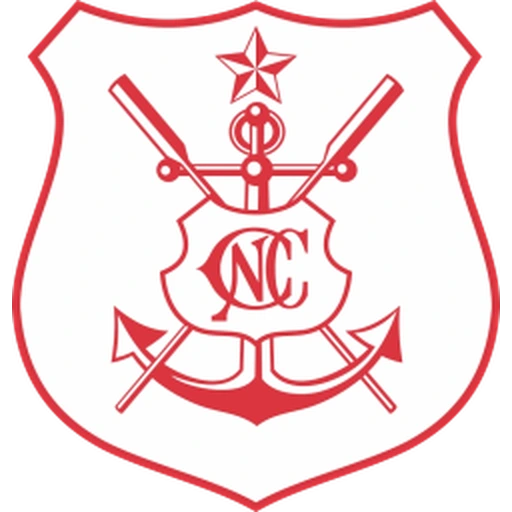
The earliest crest shown, used from 1901 to 1903, strongly reflected Náutico’s origins as a nautical club. A traditional white shield outlined in red contained an elaborate collection of sporting and maritime symbols. Crossed oars, an anchor and a central CNC monogram dominated the design, while additional decorative elements emphasised the club's connection with rowing rather than football.
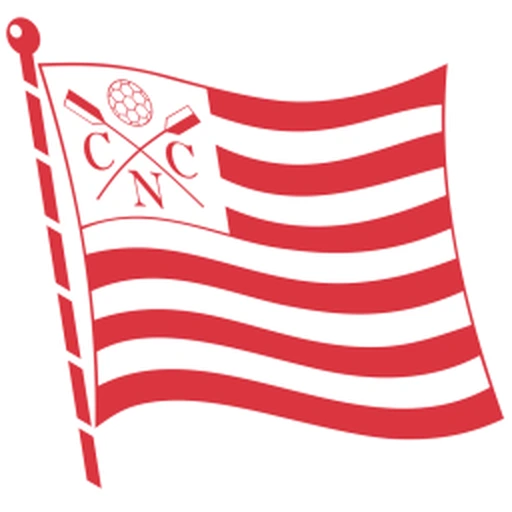
By the period represented by the 1931–1969 emblem, Náutico had developed a very different visual identity. Instead of a conventional shield, the badge took the form of a red-and-white striped flag. In its upper-left corner appeared the intertwined CNC initials, accompanied by crossed sporting implements and a football. The horizontal red-and-white stripes established the Alvirrubro colour combination that remains central to Náutico today.
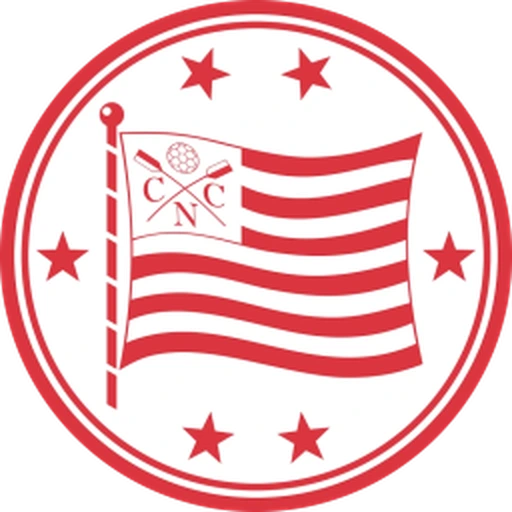
The 1969–1995 crest introduced the circular format that would become the foundation of the modern badge. The traditional striped flag remained at the centre, while the entire composition was enclosed within a double red circle. Five red stars were positioned around the flag, commemorating Náutico's historic sequence of five consecutive Campeonato Pernambucano championships from 1963 to 1967. The club would subsequently extend that run to six consecutive titles in 1968, an achievement unique in Pernambuco football.
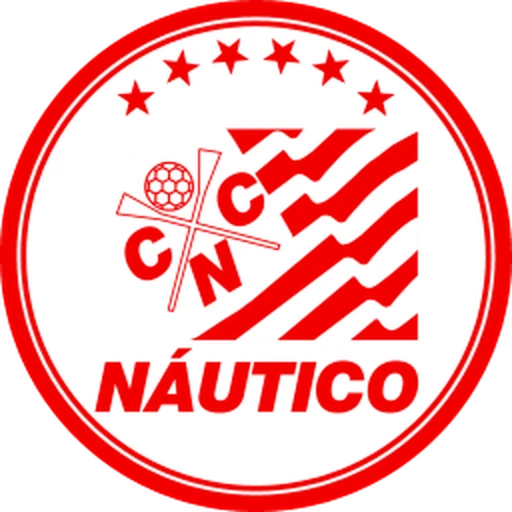
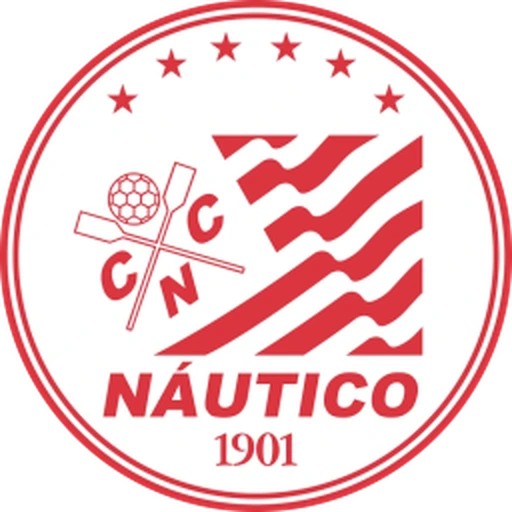
A substantial redesign arrived in 1996. The 1996–2001 crest retained the circular structure but transformed the central imagery. The traditional flag became a more abstract series of red diagonal and wavy stripes, while the letters C, N and C appeared around crossed oars and a football. The name NÁUTICO was displayed prominently underneath. Stars were arranged across the upper section of the badge.
Between 2002 and 2008, the same basic composition was refined. The red lines became thinner and the badge gained a lighter, cleaner appearance. The foundation year 1901 was added beneath the Náutico name, strengthening the connection with the club's long history.
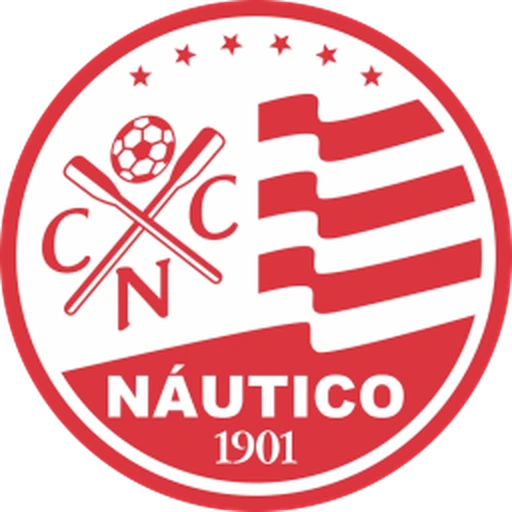
The 2008–2010 version reorganised the design more dramatically. The crossed oars, football and CNC initials occupied the left side of the badge, while the red-and-white flag motif was simplified into three broad waving stripes on the right. Six stars appeared across the upper part of the circle, now clearly referencing the extraordinary six consecutive Pernambuco championships won from 1963 through 1968.
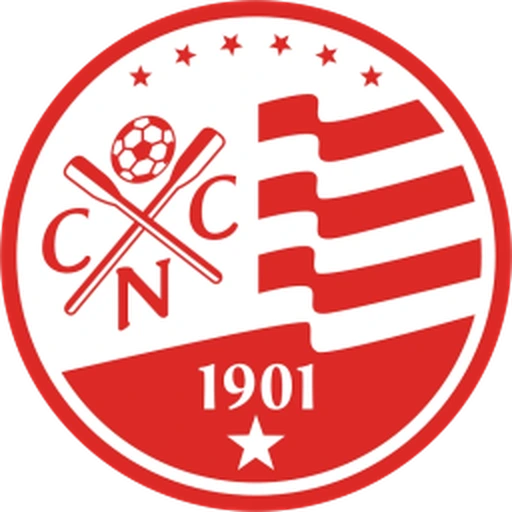
A further redesign produced the 2010–Present crest. The circular construction and nautical imagery were retained, but the composition became more balanced and distinctive. The crossed oars, football and CNC initials remain in the upper-left section, while the stylised red-and-white flag occupies the right side. The foundation year 1901 is prominently displayed within a solid red lower section.
The modern badge also retains six small stars across the top, commemorating the six consecutive Campeonato Pernambucano titles of 1963, 1964, 1965, 1966, 1967 and 1968. A larger white star appears beneath the foundation year, giving the lower portion of the emblem additional visual emphasis.
Clube Náutico Capibaribe Club History
Clube Náutico Capibaribe was founded on 7 April 1901 in Recife, Pernambuco, although its origins can be traced to a group of rowing enthusiasts who had already been organising nautical activities in the city during the late nineteenth century. As its name suggests, Náutico began primarily as a rowing and water-sports club, and this heritage remains visible in the crossed oars incorporated into its crest.
Football was introduced during the club's early years and gradually became Náutico's most important sport. The team adopted the distinctive red-and-white colours, giving rise to the nickname Alvirrubro. Náutico subsequently became one of the three traditional football powers of Recife alongside Sport Club do Recife and Santa Cruz Futebol Clube.
Náutico won its first Campeonato Pernambucano in 1934, beginning a long history of success in Pernambuco football. Further championships followed during the 1930s, 1940s and 1950s, establishing the club as a permanent challenger for state supremacy.
The greatest period in Náutico's history arrived during the 1960s. Beginning in 1963, the Timbu won an extraordinary six consecutive Campeonato Pernambucano titles from 1963 through 1968. No other club has matched this sequence in the history of the competition, and the achievement became such an important part of Náutico's identity that six stars were later incorporated into its crest.
This dominant team also achieved national prominence. Náutico regularly represented Pernambuco in the Taça Brasil, then one of Brazil's principal national competitions. The club's finest campaign came in 1967, when it reached the national final after overcoming powerful opponents during the tournament. Náutico ultimately finished runner-up to Palmeiras, but the achievement remains one of the greatest national campaigns in the club's history.
The success of the 1960s also brought Náutico into continental football. The club participated in the 1968 Copa Libertadores, becoming one of the early representatives of northeastern Brazil in South America's premier club competition.
After the extraordinary achievements of that generation, Náutico remained an important force in Pernambuco but found national success more difficult to sustain. The club continued to collect state championships while competing at different levels of the Brazilian national league system.
Náutico's historic home is the Estádio Eládio de Barros Carvalho, universally known as the Estádio dos Aflitos. Opened in 1939, the compact stadium became famous for its intense atmosphere and close proximity between supporters and the pitch. For generations of Náutico supporters, the Aflitos became one of the most important symbols of the club.
One of the most dramatic matches in Brazilian football history took place there on 26 November 2005. Náutico faced Grêmio in a decisive Série B match in what became known as the Batalha dos Aflitos — Battle of the Aflitos. Náutico missed two penalties and played against a Grêmio side reduced to seven players, yet Grêmio scored a late goal to win 1–0 and secure promotion. For Náutico, the extraordinary match became a painful but unforgettable chapter of club history.
The club recovered and achieved promotion to Série A in 2006, returning to the highest level of Brazilian football. Náutico remained in the top division for several seasons before being relegated in 2009, beginning another period of movement between Brazil's national divisions.
In 2013, Náutico temporarily left the Aflitos to play at the newly constructed Arena Pernambuco. Although the modern stadium offered significantly greater facilities, many supporters felt that the club had lost part of its traditional identity and home advantage. Náutico eventually returned to the renovated Estádio dos Aflitos in 2018, an emotionally important moment for the club and its supporters.
The following years included both sporting and financial difficulties, but Náutico continued to demonstrate its ability to recover. In 2019, the club won the Campeonato Brasileiro Série C, defeating Sampaio Corrêa in the final and securing a national championship as well as promotion back to Série B.
Náutico's greatest rivalry is with Sport Recife, with their meetings known as the Clássico dos Clássicos. First played in the early twentieth century, it is one of the oldest and most traditional derbies in Brazilian football, built around more than a century of competition for supremacy in Recife and Pernambuco. Náutico's other major rivalry is with Santa Cruz, known as the Clássico das Emoções. Together, Náutico, Sport and Santa Cruz form Recife's historic football triangle, and matches between the three clubs have shaped the history of the Campeonato Pernambucano.