Nickname(s):El Verdolaga(The Green),Ferro (The Railwaymen)
Founded:1904
Stadium:Estadio Arquitecto Ricardo Etcheverri
Capacity:24,442
1904-1932
1932-1943
1943-1962
1962-1983
1983-1986
1986-1998
1998-2004
2004
2005-2010
2010-2011
2011-2017
2017-Present
Ferro Carril Oeste Crest History
The crest history of Ferro Carril Oeste is strongly connected to the club’s railway origins and its traditional green-and-white colours. Unlike many Argentine clubs, Ferro has maintained a remarkably consistent visual identity, with most changes representing refinements of the same basic design rather than complete reinventions.
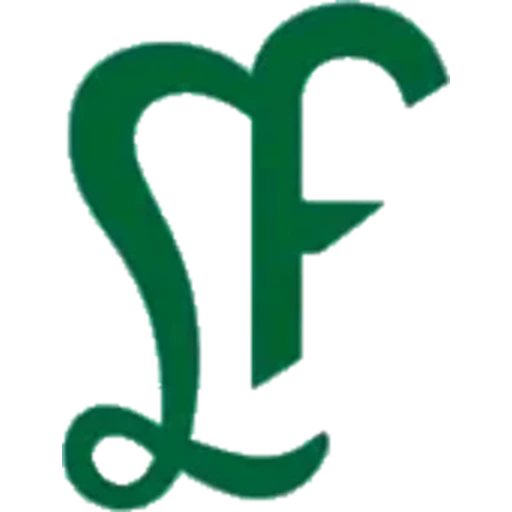
The earliest emblem shown, used from 1904 to 1932, was extremely simple. It consisted solely of an intertwined black monogram formed from the initials associated with Ferro Carril Oeste. The elegant, flowing lettering reflected the decorative style common to sporting institutions during the early twentieth century.
In 1932, the same monogram was retained but changed from black to green. This was an important development because green was becoming firmly established as the colour most closely associated with Ferro. The 1932–1943 emblem therefore provided a direct bridge between the club's earliest identity and the green-and-white image that would subsequently define it.
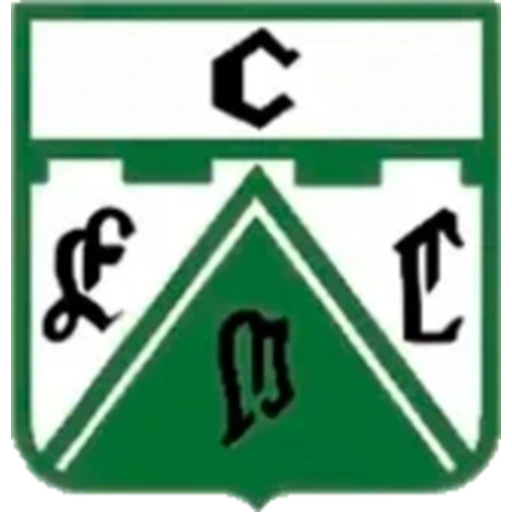
A major transformation arrived in 1943, when Ferro introduced the basic shield that has remained the foundation of its crest ever since. The 1943–1962 design featured a rectangular shield with a pointed lower section, combining white and green areas. Stylised Gothic letters were positioned throughout the badge, representing the components of the club's name.
The most distinctive feature was the large green triangular section rising from the bottom of the shield. Together with the horizontal green band across the upper portion, this established the characteristic geometric structure that remains recognisable in the modern Ferro badge.
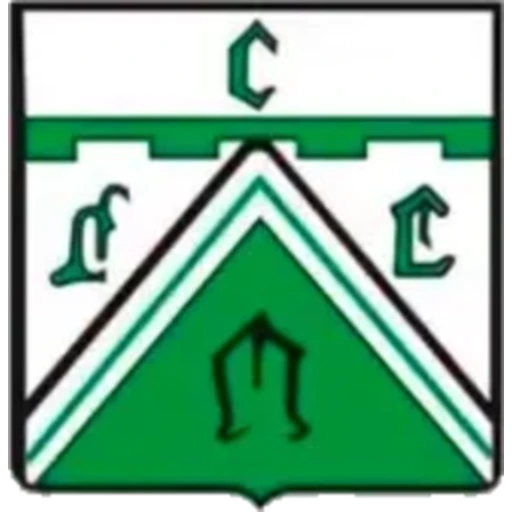
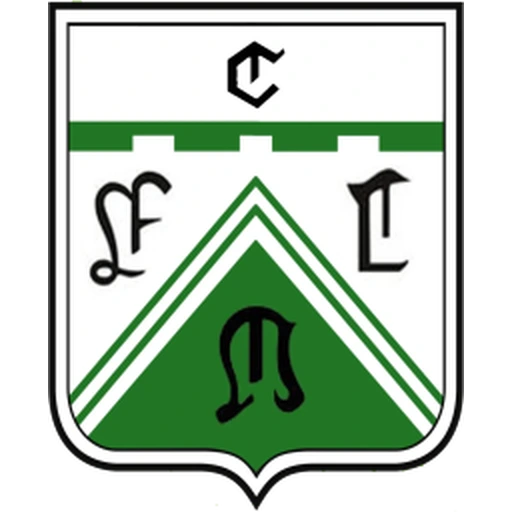
In 1962, the shield was refined. The 1962–1983 version retained the same overall composition but introduced cleaner proportions and a more clearly defined green triangle. White lines running parallel to the sides of the triangle created a layered effect, while the Gothic initials became more evenly distributed across the badge.
Another subtle redesign appeared in 1983. The 1983–1986 crest used a heavier black outline and slightly modified lettering. The green central area became more prominent, producing a stronger and more compact badge.
The 1986–1998 version further strengthened this appearance. The shield received a noticeably heavier black border, while the green horizontal band and triangular centre became more clearly defined. The Gothic lettering remained an essential part of the identity, preserving the historical character of the crest.
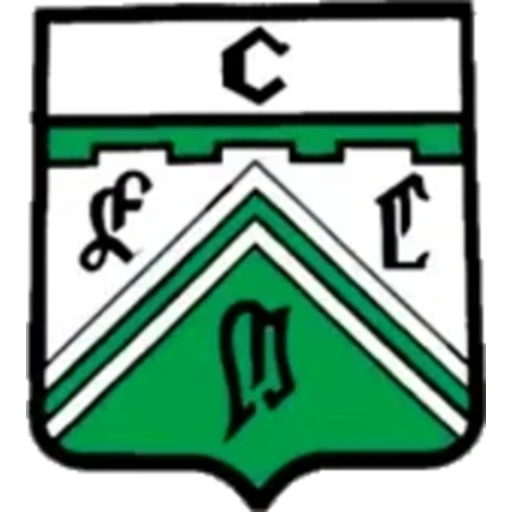
In 1998, Ferro introduced a cleaner interpretation of the traditional shield. The 1998–2004 version used a thinner outer border and more balanced proportions. The pointed bottom of the badge became more pronounced, while the green-and-white geometry was simplified and sharpened.
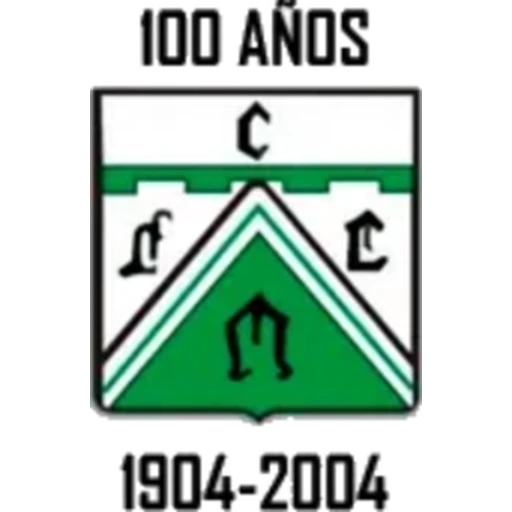
For the club's centenary in 2004, a special commemorative crest was produced. The traditional shield appeared beneath the inscription “100 Años”, with the dates 1904–2004 displayed below. Rather than replacing Ferro's historic identity, the anniversary design celebrated a century of continuity.
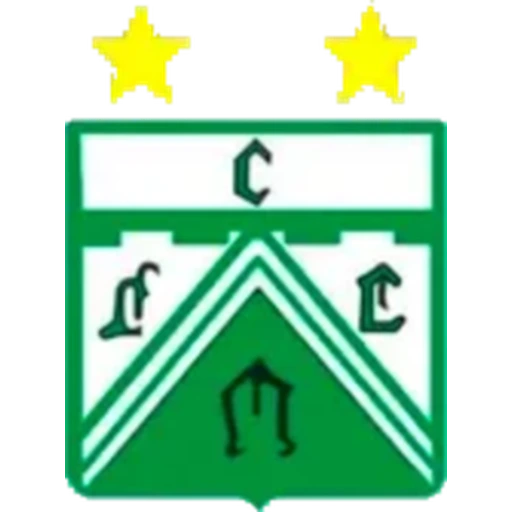
Between 2005 and 2010, Ferro returned to the standard shield but added two gold stars above the crest. These represented the club's two Argentine Primera División championships, won in the 1982 Nacional and 1984 Nacional tournaments. The underlying shield retained the familiar green triangle, white upper field and Gothic initials.
The 2010–2011 version removed the stars and returned to a more traditional presentation. The shield was redrawn with stronger outlines and more precise geometric forms, closely resembling the designs used during earlier decades.
From 2011 to 2017, the two championship stars returned above the crest. The shield itself became slightly more compact, with thinner detailing and a more restrained green tone. The stars again emphasised Ferro's greatest period of sporting success during the 1980s.
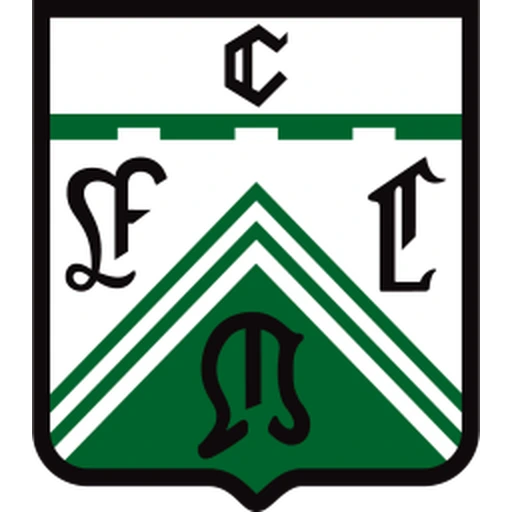
In 2017, Ferro introduced the current version of its historic badge. The 2017–Present crest retains virtually all of the elements that have defined the club since 1943: the white shield, green horizontal band, large green triangular field and distinctive Gothic lettering.
The modern version uses heavier black outlines and cleaner geometric shapes, making the badge easier to reproduce across digital platforms, merchandise and modern football kits. Importantly, the two championship stars were removed from the standard crest, leaving the historic shield itself as the central identity.
Ferro Carril Oeste Club History
Founded in 1904, Club Ferro Carril Oeste is one of the historic sporting institutions of Buenos Aires. Based in the neighbourhood of Caballito, the club is known as El Verdolaga because of its traditional green colours and has maintained a particularly strong connection with Argentina's railway heritage.
The club was founded on 28 July 1904 by employees of the Buenos Aires Western Railway, originally under the name Club Atlético del Ferrocarril Oeste de Buenos Aires. Like several important Argentine clubs created during this period, its beginnings were directly connected to the country's rapidly expanding railway network.
Ferro established itself in Caballito, where its stadium has stood since the club's earliest years. Today the ground is known as the Estadio Arquitecto Ricardo Etcheverri, although supporters commonly refer to it simply as El Templo de Madera. Its long association with the same location makes it one of the most historic football grounds in Buenos Aires.
The club entered official Argentine football competition during the early twentieth century and gradually established itself in the country's top divisions. Ferro experienced numerous promotions and relegations during its early decades but developed a loyal following in western Buenos Aires.
Green eventually became the club's defining colour, giving rise to the nickname El Verdolaga. The colour, together with Ferro's distinctive crest and Caballito identity, became inseparable from the institution.
For much of the twentieth century Ferro was regarded as a traditional Buenos Aires club rather than one of Argentina's dominant forces. That changed dramatically during the early 1980s, when the club experienced the greatest period in its football history.
Under coach Carlos Timoteo Griguol, Ferro developed one of the strongest and most tactically disciplined teams in Argentina. Griguol built his side around organisation, physical preparation, defensive strength and collective responsibility rather than individual stars.
Ferro reached the final of the 1981 Nacional, narrowly missing the championship after losing to River Plate. The campaign nevertheless demonstrated that the club was capable of competing with Argentina's traditional giants.
The breakthrough arrived in 1982.
Ferro produced an outstanding campaign in the 1982 Nacional championship, progressing through the tournament before defeating Quilmes in the final. The victory gave Ferro its first Primera División championship.
Remarkably, the club completed the tournament unbeaten, making the achievement one of the defining moments in Ferro's history.
Two years later, Griguol's team repeated the success. Ferro won the 1984 Nacional, defeating River Plate in the final and securing its second Argentine championship.
The two titles transformed Ferro's status. A club traditionally associated with Caballito and the railway community had become one of the strongest teams in Argentine football.
The championship victories also brought Ferro into the Copa Libertadores, allowing El Verdolaga to compete internationally against leading South American clubs. Although the club did not reproduce its domestic championship success on the continental stage, these appearances represented another important milestone.
The 1980s remain Ferro's golden era. Players such as Héctor Cúper, Oscar Garré, Gerónimo Saccardi and Alberto Márcico became closely associated with this period, while Griguol established himself as one of the most respected coaches in Argentine football.
Ferro's importance during these years extended far beyond football. The institution developed successful teams in several sports, particularly basketball and volleyball, strengthening its reputation as one of Argentina's great multi-sport clubs.
After the heights of the 1980s, maintaining the same level became increasingly difficult. Ferro remained in the Primera División throughout much of the 1990s, but sporting and financial problems gradually weakened the club.
The situation became particularly serious around the turn of the century. Ferro was relegated from the Primera División in 2000, ending a long period in Argentina's top flight.
Financial problems subsequently developed into an institutional crisis, and in 2002 Ferro declared bankruptcy. The club faced one of the most difficult periods in its history, with uncertainty surrounding its assets, stadium and future.
Despite these problems, Ferro survived largely because of the determination of its members and supporters. The struggle to preserve the institution became an important part of the modern identity of the club.
On the field, Ferro dropped as far as the Primera B Metropolitana, Argentina's metropolitan third tier. The club eventually recovered and won promotion back to the Primera B Nacional in 2003, beginning a long attempt to return to the Primera División.
Since then, Ferro has spent much of its football history in Argentina's second tier. Despite several competitive campaigns and promotion challenges, a return to the highest division has remained elusive.
One of the most important elements of Ferro's identity is its rivalry with Vélez Sarsfield. The fixture is traditionally known as the Clásico del Oeste.
The rivalry developed because the clubs originated in neighbouring areas of western Buenos Aires and frequently competed against one another during the twentieth century. Before Vélez moved permanently to Liniers, the geographical connection between the two clubs was particularly strong.
Ferro and Vélez followed very different trajectories from the 1990s onward, with Vélez becoming a major domestic and international force while Ferro descended through the divisions. As a result, competitive meetings became increasingly rare, but Vélez remains Ferro's historic principal rival.
Ferro also developed important rivalries with other traditional Buenos Aires clubs, particularly Atlanta. The proximity of Caballito and Villa Crespo, together with decades of meetings in both the Primera División and promotion categories, has given matches between the clubs considerable local significance.