Bramall Lane, The Historic Home of Sheffield United FC
Bramall Lane, affectionately known simply as “The Lane” to Sheffield United supporters, is much more than the home of Sheffield United Football Club. Situated close to the centre of Sheffield, South Yorkshire, it is one of the most historically important sporting grounds in the world. Long before Sheffield United even existed, crowds were already gathering at Bramall Lane, and its story provides a remarkable link between the earliest days of organised football and the modern professional game.
The ground opened in 1855, originally as a cricket venue. Its name came from the Bramall family, who owned the land on which the ground was constructed. Sheffield was one of the centres in which association football developed during the nineteenth century, and Bramall Lane soon became part of that story. Its first football match was played in 1862, decades before the creation of the Football League and before many of today's famous English clubs had even been founded.
This makes Bramall Lane particularly special. While many historic football grounds have disappeared or been completely replaced, football is still played professionally on essentially the same site. It is therefore generally regarded as the oldest major stadium in the world still regularly hosting professional association football.
Before Sheffield United
One of the most fascinating aspects of Bramall Lane is that its football history began long before Sheffield United. During the nineteenth century the ground hosted matches involving some of the pioneering clubs of the Sheffield football scene. At the time, Sheffield had its own set of rules – the famous Sheffield Rules – which played an important role in the development of the modern Laws of the Game.
Bramall Lane also staged important representative and cup matches. An especially significant moment came in 1878, when the ground hosted an experimental match played under electric lighting. Huge lamps illuminated the pitch in what became one of the earliest and most celebrated experiments with floodlit football. Thousands of spectators reportedly attended to witness something that must have seemed extraordinary at the time: football being played after darkness had fallen.
The Lane was also used for major matches before purpose-built national stadiums became commonplace. It staged England internationals and important FA Cup fixtures, giving the ground national significance decades before Sheffield United developed into the club associated with it today.
The Birth of Sheffield United
Sheffield United was founded in 1889, initially as the football section of the organisation already operating at Bramall Lane. The club's name reflected its origins: it brought football into a venue already strongly associated with Sheffield sport.
From that moment, Bramall Lane and Sheffield United became inseparable. The newly formed club quickly developed into one of the strongest sides in England. Sheffield United became English champions in 1897–98 and enjoyed enormous success in the FA Cup, winning the competition in 1899, 1902, 1915 and 1925.
Generations of supporters have subsequently walked through the same part of Sheffield to watch the Blades. Promotions, relegations, cup runs and changing eras of English football have all passed through Bramall Lane, but the ground has remained the club's home.
A Stadium Shared by Football and Cricket
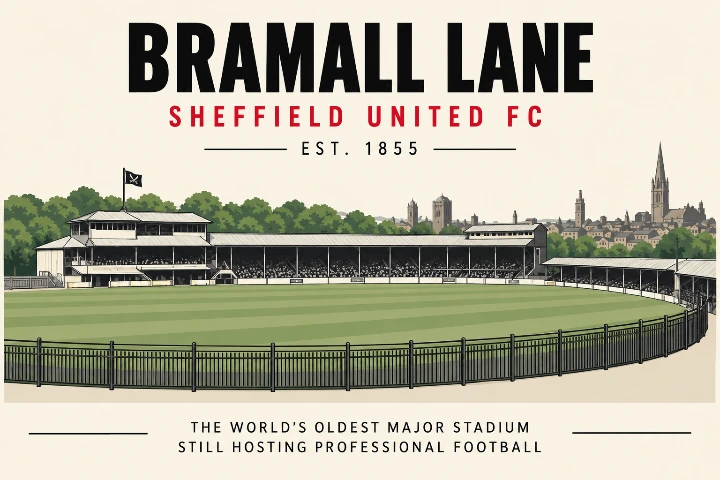
Bramall Lane's sporting history is unusual because football was not initially its only major attraction. For many decades it remained an important cricket ground, eventually becoming closely associated with Yorkshire County Cricket Club.
This dual purpose had a major influence on the appearance of the stadium. For much of its history Bramall Lane looked very different from the compact football ground seen today. A cricket pavilion and cricket field occupied part of the site, meaning the football stadium was not completely enclosed by permanent stands.
Cricket finally left Bramall Lane in the 1970s, allowing Sheffield United to develop the ground exclusively for football. The former cricket side could then be redeveloped, gradually creating the enclosed stadium familiar to modern supporters.
Four Stands, One Intimidating Ground
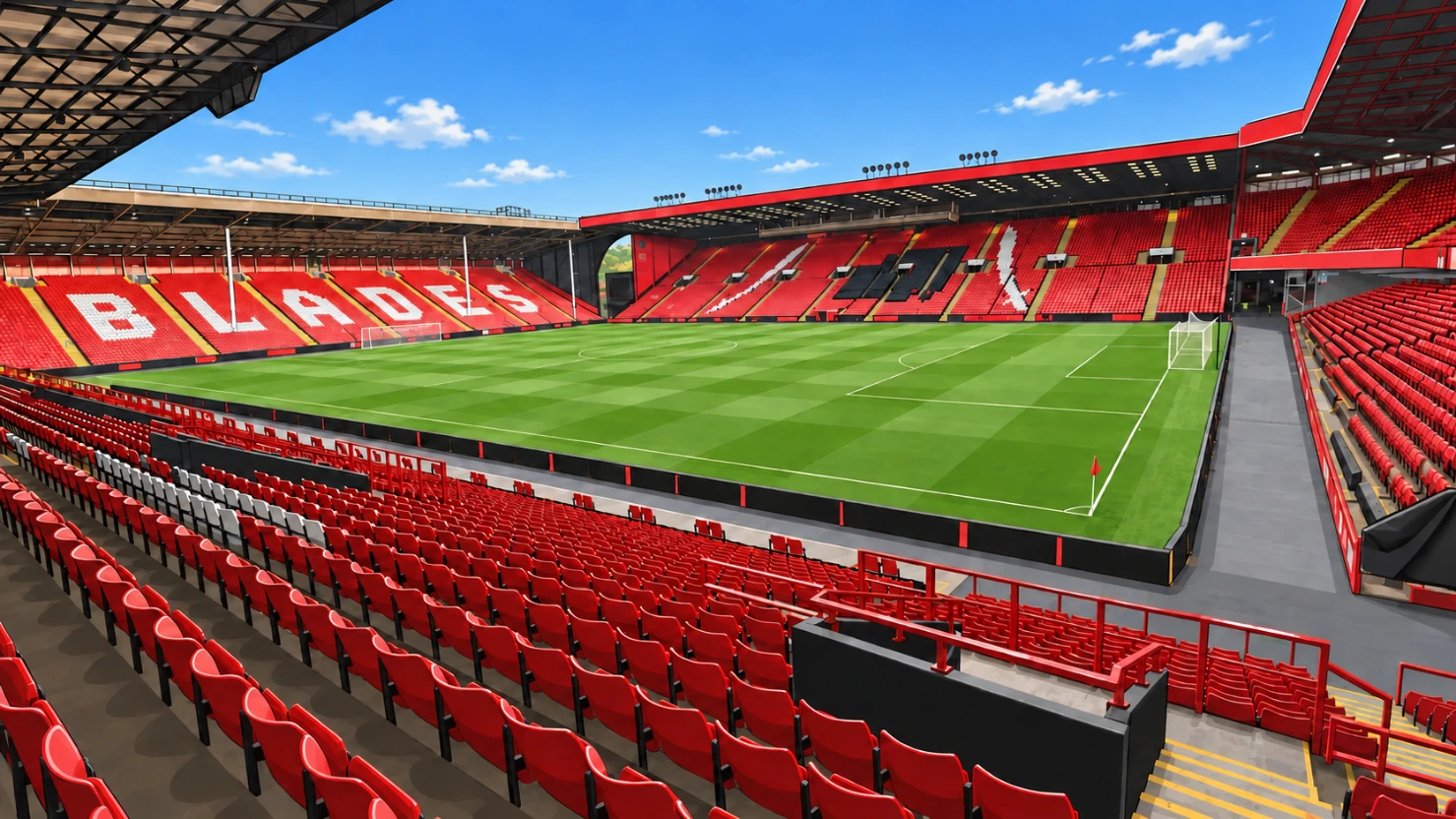
Today Bramall Lane holds a little over 32,000 spectators. It cannot compete in size with the enormous modern stadiums of England's richest clubs, but capacity tells only a small part of its story.
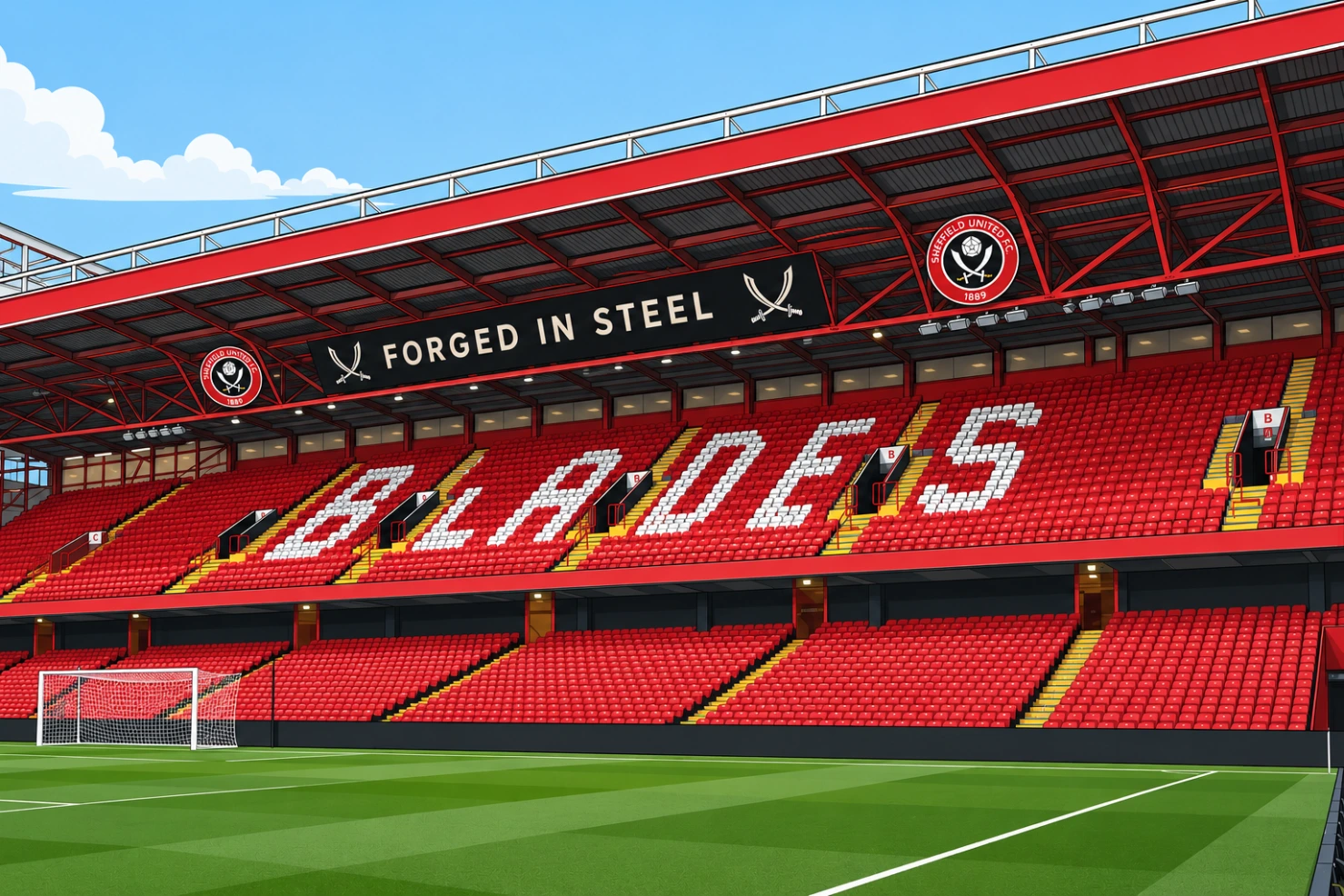
Its four principal stands – the Kop Stand, South Stand, John Street Stand and Bramall Lane Stand – sit close to the playing surface. This creates the enclosed atmosphere characteristic of traditional English football grounds.
The Kop is particularly associated with Sheffield United's most vocal support. When Bramall Lane is full, the steep stands and proximity of the crowd to the pitch can create an intimidating environment for visiting teams. Unlike some modern stadiums constructed far outside city centres, The Lane remains embedded within its urban surroundings. Terraced streets, pubs and the city itself form part of the matchday experience.
A Ground That Constantly Evolved
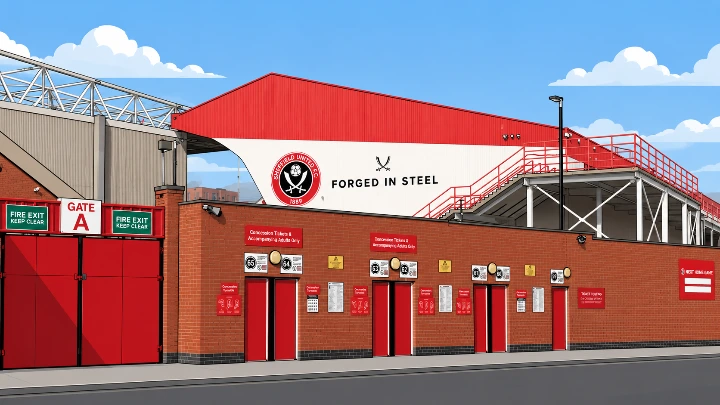
The Bramall Lane visible today is the product of more than a century and a half of continuous change. Wooden structures gave way to permanent stands; terraces were modified or replaced; floodlights became an ordinary part of football rather than a Victorian experiment; and the ground was gradually converted into an all-seater stadium.
Major redevelopment took place particularly during the late twentieth century as English stadium regulations and supporter expectations changed. The stands were modernised and facilities for hospitality, media, accessibility and supporters improved.
Yet Bramall Lane has managed to retain something that many completely rebuilt stadiums have lost. It still feels unmistakably like a traditional English football ground. Its history has accumulated gradually rather than being erased and started again.
A Place in International Football History
Bramall Lane's importance extends beyond Sheffield United. The ground has hosted England international matches and other major fixtures during its long history. Most significantly, it was one of the venues used for UEFA Euro 1996, when England hosted the European Championship.
That tournament brought international football back to one of the places where the sport had developed more than a century earlier – an appropriate connection between football's Victorian beginnings and its modern global popularity.
More Than a Football Stadium
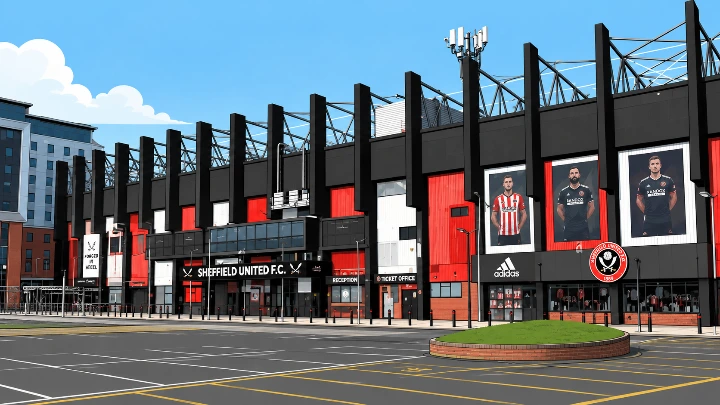
Visiting Bramall Lane is therefore very different from simply visiting another professional football ground. Few stadiums allow supporters to stand in a venue with such a direct connection to the formative years of the sport.
Through Sheffield United's stadium tours and club heritage displays, visitors can explore the history of the Blades and the ground itself. Stories range from the club's championship-winning side and four FA Cup triumphs to the changing architecture of the stadium and its unusual cricketing past.
Even the floodlights tell part of the story. Today playing football under artificial light is completely ordinary. At Bramall Lane, spectators were experimenting with the idea in 1878, when organised league football did not yet exist.
From Victorian Sport to Modern Football
That continuity is what makes Bramall Lane exceptional. The stadium has witnessed the transformation of football from an emerging Victorian pastime into the world's most popular sport.
When football was first played here, there was no Football League, no Premier League and no FIFA. The rules of the sport itself were still evolving. Sheffield United had not yet been founded. Bramall Lane was primarily known as a cricket ground.
More than 160 years later, tens of thousands of supporters still gather on the same site to watch professional football.
Modern stands now surround the pitch and the facilities have changed beyond recognition, but the geographical heart of the ground remains where it was in the nineteenth century. That combination of continuity and evolution gives Bramall Lane a status few football stadiums can match.
For Sheffield United supporters, it will always simply be The Lane. For football history, however, Bramall Lane represents something larger: a surviving piece of the game's origins that is still alive every matchday.