Historical Crests West Ham United FC
Name: West Ham United FC
Nickname(s): The Hammers
Founded: 1895
Stadium: London Stadium (London)
Capacity: 60,000
1895-1923
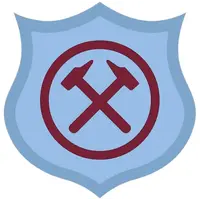
1923-1950
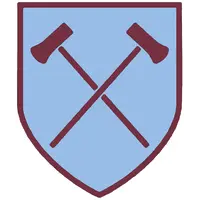
1950-1952
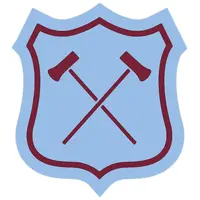
1952-1958
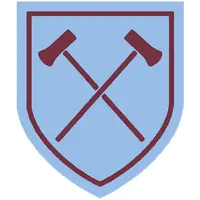
1958-1963
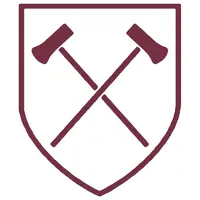
1963-1968
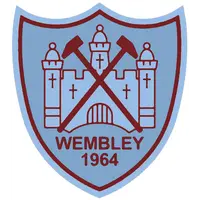
1964 FA Cup Final
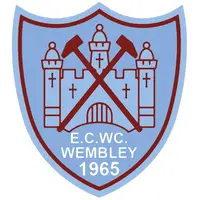
1965 E.C.W.C. Final
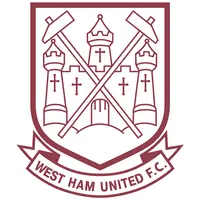
1968-1975
1975 E.C.W.C. Final
1975-1980
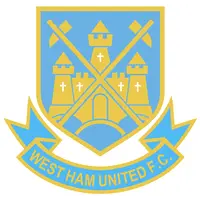
1980-1983, 1985-1987
1983-1985
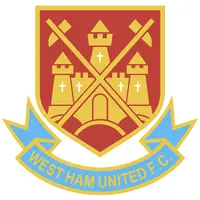
1987-1999
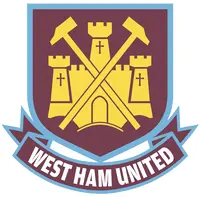
1999-2016
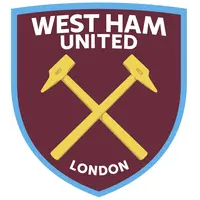
2016-Present
West Ham United FC Crest History
West Ham United’s badge reflects its origins in East London’s shipbuilding industry and preserves a direct connection to the working-class heritage from which the club emerged.
The principal element of every West Ham United crest has been the crossed pair of rivet hammers. These tools were used extensively in the shipbuilding and engineering trades associated with the Thames Ironworks and Shipbuilding Company, where the club was originally formed. The crossed hammers became the defining symbol of the club and gave rise to the famous nickname, “The Hammers.”
From the 1950s onwards, an additional element began appearing on the crest: a yellow or white castle-like tower. This feature was widely understood to represent Anne Boleyn’s Tower, a landmark that stood adjacent to the Boleyn Ground, West Ham’s historic home stadium. Although the original structure was demolished in 1955, the tower remained an important symbol because of its connection to Upton Park and the club’s long-standing home.
Throughout the second half of the twentieth century, various versions of the badge combined the crossed hammers with the castle. Different designs altered the shape of the shield, colours and typography, but the essential symbolism remained unchanged. The combination of the industrial hammers and the Boleyn Castle created a badge that reflected both the club’s origins and its geographical identity.
A major redesign occurred in 2016 following West Ham United’s move from the Boleyn Ground to the London Stadium, originally built for the 2012 Olympic Games. With the club leaving its historic home, the decision was taken to remove the castle from the crest. The redesign focused attention once again on the crossed hammers, creating a cleaner and more modern visual identity.
The current badge features the famous crossed hammers within a shield-shaped crest. The shape of the shield is inspired by the hull of HMS Warrior, the Royal Navy’s first iron-hulled warship, which was built by the Thames Ironworks. This subtle detail further strengthens the connection between the club and its industrial heritage.
The updated design was intended to create a simpler, more versatile crest while preserving the symbols most closely associated with West Ham United. The crossed hammers remain the focal point, ensuring that the club’s origins continue to be celebrated despite its move to a new stadium.
West Ham United FC Club History
West Ham United Football Club was founded in 1895 as Thames Ironworks FC by workers from the Thames Ironworks and Shipbuilding Company in East London. Formed as a team for shipyard and ironworks employees, the club quickly developed a strong local following and became deeply connected to the working-class communities along the River Thames. In 1900, the club was reorganised and adopted the name West Ham United.
The club’s industrial origins remain a defining part of its identity. The famous nickname “The Hammers” is a direct reference to the rivet hammers used by the shipbuilders and ironworkers who founded the club, while the crossed hammers on the crest continue to celebrate this heritage.
In 1904, West Ham moved to the Boleyn Ground, commonly known as Upton Park. The stadium became the club’s home for more than a century and witnessed many of the greatest moments in West Ham’s history. In 2016, after 112 years at the Boleyn Ground, the club relocated to the London Stadium, originally built for the 2012 Olympic Games. The move marked the beginning of a new chapter while ending one of the longest stadium associations in English football.
West Ham established itself as a major force in English football during the 1960s. The club won the FA Cup in 1964 and followed that success by lifting the European Cup Winners’ Cup in 1965, defeating TSV 1860 Munich at Wembley Stadium. This remains one of the most important achievements in the club’s history and established West Ham as a respected name in European football.
The club’s influence extended beyond its own successes. West Ham’s famous youth academy produced several members of England’s 1966 World Cup-winning team, including Bobby Moore, Geoff Hurst and Martin Peters. Moore captained England to victory, while Hurst scored the only hat-trick ever recorded in a World Cup Final, securing West Ham’s place in football history.
Further success followed during the 1970s and 1980s. West Ham won the FA Cup again in 1975 and reached the European Cup Winners’ Cup Final in 1976, finishing as runners-up. In 1980, the club lifted the FA Cup for a third time, becoming the last team from outside the top division to win the competition.
Throughout the modern era, West Ham has remained one of England’s most popular and best-supported clubs. The club has enjoyed numerous memorable Premier League campaigns and has continued to produce talented players through its highly regarded academy, often referred to as “The Academy of Football.”
One of the most famous traditions associated with West Ham is the supporters’ anthem, “I’m Forever Blowing Bubbles.” Sung before matches and throughout games, the song has become one of the most recognisable football anthems in the world and is closely linked to the club’s identity.
West Ham has several fierce rivalries. Strong competition exists with fellow London clubs Tottenham Hotspur and Chelsea, reflecting the traditional East versus North and East versus West London rivalries. However, the club’s oldest and most intense rivalry is with Millwall. The rivalry dates back to the clubs’ origins as teams representing rival shipbuilding and industrial communities along the Thames and remains one of the fiercest rivalries in English football.
West Ham United FC
Your Dynamic Snippet will be displayed here... This message is displayed because you did not provide enough options to retrieve its content.