The crest of F.C. Dinamo București has evolved considerably since the club's foundation, reflecting both Romania's political history and the club's own transformation into one of the country's most successful football institutions. While the designs have changed dramatically over the decades, the club's traditional red and white colours have remained a constant symbol of Dinamo's identity.
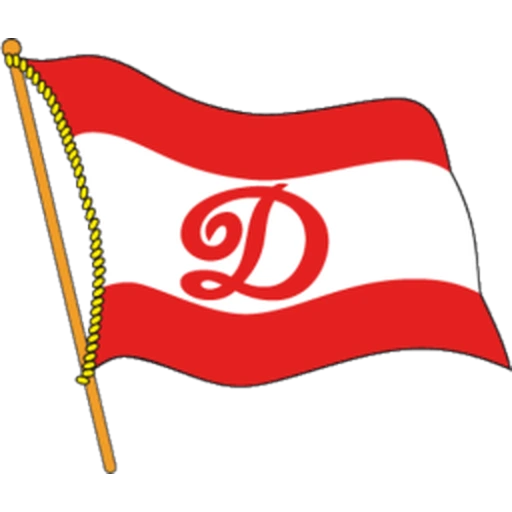
The club's first emblem, used between 1948 and 1950, was a simple red-and-white flag featuring the letter "D." Introduced when the club was founded under the Ministry of Internal Affairs, the flag represented the birth of Romania's newest major football institution.
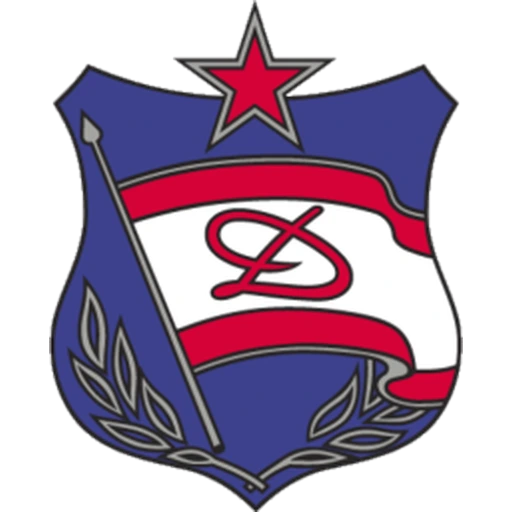
In 1950, Dinamo adopted a more elaborate badge incorporating the red-and-white flag within a shield topped by a red star and surrounded by laurel branches. This emblem reflected the club's status during the communist era and remained in use for nearly twenty-five years.
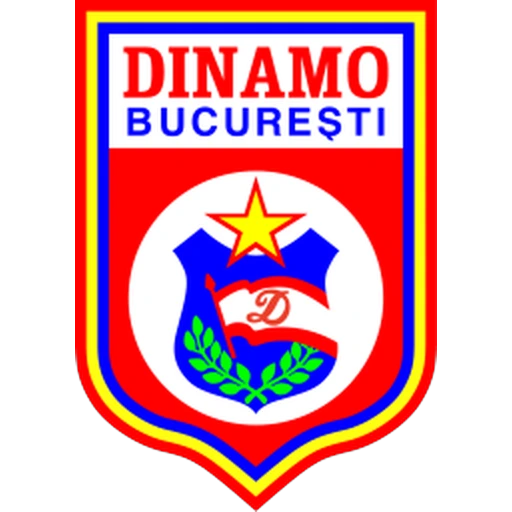
A new crest was introduced in 1974, featuring a modern shield with the words "Dinamo București", a red star, and a stylised flag. This version became closely associated with one of the club's most successful periods, during which Dinamo won numerous league titles and regularly competed in European competitions.
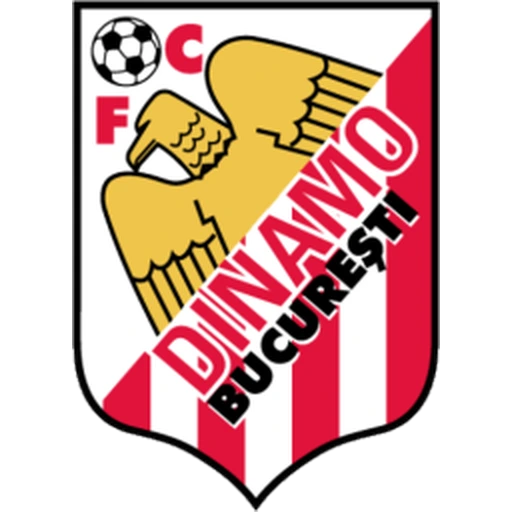
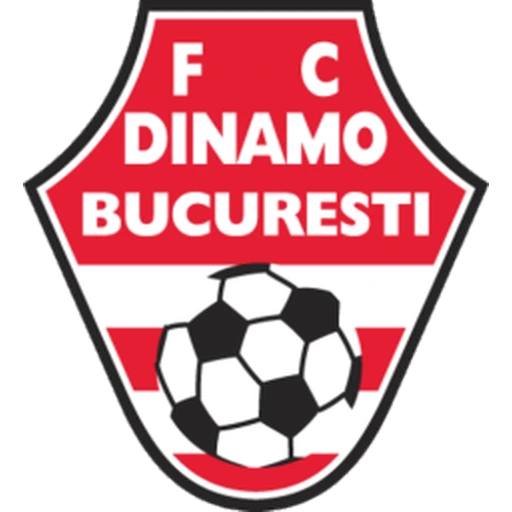
Following the fall of communism, Dinamo modernised its visual identity several times. Between 1990 and 1999, the club experimented with several shield designs, introducing simplified red-and-white colour schemes and football motifs while gradually moving away from communist symbolism.
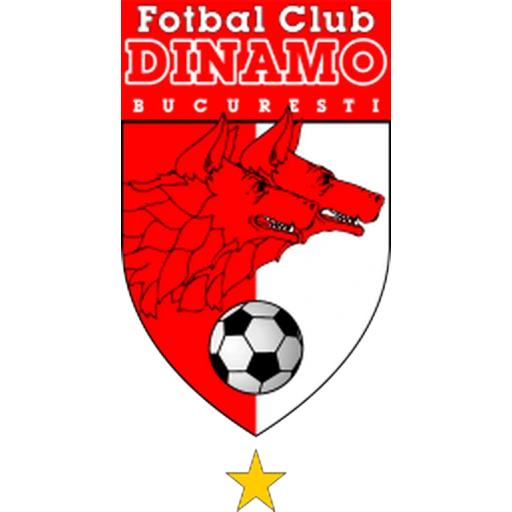
A major redesign came in 1999, when Dinamo introduced the famous red wolf crest. Inspired by the club's nickname "Câinii Roșii" (The Red Dogs), the emblem featured the heads of two wolves above a football, symbolising courage, determination and unity. A gold star above the badge commemorated the club's ten national league championships at the time. This design quickly became one of the most recognisable symbols in Romanian football.
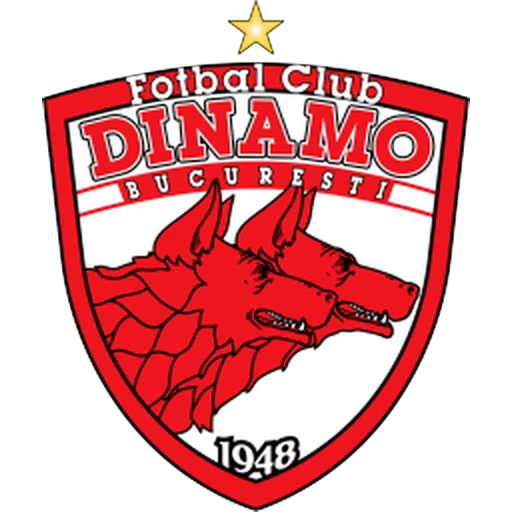
In 2004, the wolf crest received a refined and more modern appearance while retaining its overall concept. This badge accompanied the club through two decades of domestic and European competition and became strongly associated with modern Dinamo.
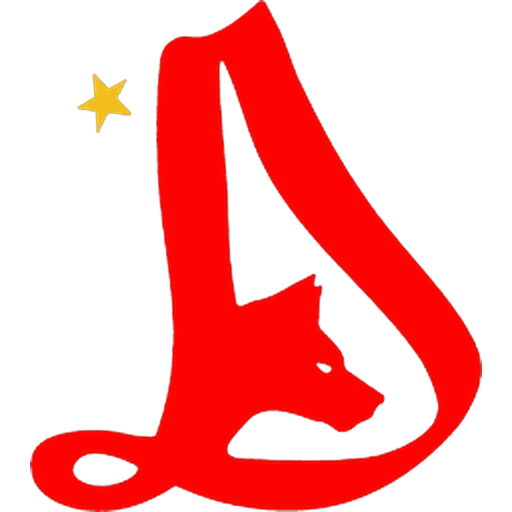
In 2026, Dinamo unveiled a completely new visual identity centred around a minimalist red letter "D" incorporating the silhouette of a wolf's head. The clean, contemporary design pays tribute to both the club's historic initial and its famous Red Dogs nickname while creating a modern emblem suited for the digital era. A single gold star above the crest continues to honour the club's historic domestic achievements.
FC Dinamo Bucuresti Club History
Founded in 1948, F.C. Dinamo București is one of Romania's most successful and historic football clubs. Based in the capital city of Bucharest, the club was established by the Ministry of Internal Affairs, becoming the football team of Romania's police and security services. Wearing its traditional red and white colours, Dinamo has developed one of the country's largest fan bases and is affectionately known as "Câinii Roșii" (The Red Dogs).
Dinamo quickly established itself as one of Romania's dominant clubs during the 1950s and 1960s, winning numerous league championships and domestic cups. Throughout the communist era, the club formed one half of Romanian football's greatest rivalry with Steaua București, representing the fierce competition between the Ministry of Internal Affairs and the Romanian Army.
The club enjoyed one of its most successful periods during the 1980s, winning multiple Divizia A titles and becoming a regular participant in European competitions. Dinamo reached the European Cup semi-finals in 1983–84, defeating strong opponents before eventually losing to Liverpool, one of Europe's finest teams. This remains one of the greatest European achievements by a Romanian club.
Following the fall of communism in 1989, Dinamo remained one of Romania's leading clubs despite significant political and financial changes. Throughout the 1990s and 2000s, the club continued to compete for domestic honours, winning several league titles and Romanian Cups while regularly qualifying for the UEFA Champions League and UEFA Cup.
Like many Eastern European clubs, Dinamo experienced financial instability during the 2010s. Ownership changes, mounting debts and inconsistent performances eventually led to the club's first-ever relegation from Romania's top division in 2022, ending an uninterrupted 74-year stay in the highest league. The setback proved short-lived, however, as Dinamo secured promotion back to Liga I after just one season and quickly re-established itself among Romania's elite.
Throughout its history, Dinamo has produced and developed many of Romania's greatest footballers, including Mircea Lucescu, Cornel Dinu, Florea Dumitrache, Dudu Georgescu, Ioan Andone, and Florin Răducioiu. The club has also enjoyed success in handball, volleyball and several other sports as part of the wider Dinamo sporting organisation.
Dinamo's greatest rivalry is with FCSB/Steaua București in the legendary Eternal Derby (Derby-ul Etern), one of Eastern Europe's oldest and fiercest football rivalries. Matches against Rapid București form another historic Bucharest derby, while encounters with Universitatea Craiova and CFR Cluj have also become major fixtures in Romanian football.