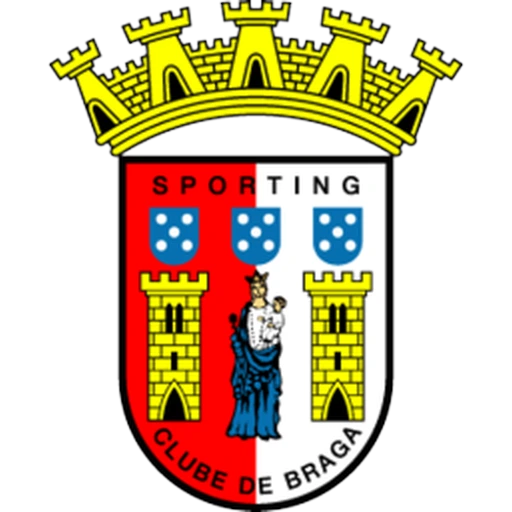
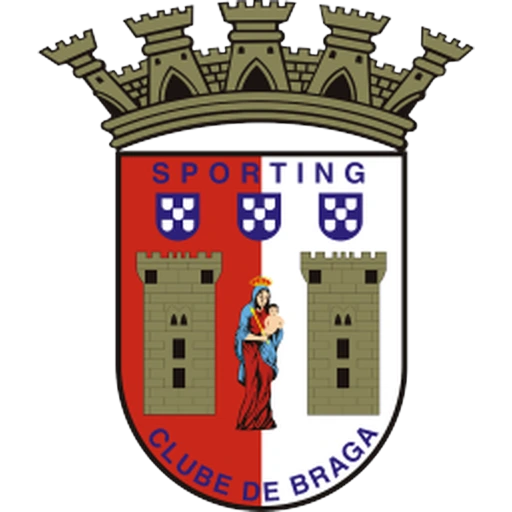
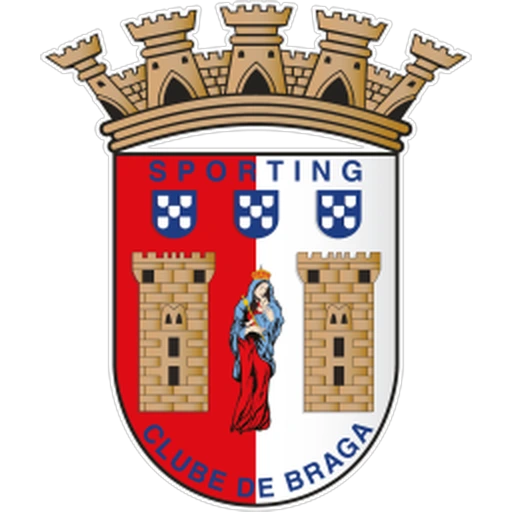
The crest of Sporting Clube de Braga has evolved significantly over the past century, mirroring the club's transformation from a local sporting institution into one of Portugal's footballing powers. While several early designs experimented with different concepts, the club eventually embraced the coat of arms of the city of Braga, which has remained the foundation of its identity ever since.
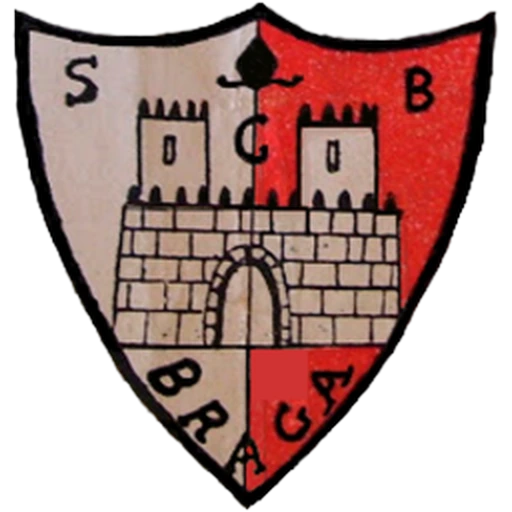
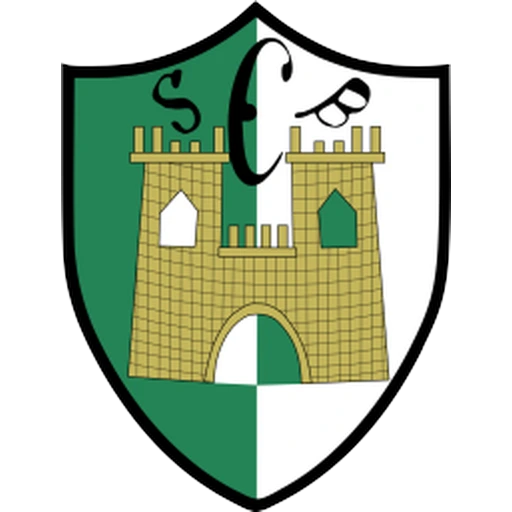
The first crest, introduced in 1921, featured a red-and-white shield depicting one of the city's medieval gates, reflecting Braga's rich historical heritage. Later that same year, an alternative version appeared, using a green-and-white shield with a more stylised representation of the city walls and towers, demonstrating the club's search for a distinctive visual identity.
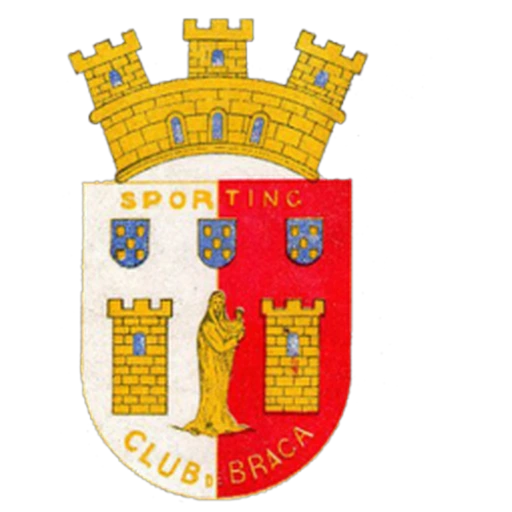
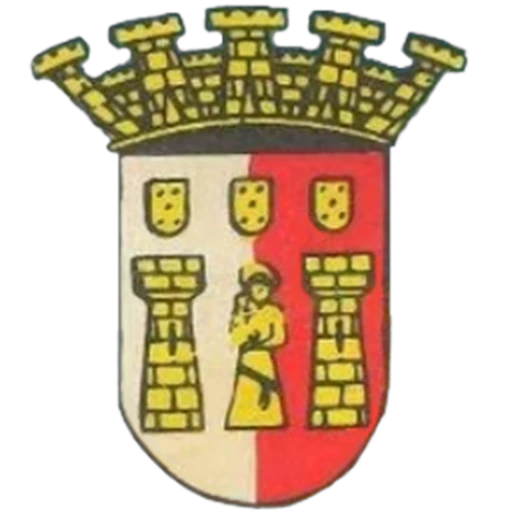
In 1930, Braga adopted a crest inspired directly by the municipal coat of arms. The emblem featured a crowned shield displaying the Virgin Mary, flanked by two towers beneath the city's crown. This marked the beginning of the club's long association with Braga's civic symbols.
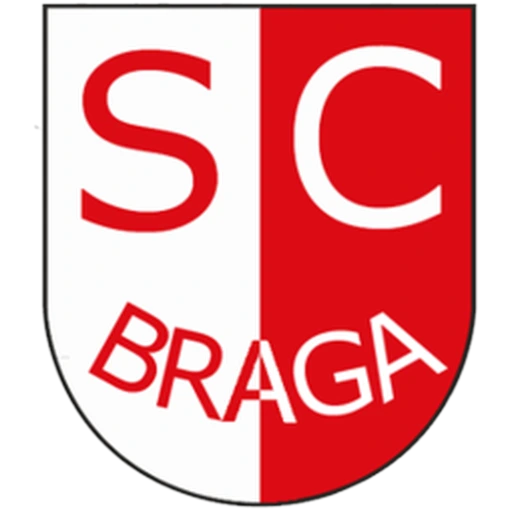
Between 1943 and 1946, the club briefly departed from its traditional imagery by introducing a minimalist red-and-white shield displaying only the initials "SC Braga." Although modern for its time, the badge proved short-lived before the club returned to its historic roots.
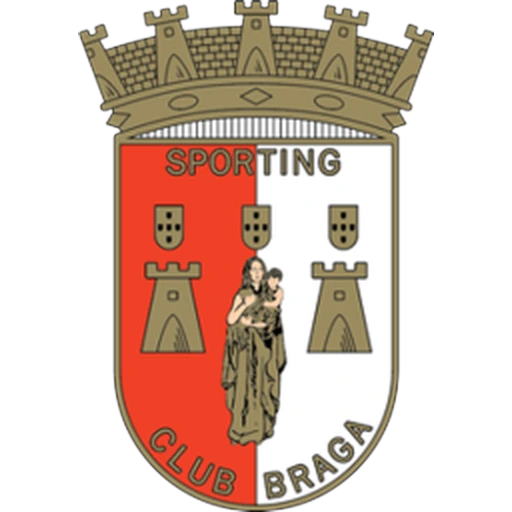
From 1955 onwards, Sporting Clube de Braga consistently based its crest on the city's coat of arms. Successive updates between 1955–1965, 1965–1970, and 1970–1985 refined the artwork while preserving the iconic elements: the Virgin Mary, the two towers, the Portuguese shields, and the mural crown. These versions became closely associated with Braga's rise in Portuguese football.
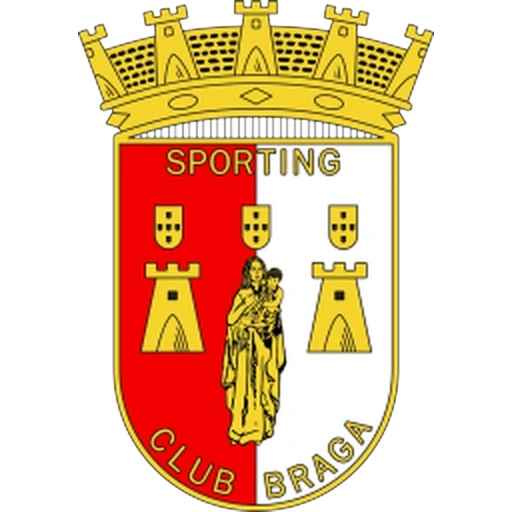
Further refinements followed during the 1980s and 2000s. The versions used between 1985–1986 and 1986–2007 introduced brighter colours, improved proportions and more detailed illustrations. The crest became cleaner and more suitable for commercial use while remaining faithful to the historic municipal design.
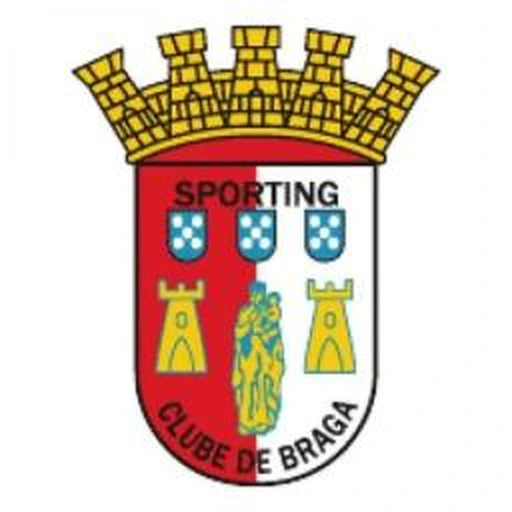
In 2007, the badge received another modernisation with simplified artwork, sharper outlines and updated colours. The redesign improved visibility across digital platforms while preserving every traditional symbol. A final refinement arrived in 2018, producing the version still used today. The current crest features cleaner typography, balanced proportions and a more contemporary illustration of the Virgin Mary and the city towers, while maintaining the historic identity that has defined the club for almost a century.
SC Braga Club History
Founded in 1921, Sporting Clube de Braga is one of Portugal's most successful and respected football clubs. Based in the historic city of Braga, one of the oldest cities in the country, the club has grown from a regional side into a regular challenger to Portugal's traditional football elite. Wearing its distinctive red and white colours, Braga has earned the nickname "Os Arsenalistas" due to its long-standing resemblance to Arsenal's famous kit.
For much of its early history, Braga competed in regional competitions before gradually establishing itself in Portugal's national leagues. Although the club enjoyed occasional success during the mid-twentieth century, it remained largely overshadowed by Portugal's traditional "Big Three"—Benfica, Sporting CP, and FC Porto.
A turning point came in the 2000s, when Sporting Braga underwent significant sporting and organisational development. Improved infrastructure, intelligent recruitment and stable management transformed the club into one of the strongest teams in Portuguese football. Braga became a consistent contender for European qualification and established itself as the leading club outside the traditional "Big Three," giving rise to the term "Big Four" in Portuguese football.
The club's greatest achievement on the European stage came during the 2010–11 UEFA Europa League, when Braga reached its first major European final. After eliminating clubs including Liverpool, Dynamo Kyiv, and Benfica, Braga faced FC Porto in the final, narrowly losing 1–0 in Dublin. Despite the defeat, the campaign remains one of the greatest achievements in the club's history.
Domestically, Braga has enjoyed considerable success in cup competitions. The club has won the Taça de Portugal on several occasions, including memorable triumphs in 1966, 2016, and 2021, while also lifting multiple Taça da Liga (League Cup) trophies. These victories cemented Braga's reputation as one of Portugal's most competitive clubs.
Since 2003, Braga has played its home matches at the spectacular Estádio Municipal de Braga, designed by renowned architect Eduardo Souto de Moura for UEFA Euro 2004. Built into the side of an old granite quarry, the stadium is widely regarded as one of the most unique and architecturally impressive football venues in the world.
Sporting Braga's fiercest rivalry is with neighbouring Vitória de Guimarães in the Derby do Minho, one of Portugal's most passionate local derbies. Matches against FC Porto, Benfica, and Sporting CP have also grown in importance as Braga has consistently challenged the country's traditional giants for domestic honours.