Historical Crests Nottingham Forest FC
Name: Nottingham Forest FC
Nickname(s): Forest
Founded: 1865
Stadium: City Ground (Nottingham)
Capacity: 30,446
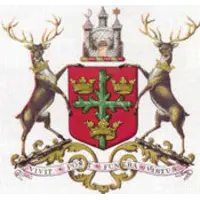
1947-1974
1974-2000
2000-2008
2008-2010
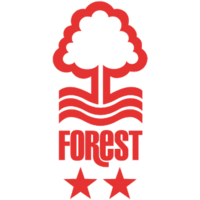
2010-Present
Nottingham Forest FC Crest History
The most recognisable symbol associated with the club today is the stylised tree and river design introduced in the 1970s. The crest has become one of the most distinctive and admired badges in world football, reflecting both the club’s name and its connection to the city of Nottingham.
The first crest officially worn by Nottingham Forest was the coat of arms of the City of Nottingham, which first appeared on the club’s kits in 1947. The civic arms reflected the club’s close connection to the city and remained associated with Forest for several decades.
A major turning point came in 1973 when the club announced a public competition to design a new badge. The winning entry was created by David Lewis, a graphic design lecturer at Trent Polytechnic. To avoid any suggestion of favouritism, Lewis submitted the design under his mother’s maiden name because one of the competition judges was his departmental superior, Associate Head of Graphics W. Payne.
The resulting badge was officially introduced in 1974 and featured a highly stylised tree above a flowing river. The tree represented Sherwood Forest, from which the club takes its name, while the wavy lines below symbolised the River Trent, which runs through Nottingham. The design was modern, minimalist and instantly recognisable, becoming one of the most successful football badges ever created.
Although the logo is often credited to legendary manager Brian Clough, he did not arrive at Nottingham Forest until 1975, a year after the badge had been introduced. Nevertheless, the crest became closely associated with Clough’s extraordinary period of success and is now inseparable from the club’s greatest achievements.
Minor refinements were made to the badge over the years, including adjustments to typography and proportions, but the essential tree-and-river design remained unchanged. The crest’s simplicity helped it stand out during an era when many clubs were moving towards increasingly complex heraldic designs.
Following Nottingham Forest’s back-to-back European Cup triumphs in 1979 and 1980, two stars were added above the club badge to commemorate those achievements. The stars remain a prominent feature of the crest and serve as a reminder of Forest’s unique place in football history as one of the few clubs to have won more European Cups than domestic league titles.
Nottingham Forest FC Club History
Nottingham Forest Football Club was founded in 1865 and is one of the most historic clubs in world football. Following Notts County’s relegation from the Football League in 2019, Forest became widely recognised as the oldest club currently competing within England’s professional league system. The club has played its home matches at the City Ground since 1898, with the stadium becoming one of the most iconic venues in English football.
Forest enjoyed early success during the late nineteenth century and won the FA Cup in 1898, establishing itself as one of the leading clubs of the era. However, the greatest chapter in the club’s history would not arrive until almost eighty years later.
The most successful period in Nottingham Forest’s history began with the appointment of Brian Clough as manager in 1975. When Clough arrived, Forest were playing in the Second Division and far removed from the elite of English football. Working alongside his assistant Peter Taylor, Clough transformed the club in remarkably short time.
Forest won promotion to the First Division in 1977 and immediately achieved one of the most remarkable accomplishments in English football history by winning the league championship in the 1977–78 season. The achievement remains one of the greatest examples of a newly promoted club conquering the top flight.
Clough continued to strengthen his squad, most notably in February 1979 when he signed Trevor Francis from Birmingham City for £1 million, making him the first £1 million footballer in English football history. Francis had previously spent time on loan with the Detroit Express in the North American Soccer League. The transfer initially attracted considerable attention, but it soon proved inspired. A few months later, Francis scored the only goal in the European Cup Final against Malmö, securing Nottingham Forest’s first European crown.
Forest successfully defended the European Cup the following season, defeating Hamburg in the 1980 final. The achievement cemented the club’s place in football history and created one of the sport’s most extraordinary records: Nottingham Forest remain the only club to have won the European Cup more times than they have won their domestic league championship. Indeed, Forest won the English league title only once, yet became European champions twice.
The club continued to enjoy success throughout the late 1970s and 1980s, winning League Cups and regularly competing in European competitions. Brian Clough’s reign remains one of the most celebrated managerial eras in football history and transformed Nottingham Forest from a second-tier side into continental champions.
Following Clough’s departure in 1993, Forest experienced a more turbulent period, including several relegations and promotions. Despite these challenges, the club retained a loyal fanbase and a proud identity built upon its remarkable achievements under Clough.
After spending more than two decades outside the top flight, Nottingham Forest returned to the Premier League in 2022, restoring the club to the highest level of English football and reconnecting a new generation of supporters with Forest’s rich history.
Forest’s traditional local rivals are Notts County, with whom they contest the Nottingham Derby. However, because the two clubs have spent much of recent history in different divisions, meetings have been relatively rare. As a result, Nottingham Forest’s principal rivalry is now with Derby County. Matches between the two clubs are known as the East Midlands Derby and are among the most fiercely contested fixtures in English football.
Nottingham Forest
Your Dynamic Snippet will be displayed here... This message is displayed because you did not provide enough options to retrieve its content.