Historical Crests Manchester United FC
Name: Manchester United FC
Nickname(s): The Red Devils
Founded: 1878
Stadium: Old Trafford (Manchester)
Capacity: 74,879
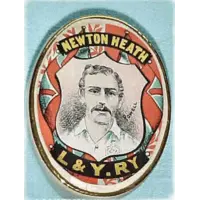
1878-1891
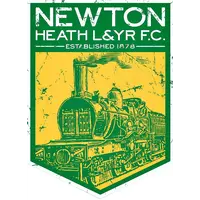
1891-1902
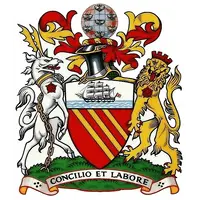
1902-1940s
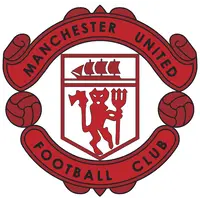
1940s-1960
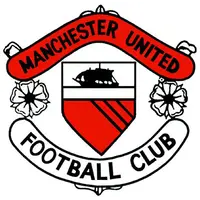
1960-1970
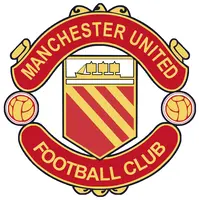
1970-1973
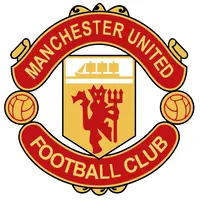
1973-1998
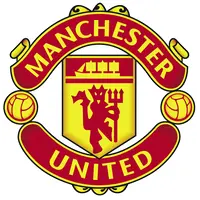
1998-Present
Manchester United FC Crest History
The symbol the most closely associated with Manchester United FC is the Red Devil. Today, the devil is the defining feature of Manchester United’s crest and one of the most recognisable symbols in world sport.
During the club’s early years as Newton Heath and in the first decades following its renaming to Manchester United in 1902, the team did not regularly wear a dedicated club crest on its shirts.
The first symbols associated with Manchester United were civic rather than club-specific. The Manchester coat of arms featured a ship, representing the city's commercial and industrial importance, together with heraldic elements linked to Manchester’s history. These civic designs influenced several later club badges.
A major step towards a unique club identity came in the 1960s. Manchester United adopted a crest based on elements of the city coat of arms, featuring a shield with a ship at the top and football-themed imagery below. The club name was displayed on banners above and below the shield, creating the foundation for the modern badge.
The most significant change in the club’s visual identity occurred in the early 1970s. Inspired by manager Sir Matt Busby’s description of his team as “devils” and the growing popularity of the nickname “The Red Devils,” Manchester United introduced a devil carrying a trident into the centre of the crest. The nickname had originally been associated with the Salford Rugby Club touring side, and Busby adopted it because he felt it projected strength and intimidation more effectively than the previous nickname, “The Busby Babes.”
The redesigned badge, introduced in 1973, featured the now-famous Red Devil beneath the ship, creating the basic structure that remains in place today. The devil quickly became inseparable from Manchester United’s identity and transformed the club’s branding around the world.
Throughout the 1970s and 1980s, several minor variations of the crest were used on shirts, programmes and merchandise. While colours, typography and artistic details changed slightly, the ship and Red Devil remained the key elements.
In 1998, Manchester United introduced a refined version of the crest. The words “Football Club” were removed from the banner, leaving simply “Manchester United.” The redesign reflected the club’s growing global profile and created a cleaner badge that could be used more effectively across commercial and international markets. The ship and Red Devil remained unchanged, preserving the most important aspects of the club’s heritage.
Since then, only minor adjustments have been made to the artwork and proportions of the crest. The fundamental design has remained consistent, helping to create one of the most recognisable sporting logos in the world.
Manchester United FC Club History
Manchester United Football Club was founded in 1878 as Newton Heath LYR Football Club by employees of the Lancashire and Yorkshire Railway Company. Originally formed as a works team, the club competed in local competitions before joining the Football League. Financial difficulties at the turn of the twentieth century nearly led to its collapse, but a rescue in 1902 resulted in the club being renamed Manchester United, marking the beginning of a new era.
United quickly established itself among England’s leading clubs, winning its first League Championship in 1908 and its first FA Cup in 1909. In 1910, the club moved to Old Trafford, a stadium that would become one of the most famous football venues in the world. Known as the “Theatre of Dreams,” Old Trafford remains Manchester United’s home and regularly attracts crowds of nearly 75,000 supporters.
The club’s first major golden era arrived during the 1950s under manager Sir Matt Busby. His exciting young team, famously known as the “Busby Babes,” dominated English football and appeared destined for European success. Tragedy struck on 6 February 1958 when the Munich Air Disaster claimed the lives of 23 people, including eight Manchester United players. The team was returning from Belgrade after qualifying for the European Cup semi-finals against Red Star Belgrade when the aircraft crashed during a refuelling stop in Munich. The disaster remains one of the darkest days in football history. In remembrance, the Munich Clock at Old Trafford remains permanently stopped at 3:04 pm, the time of the crash.
Remarkably, Busby rebuilt the club and led Manchester United to even greater heights. In 1968, United became the first English club to win the European Cup, defeating Benfica at Wembley Stadium. The achievement represented a remarkable recovery from the tragedy of a decade earlier and cemented the club’s place among Europe’s elite.
Following a period of fluctuating fortunes during the 1970s and 1980s, Manchester United entered the most successful era in its history under manager Sir Alex Ferguson. Appointed in 1986, Ferguson transformed the club into a dominant force in English and European football. His teams won numerous league titles, domestic cups and international honours while developing some of the most famous players in football history.
The pinnacle of Ferguson’s success came in the 1998–99 season when Manchester United became the first club in English football history to win the continental treble, capturing the Premier League, FA Cup and UEFA Champions League in the same campaign. The dramatic Champions League Final victory over Bayern Munich remains one of the greatest moments in football history.
Manchester United continued to enjoy domestic and international success throughout the 2000s, winning further Premier League titles and a third European Cup in 2008. In 2017, the club won the UEFA Europa League, becoming one of only five clubs to have won all three major UEFA club competitions: the European Cup/Champions League, the UEFA Cup Winners’ Cup and the UEFA Cup/Europa League.
Today, Manchester United is the most successful club in English football history, having won a record 20 League Championships, 12 FA Cups, five League Cups and a record 21 FA Community Shields. The club has also won three European Cups/UEFA Champions Leagues, one UEFA Europa League, one UEFA Cup Winners’ Cup, one UEFA Super Cup, one Intercontinental Cup and one FIFA Club World Cup.
Much of Manchester United’s success has been built on its renowned youth development system, which has produced generations of outstanding players, from the Busby Babes to the famous Class of ’92. Combined with strong commercial growth and global appeal, this has helped make United one of the most valuable and widely supported sports organisations in the world.
Manchester United’s principal rivalries are with Liverpool, Manchester City, Arsenal and Leeds United. The rivalry with Liverpool is often considered the biggest in English football, while the Manchester Derby against City divides the city itself.
Manchester United Pin
Your Dynamic Snippet will be displayed here... This message is displayed because you did not provide enough options to retrieve its content.