Historical Crests Huddersfield Town AFC
Name: Huddersfield Town AFC
Nickname(s): The Terriers
Founded: 1908
Stadium: John Smith's Stadium (Kirklees Stadium), Huddersfield
Capacity: 24,121






Huddersfield Town AFC Crest History
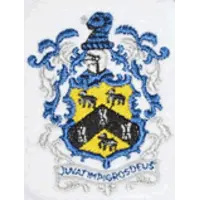
Founded in 1908, Huddersfield Town Association Football Club has used several badges throughout its history, but its visual identity has consistently been rooted in the heritage of the town of Huddersfield. The club’s crest is based on the coat of arms of Huddersfield and incorporates symbols that reflect the area’s history, traditions and civic pride.
As the club developed, Huddersfield increasingly adopted badges inspired by the town’s coat of arms. These heraldic designs typically featured elements associated with the local area, including Yorkshire roses and symbols representing Huddersfield’s industrial and cultural heritage. The use of civic imagery helped establish a strong connection between the football club and the town it represents.
Throughout the latter half of the twentieth century, variations of the heraldic badge appeared on club merchandise and playing kits. While layouts and artistic styles changed over time, the crest consistently reflected the club’s local identity and historical roots.
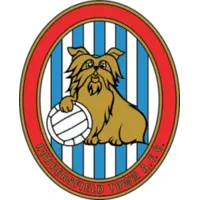
A major redesign arrived in 2000 when Huddersfield Town introduced a circular badge. The modernised design represented a significant departure from the traditional heraldic style that supporters had become accustomed to. However, the circular crest was never particularly popular among fans, many of whom felt it lacked the character and heritage associated with earlier badges.
In response to supporter sentiment, the club returned to a heraldic-style crest in 2002. The redesigned badge restored many of the traditional elements associated with Huddersfield Town and re-established the connection with the town’s coat of arms. The move was widely welcomed by supporters and marked a return to the club’s historic identity.
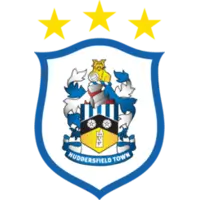
The badge underwent a further development in February 2005 with a small but significant modification. The club decided to remove the letters “A.F.C.” from the wording surrounding the crest, leaving simply “Huddersfield Town.” While subtle, the change helped create a cleaner and more modern appearance without altering the traditional design that supporters had embraced.
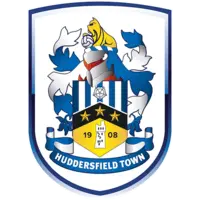
In 2019, Huddersfield Town unveiled an updated version of the heraldic crest following the club’s relegation from the Premier League. Described by the club as an evolution rather than a revolution, the redesign modernised several elements while retaining the badge’s historic foundations. The three stars commemorating the club’s unprecedented achievement of winning three consecutive league titles in the 1920s were moved inside the shield, a single Yorkshire White Rose replaced the previous two roses, and the shield itself was reshaped to create a cleaner and less rounded appearance. The Terrier was also redesigned and positioned prominently at the top of the crest, while the club’s foundation year, 1908, was added on either side of Castle Hill.
Huddersfield Town AFC Club History
Huddersfield Town Association Football Club was founded in 1908 and is based in Huddersfield, West Yorkshire. The club quickly established itself within English football and joined the Football League in 1910, beginning a journey that would see it become one of the most historically significant clubs in the country.
The most successful period in Huddersfield Town’s history came during the 1920s under the management of Herbert Chapman and his successors. The Terriers won the FA Cup in 1922 and reached three consecutive FA Cup Finals between 1920 and 1922. Their greatest achievement followed shortly afterwards when Huddersfield became the first English club to win three successive League Championships, claiming the First Division title in 1923–24, 1924–25 and 1925–26. This remarkable feat has since been matched by only three other clubs and remains one of the most significant accomplishments in English football history.
Huddersfield continued to compete at the highest level during the interwar years and reached the FA Cup Final again in 1928 and 1930. However, the club was unable to replicate the extraordinary success of the 1920s and gradually settled into a period of fluctuating fortunes.
Following relegation from the First Division in 1972, Huddersfield entered one of the most challenging periods in its history. The club spent the next 45 years moving between the second, third and fourth tiers of English football, experiencing financial difficulties and several relegations. Despite these struggles, Huddersfield maintained a loyal supporter base and remained an important part of the football landscape in West Yorkshire.
For most of its history, Huddersfield played at Leeds Road, which served as the club’s home from 1908 until 1994. The ground witnessed many of the club’s greatest achievements, including the three consecutive league titles of the 1920s. In 1994, Huddersfield moved to the newly built Kirklees Stadium, a modern venue shared with the town’s rugby league club. The stadium is currently known as the John Smith’s Stadium and remains the club’s home today.
A remarkable revival began during the 2010s, culminating in promotion to the Premier League in 2017 under manager David Wagner. After 45 years outside the top flight, Huddersfield returned to the highest level of English football by defeating Reading in the Championship play-off final at Wembley Stadium. The achievement was widely regarded as one of the greatest moments in the club’s modern history.
Huddersfield successfully retained its Premier League status during the 2017–18 season but was relegated back to the Championship at the end of the 2018–19 campaign. Despite the brief stay, the club’s return to the top division represented a significant milestone and reintroduced Huddersfield Town to the national spotlight.
Huddersfield’s principal rivalry is with Leeds United, a fixture that forms part of the long-standing Yorkshire football rivalries. Strong local rivalries also exist with Bradford City, while matches against Sheffield Wednesday and Barnsley have historically carried additional significance.
Huddersfield Town AFC Pin
Your Dynamic Snippet will be displayed here... This message is displayed because you did not provide enough options to retrieve its content.