Historical Crests Fulham FC
Name: Fulham FC
Nickname(s): The Cottagers
Founded: 1879
Stadium: Craven Cottage (London)
Capacity: 25,700

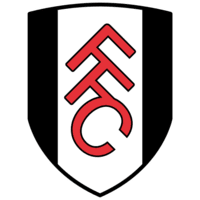
Fulham FC Crest History
Founded in 1879, Fulham Football Club has used a variety of badges throughout its history, with each reflecting different aspects of the club’s heritage, local identity and connection to West London. While the modern crest is recognised around the world, Fulham’s badge history is one of the most diverse in English football, evolving through a number of distinct designs over the course of more than a century.
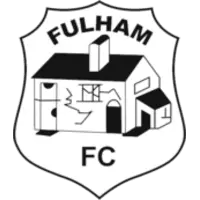
The first official Fulham crest was introduced in 1931 and featured an image of Craven Cottage, the club’s historic home on the banks of the River Thames. The pavilion at Craven Cottage formed the centrepiece of the design and highlighted the importance of the stadium to Fulham’s identity. This badge remained in use until the outbreak of the Second World War.
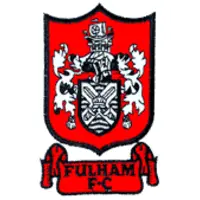
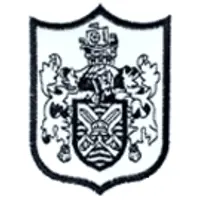
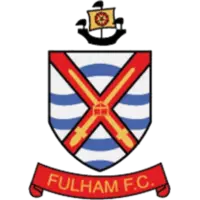
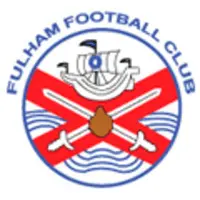
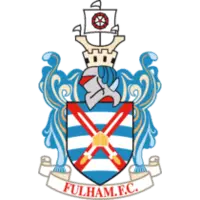
Following the war, Fulham adopted a new crest based on the coat of arms of the London Borough of Hammersmith and Fulham. First introduced in 1945, the design incorporated local heraldic symbols, including crossed swords, a ship and other civic elements that reflected the club’s connection to the borough and the River Thames. Variations of this crest would remain closely associated with Fulham for several decades.
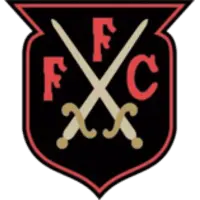
A significant change came in 1972 when the club introduced a simple “retro FFC” logo. The minimalist monogram featured the club’s initials and represented a modern departure from traditional heraldic designs. Although distinctive, the badge remained in use for only five years before Fulham returned to versions of the London Borough of Hammersmith and Fulham crest, which subsequently appeared in several different forms throughout the late 1970s, 1980s and 1990s.
The current Fulham FC crest was introduced in 2001 and represents the fourth completely new design in the club’s history. The badge features a simple black-and-white shield containing stylised red “FFC” initials. The modern design was carefully created to appeal to a new generation of supporters while also providing a strong and recognisable brand for the club. The red initials pay tribute to the 1972 monogram, while the shield shape reflects elements of earlier Fulham crests.
Fulham FC Club History
Fulham Football Club was founded in 1879 and is the oldest London club to have played in the Football League. Originally established as Fulham St Andrew’s Church Sunday School FC, the club gradually developed from its amateur roots into one of the most respected football institutions in the capital.
After turning professional in 1898, Fulham joined the Southern League and quickly established itself as one of the strongest clubs outside the Football League. In 1907, the club was elected to the Football League, beginning a long association with the English professional game.
Fulham has played at Craven Cottage since 1896. Situated on the banks of the River Thames in West London, the stadium is one of the most distinctive and historic grounds in English football. Craven Cottage has become synonymous with the club’s identity and remains one of the few traditional stadiums still in use at the highest levels of the game.
The club enjoyed its first major successes during the twentieth century, regularly competing in the upper divisions of English football. Fulham reached the FA Cup Final for the first time in 1975, defeating several top clubs before eventually losing to West Ham United at Wembley Stadium. The team featured club legend Johnny Haynes, widely regarded as one of the greatest players in Fulham’s history.
Fulham spent much of the latter half of the twentieth century moving between divisions before a dramatic revival began under chairman Mohamed Al Fayed in the late 1990s. Significant investment helped transform the club, culminating in promotion to the Premier League in 2001 under manager Jean Tigana.
The 2000s became one of the most successful periods in Fulham’s history. The club established itself in the Premier League and achieved its greatest European success in 2010 by reaching the UEFA Europa League Final. Along the way, Fulham defeated several leading European clubs before narrowly losing to Atlético Madrid in extra time.
Fulham’s principal rivalries are with fellow West London clubs Chelsea, Queens Park Rangers and Brentford. Matches against Chelsea are generally regarded as Fulham’s biggest rivalry, while fixtures against QPR and Brentford form an important part of the West London football landscape.
Fulham FC
Your Dynamic Snippet will be displayed here... This message is displayed because you did not provide enough options to retrieve its content.