Historical Crests Everton FC
Name: Everton FC
Nickname(s): The Toffees
Founded: 1878
Stadium: Hill Dickinson Stadium (Liverpool)
Capacity: 52,769


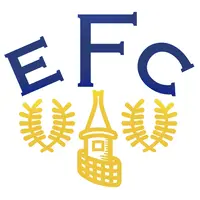
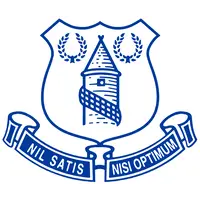
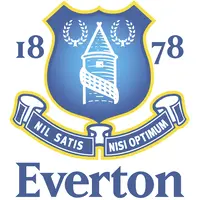
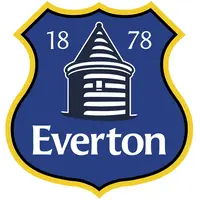
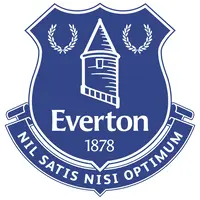
Everton FC Crest History
Founded in 1878, Everton Football Club has used several different badges throughout its history, but no symbol has become more closely associated with the club than the Everton Lock-Up. The historic structure has become the defining feature of Everton’s visual identity and serves as a powerful representation of the club’s deep connection to its local community and heritage.
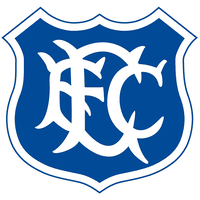
Like many early football clubs, Everton did not consistently wear an official crest on its shirts during its formative years. For much of the club’s early history, players often competed without an embroidered badge, occasionally using simple monograms or civic symbols associated with the city of Liverpool.
The most significant symbol in Everton’s history is the Everton Lock-Up, a small stone building that has been inextricably linked with the Everton area since its construction in 1787. Originally built as a bridewell, the Lock-Up was used to incarcerate drunks and minor criminals before they appeared before local magistrates. The building still stands today on Everton Brow and has become one of the most recognisable landmarks associated with the club.
The Lock-Up first became part of Everton’s identity in the 1930s when club secretary Theo Kelly designed a tie featuring the structure for an official club event. The design proved popular and soon became associated with Everton’s branding. The symbol’s connection to the local area made it a natural choice for incorporation into the club’s crest.
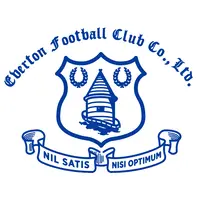
A formal club badge featuring the Everton Lock-Up was introduced in 1938. The design also included two laurel wreaths, symbolising victory and success, together with the club motto, “Nil Satis Nisi Optimum,” meaning “Nothing but the best is good enough.” These elements combined to create one of the most distinctive and meaningful crests in English football.
Throughout the following decades, Everton introduced several variations of its badge. Different designs altered the shape of the shield, typography and decorative features, but the Lock-Up remained the central element. The enduring presence of the landmark helped maintain a strong connection between the club and its local roots.
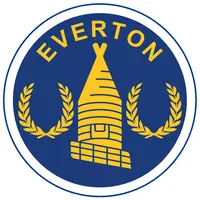
A controversial redesign arrived in 2013 when Everton unveiled a simplified crest that removed the laurel wreaths and the club motto. Although the Lock-Up remained central to the badge, many supporters felt that important aspects of the club’s heritage had been lost. Following widespread fan opposition, Everton consulted supporters and introduced a revised crest the following year.
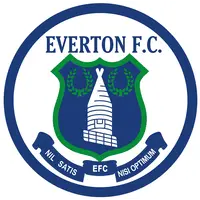
The 2014 redesign restored both the laurel wreaths and the club motto, creating a badge that balanced modern branding with traditional symbolism. The updated crest was widely welcomed and reaffirmed the importance of the Lock-Up and other historic elements within Everton’s identity.
Everton FC Club History
Everton Football Club was founded in 1878 as St Domingo FC by members of St Domingo Methodist Church in Liverpool. The club soon adopted the name Everton and became one of the founding members of the Football League in 1888, helping to establish the first professional league competition in world football.
The club initially played at Anfield before a dispute with landlord John Houlding led to Everton's departure in 1892. Everton moved to the newly built Goodison Park, while Houlding founded Liverpool FC to occupy Anfield. This unique sequence of events gave rise to one of the most famous rivalries in world football.
Goodison Park became one of the most iconic stadiums in English football. Opened in 1892, it was the first purpose-built major football stadium in England and served as Everton’s home for more than 130 years. Known affectionately as the “Grand Old Lady,” Goodison hosted FA Cup Finals, international matches and games during the 1966 FIFA World Cup, becoming one of the most historic grounds in the sport.
Everton established itself as one of England’s leading clubs during the early twentieth century, winning league championships in 1891, 1915 and 1928. The club enjoyed further success after the Second World War and entered a golden era during the 1960s under manager Harry Catterick, winning league titles in 1963 and 1970 as well as the FA Cup in 1966.
The 1980s are widely regarded as the most successful period in Everton’s history. Under manager Howard Kendall, the club won two First Division titles, the FA Cup and the European Cup Winners’ Cup in 1985. Everton were among the strongest teams in Europe during this period and many supporters regard the mid-1980s side as the greatest team in the club’s history.
Following the formation of the Premier League in 1992, Everton experienced a more challenging period. Despite winning the FA Cup in 1995, the club spent many years battling relegation while maintaining its status as one of the few clubs never to have been relegated from the Premier League.
A revival began in the 2000s under manager David Moyes, who guided Everton to regular top-half finishes and European qualification despite operating with a smaller budget than many rivals. The club continued to establish itself as a respected Premier League side while planning for a new stadium to secure its long-term future.
One of the most significant milestones in Everton’s history came with the construction of a new waterfront stadium at Bramley-Moore Dock on Liverpool’s historic docks. Construction began in 2021, and after a series of test events in 2025, Everton officially moved into the 52,769-capacity Hill Dickinson Stadium for the start of the 2025–26 season. The move ended a 133-year stay at Goodison Park and marked the beginning of a new chapter in the club’s history. The stadium is located on Liverpool’s waterfront and is expected to play a major role in the regeneration of North Liverpool while providing Everton with modern facilities and increased matchday revenue.
The farewell to Goodison Park was an emotional moment for supporters. The stadium had been the club’s home since 1892 and witnessed countless historic moments, from league title celebrations to European nights and Merseyside derbies. Everton’s final seasons at Goodison were widely viewed as the end of one of football’s most historic eras.
Everton’s principal rivalry is with Liverpool FC in the Merseyside Derby, one of the most famous and longest-running rivalries in English football. Strong rivalries also exist with Manchester United and other leading clubs due to Everton’s long-standing presence in the top flight.
Everton FC
Your Dynamic Snippet will be displayed here... This message is displayed because you did not provide enough options to retrieve its content.