Nickname(s):Fantasma (The Ghost),Fantasma da Vila(The Ghost of Vila)
Founded:1912
Stadium:Estádio Germano Krüger
Capacity:10,632
1921-1940
1941-1946
1947-1956
1957-1960
1961-1975
1976-1978
1979-1980
1981-1986
1987-2007
2008-2012
2015-2016
2017
2018-2024
2025-Present
Opérario Ferroviário EC Crest History
The crest history of Operário Ferroviário Esporte Clube is unusually varied, moving from simple monograms through striped shields and even direct representations of the club's famous Fantasma (Ghost) nickname. Despite these changes, black and white have remained the dominant colours and have become inseparable from the identity of the club from Ponta Grossa.
The 1921–1940 crest was extremely simple. It consisted of a thin black circular outline containing the large intertwined initials OFC. With no additional symbols or decoration, the design relied entirely on the club's initials and its black-and-white identity.
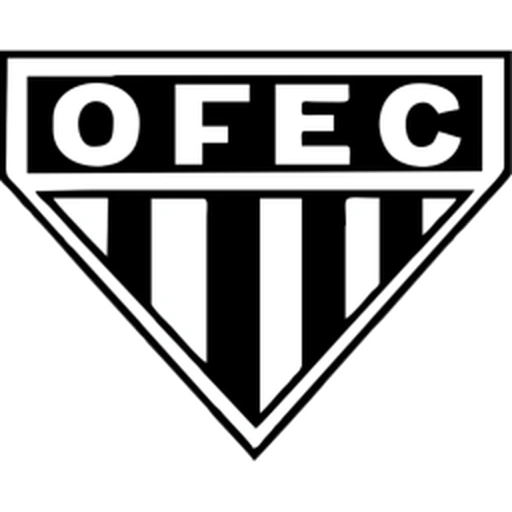
Between 1941 and 1946, Operário adopted a much more conventional football shield. The upper section contained the initials OFEC, while the lower part featured vertical black and white stripes. This was an important development because the striped pattern would become one of the most persistent elements in the club's later visual identity.
The 1947–1956 crest represented a dramatic simplification. A black shield contained a single large white five-pointed star, abandoning both the initials and the traditional stripes. It remains one of the most distinctive minimalist badges used by Operário.
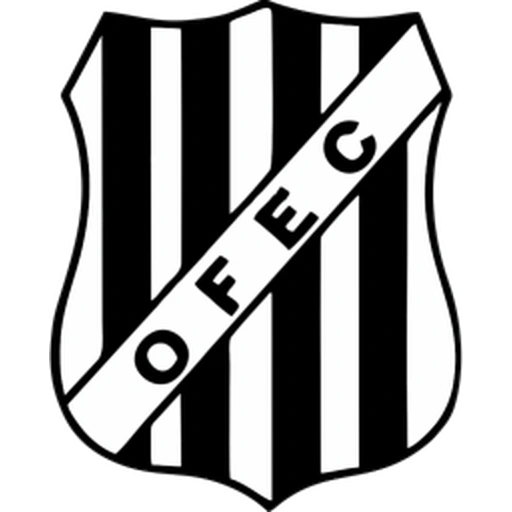
Between 1957 and 1960, the black-and-white stripes returned. The crest used a traditional shield divided by a diagonal white band carrying the letters O.F.E.C., while vertical stripes occupied the remainder of the badge. This design established the basic visual structure that would eventually become central to the modern crest.
The 1961–1975 badge introduced the symbol most closely associated with Operário's nickname. A white ghost appeared prominently in the centre of a black shield. It provided a direct visual representation of the club's famous Fantasma identity and marked a major departure from the more traditional monogram and striped designs.
Between 1976 and 1978, Operário went even further with this concept. The shield disappeared completely and was replaced by a standalone outline of a flying ghost. Few football clubs have used such an unconventional badge, making this one of the most distinctive periods in Operário's visual history.
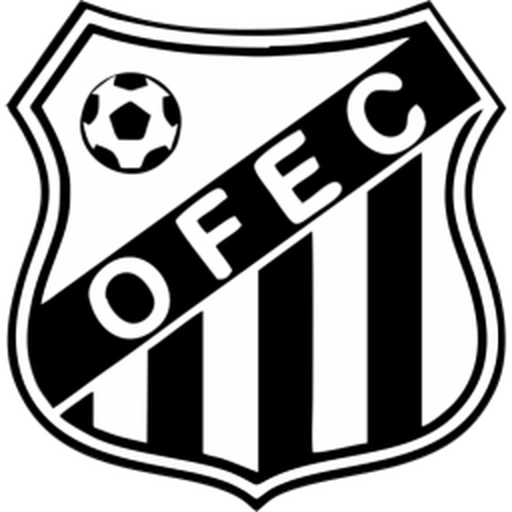
The 1979–1980 crest returned to a more traditional football appearance. A black-and-white shield featured vertical stripes beneath a diagonal black band carrying OFEC, while a football appeared in the upper-left section. The design effectively combined the club's initials, colours and sporting identity.
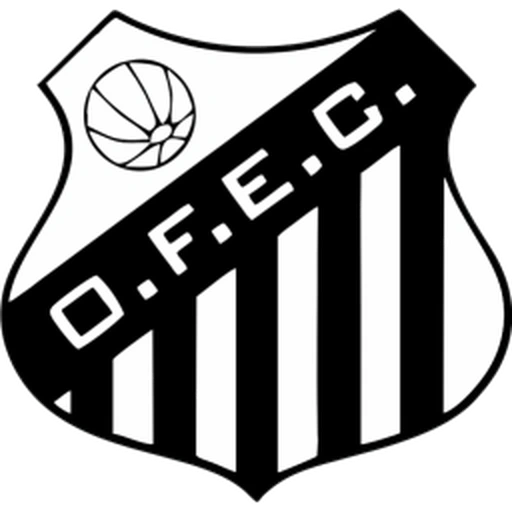
From 1981 to 1986, the same basic shield was retained but the football was replaced by a basketball. The initials on the diagonal band were also presented as O.F.E.C., while the black-and-white striped lower section remained unchanged.
Between 1987 and 2007, the badge was refined into a cleaner outlined shield. A football returned to the upper-left corner, the diagonal band displayed O.F.E.C., and the lower section continued to carry the familiar vertical black-and-white stripes.
The 2008–2012 version modernised this established design without fundamentally changing it. The outline became stronger and cleaner, the football was redrawn, and the diagonal band and striped lower section were given a more balanced appearance.
A major redesign appeared in 2015–2016. The traditional shield was placed inside a circular badge, with OPERÁRIO FERROVIÁRIO written around the upper part and 1912 displayed at the bottom. The historic striped shield, diagonal O.F.E.C. band and football remained at the centre. A single star appeared above the crest.
In 2017, the circular design remained essentially unchanged, but the star presentation was altered. This began a period in which the stars above the badge were adjusted to represent important achievements in the club's history.
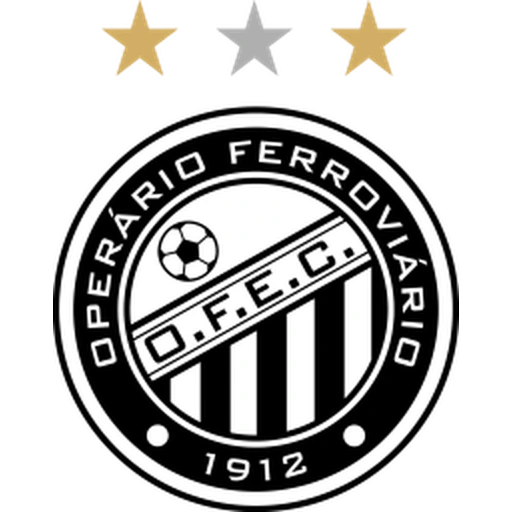
From 2018 to 2024, three stars appeared above the circular crest. The central star was presented differently from the two outer stars, while the underlying badge continued to use the established combination of the circular inscription, striped shield, football and 1912 foundation year.
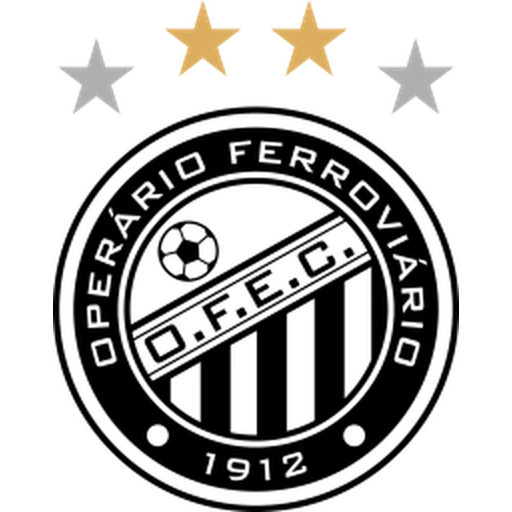
Since 2025, the basic crest has remained unchanged, but the arrangement of honours above it has been updated to four stars. The modern emblem therefore combines several elements developed during earlier periods: the black-and-white stripes, the diagonal O.F.E.C. band, the football and the club's full name.
Opérario Ferroviário EC Club History
Operário Ferroviário Esporte Clube was founded on 1 May 1912 in Ponta Grossa, in the state of Paraná. The club emerged from the city's railway community, and the name Operário Ferroviário — essentially Railway Workers — reflects those origins. This connection with railway labour became an important part of the club's identity and helped establish Operário as one of the historic football institutions of Paraná.
During its early decades, Operário developed primarily within the football competitions of Paraná. The club became the principal representative of Ponta Grossa, challenging the dominance of teams from the state capital, Curitiba. Its black-and-white colours and increasingly popular Fantasma (The Ghost) nickname became central elements of its identity.
Operário enjoyed important periods of success in state football during the twentieth century, but its history was also characterised by financial difficulties and periods away from the highest levels of competition. Despite these setbacks, the club retained a strong following in Ponta Grossa and continued to be regarded as one of the traditional clubs from the interior of Paraná.
A particularly difficult period arrived around the turn of the century. Financial problems eventually forced Operário to suspend its professional football activities, and the club spent several years outside the professional game. Its return during the late 2000s marked the beginning of one of the most successful periods in its history.
The revived Operário climbed rapidly through the Paraná state league system. By 2010, the Fantasma had returned to the top division of the Campeonato Paranaense, restoring regular meetings with the state's major clubs and rebuilding its position within Paraná football.
The breakthrough came in 2015, when Operário produced a historic Campeonato Paranaense campaign. After an impressive tournament, the club defeated Coritiba in the final and became Paraná state champion for the first time. The achievement was particularly significant because Operário became the first club from outside Curitiba to win the state championship in decades.
Success at state level was followed by an extraordinary rise through Brazil's national league system. In 2017, Operário won the Campeonato Brasileiro Série D, defeating Globo in the final. The national championship secured promotion to Série C and represented the club's first major national trophy.
The momentum continued immediately. In 2018, during its first season back in Série C, Operário again reached the final and defeated Cuiabá to become Campeonato Brasileiro Série C champion. The title secured a second consecutive promotion and took the Fantasma into Série B.
Operário's rise from Série D to Série B in only two seasons transformed the club's national profile. It established itself in Brazil's second division and demonstrated that a traditional interior club with a relatively modest financial structure could compete successfully against organisations from much larger markets.
After several seasons in Série B, Operário was relegated to Série C in 2022. The setback proved temporary. During the 2023 Série C, the club secured promotion back to Série B, once again demonstrating the resilience that has become an important part of the Fantasma identity.
The club's home is the Estádio Germano Krüger in Ponta Grossa. Named after a prominent figure in Operário's history, the stadium is closely associated with the club and its supporters and has provided the setting for many of its most important state and national achievements.
Operário's principal traditional rivalry is with Guarani Sport Club of Ponta Grossa, a historic local contest known as the Clássico Ope-Guá. Although the rivalry became less prominent as the clubs followed different competitive paths, it remains an important part of the city's football history. At state level, matches against major Paraná clubs such as Coritiba, Athletico Paranaense and Paraná Clube have also carried considerable significance, particularly as Operário emerged as one of the strongest representatives of the state's interior.