Airdrieonians Football Club has experienced a unique history, reflected in the evolution of its club crest. The badges used by the club have mirrored changes in identity, ownership and even the club’s name, while maintaining strong links to the town of Airdrie and its local heritage.
For much of the original Airdrieonians FC's history, the club used a traditional crest featuring a cockerel standing above a heraldic shield. This design became one of the most recognisable symbols associated with the club and was closely linked to Airdrieonians during its years in the Scottish Football League.
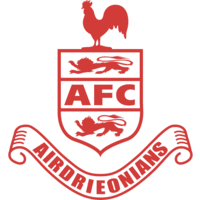
The classic badge, worn from 1974 until 2002 (with the exception of the 2000–01 season), featured a cockerel perched above a shield containing two lions passant together with the club’s initials. The design reflected traditional Scottish heraldic influences and became strongly associated with some of the club’s most successful periods.
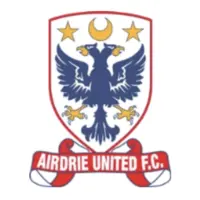
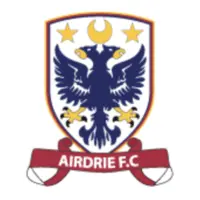
Following the liquidation of the original Airdrieonians in 2002, a new club was formed under the name Airdrie United. With the creation of the new entity came a completely different visual identity. Airdrie United adopted a crest featuring a blue double-headed eagle displayed on a white shield. The eagle was inspired by elements found in the coat of arms of the town of Airdrie and represented a fresh beginning for the club while maintaining links to the local community.
The double-headed eagle badge remained the symbol of Airdrie United throughout the club's first decade. During this period, it became associated with the club’s efforts to establish itself within the Scottish football pyramid following the loss of the original Airdrieonians.
A significant change occurred in 2013 when the club successfully regained the historic Airdrieonians name. To mark the restoration of the club’s traditional identity, the classic crest was reintroduced. The return of the cockerel badge was warmly welcomed by supporters, many of whom viewed it as an important reconnection with the club’s heritage and history.
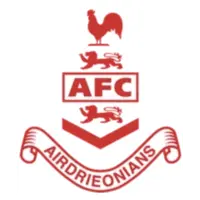
Further refinements followed in 2015 after guidance was received from the Lord Lyon King of Arms, Scotland’s official heraldic authority. To ensure compliance with Scottish heraldic regulations, the club modified its badge. The traditional shield was removed and replaced by a chevron symbolising the famous Airdrie Diamond, one of the town’s most recognisable local emblems.
The redesign successfully retained the key historic elements of the crest, including the cockerel and heraldic influences, while modernising the overall appearance. The result was a badge that respected tradition while conforming to official heraldic standards.
Airdrieonians FC Club History
Airdrieonians Football Club, commonly known as Airdrie, has a long and distinctive place in Scottish football history. The club’s story is one of tradition, resilience and strong community identity, spanning nearly a century and a half.
The original Airdrieonians Football Club was founded in 1878 and became one of Scotland’s established professional clubs. Based in the town of Airdrie, North Lanarkshire, the club built a loyal support and enjoyed many memorable moments throughout its history. For generations, Airdrieonians were an important part of Scottish football and developed a reputation as a proud community club.
The club became instantly recognisable through its famous white shirt featuring a red diamond. This iconic design gave rise to the club’s nickname, “The Diamonds,” a name that remains synonymous with Airdrie football today. The red diamond has become one of the most distinctive and enduring symbols in Scottish football.
Throughout the twentieth century, Airdrieonians competed regularly in the upper levels of Scottish football. The club enjoyed success in cup competitions, most notably reaching the Scottish Cup Final on several occasions. One of the club’s finest achievements came in 1995 when Airdrieonians reached the Scottish Cup Final and subsequently qualified for European competition through the UEFA Cup Winners’ Cup after cup winners Celtic had already secured European qualification through the league.
However, despite its rich history, the original Airdrieonians FC entered financial difficulties and was liquidated in 2002. The loss of one of Scotland’s historic clubs was a significant blow to supporters and the local community.
Determined to preserve senior football in the town, local businessman Jim Ballantyne led efforts to establish a successor club. In 2002, Airdrie United was created following the acquisition of Clydebank FC’s league membership, allowing professional football to continue in Airdrie. Although operating under a new name, the club maintained strong links to the traditions and supporters of the original Airdrieonians.
For more than a decade, Airdrie United competed within the Scottish league system while preserving the heritage of the former club. In 2013, after receiving approval from the Scottish Football Association, the club officially reclaimed the historic Airdrieonians name. The restoration was widely celebrated by supporters and represented an important step in reconnecting the club with its origins and footballing heritage.
Since re-adopting the Airdrieonians identity, the club has continued to build on its historic traditions while looking toward the future. The Diamonds remain a respected name in Scottish football, supported by a passionate fanbase and a strong connection to the local community.