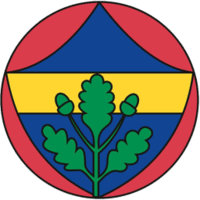
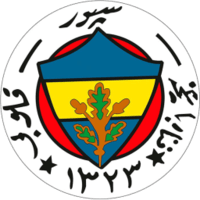
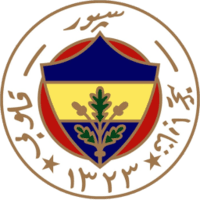
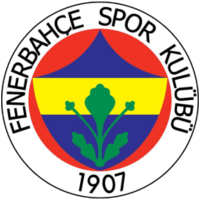
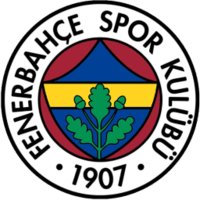
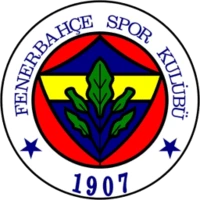
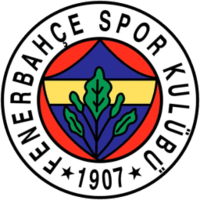
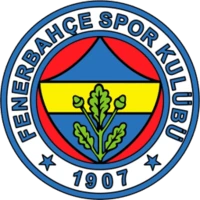
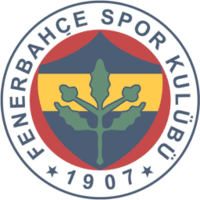
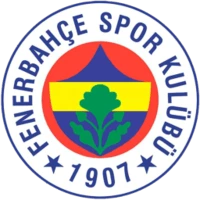
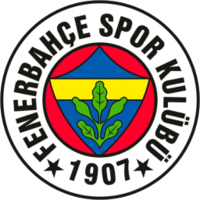
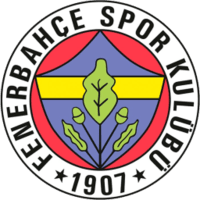
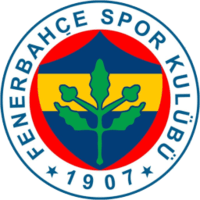
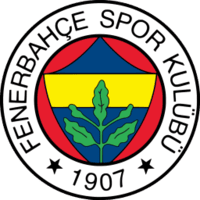
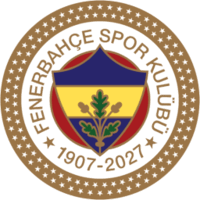
The crest of Fenerbahçe SK is one of the most iconic symbols in Turkish football and has remained closely linked to the club's identity for more than a century. Designed in 1910 by club founder Topuz Hikmet, the badge incorporates symbols representing strength, purity, patriotism and success. While the overall design has been refined several times, the famous yellow, navy blue and red colour scheme and the distinctive oak leaf have remained at the heart of the club's identity.
The earliest crest, used between 1910 and 1912, introduced the basic elements that still define the badge today. A red outer ring surrounded a shield featuring the club's colours, while a green oak leaf symbolised strength, endurance and growth.
Between 1912 and 1928, the crest underwent several refinements, incorporating Ottoman script around the outer ring before gradually transitioning to a more modern appearance following the establishment of the Republic of Turkey. During this period, the overall structure of the badge became firmly established.
From 1928 onwards, the club adopted the familiar circular crest displaying the words "Fenerbahçe Spor Kulübü" together with the founding year 1907. The badge featured the famous yellow and navy blue stripes, a red field, and the iconic green oak leaf, whose symbolism was officially defined by the club: white represents purity and honesty, red symbolises love for the homeland, yellow and navy blue express admiration and loyalty among supporters, while the green oak leaf stands for strength and success.
Throughout the 1950s, 1960s, 1970s and 1980s, several minor updates adjusted the proportions, colours and typography of the crest. Variations included different coloured outer rings, stars and subtle artistic refinements, but the badge's essential design remained unchanged and instantly recognisable.
In 1992, Fenerbahçe introduced the modern version of the crest still in use today. The redesign sharpened the colours, improved the typography and created a cleaner, more balanced appearance while remaining faithful to the original design created more than eighty years earlier.
To celebrate the club's 120th anniversary, a special commemorative crest was introduced for the 2026–27 season. Featuring a gold anniversary border and the years 1907–2027, the badge honoured one of the oldest and most successful sporting institutions in Turkey.
Fenerbahce SK Club History
Founded in 1907, Fenerbahçe Spor Kulübü is one of Turkey's oldest, most successful and best-supported football clubs. Established in the Kadıköy district on the Asian side of Istanbul, the club was founded at a time when football was still restricted under the Ottoman Empire. Despite these challenges, a group of young football enthusiasts created Fenerbahçe, which soon became a symbol of sporting excellence and national pride. Wearing its famous yellow and navy blue colours, the club is affectionately known as "Sarı Kanaryalar" (The Yellow Canaries).
Fenerbahçe quickly established itself as one of the strongest clubs in Istanbul, winning numerous Istanbul Football League championships before the creation of a national league. During the Turkish War of Independence, the club gained legendary status by playing matches against occupying military teams, becoming a symbol of resistance and patriotism.
Following the establishment of the Turkish Süper Lig in 1959, Fenerbahçe became one of the country's "Big Three" clubs alongside Galatasaray and Beşiktaş. The club has won numerous Turkish league championships, Turkish Cups, and Turkish Super Cups, consistently competing for domestic honours while developing one of the largest fan bases in world football.
Fenerbahçe has also enjoyed a long history in European competitions. The club has regularly participated in the UEFA Champions League, UEFA Cup, Europa League, and Europa Conference League. Its greatest European achievement came in 2007–08, when Fenerbahçe reached the UEFA Champions League quarter-finals, defeating clubs such as Sevilla before narrowly losing to Chelsea. In 2012–13, the club reached the UEFA Europa League semi-finals, its best-ever performance in that competition.
Throughout its history, Fenerbahçe has been home to many legendary players, including Lefter Küçükandonyadis, Alex de Souza, Rüştü Reçber, Volkan Demirel, Dirk Kuyt, Robin van Persie, Nicolas Anelka, Mesut Özil, Edin Džeko, and numerous Turkish internationals who have become club icons.
The club has played its home matches at the Şükrü Saracoğlu Stadium since 1908, making it one of the few clubs in Europe to have remained at the same location throughout its history. Following extensive redevelopment, the modern stadium, officially known as Ülker Stadium Şükrü Saracoğlu Sports Complex, is regarded as one of Turkey's finest football venues and regularly hosts some of the country's most passionate atmospheres.
Fenerbahçe's greatest rivalry is with Galatasaray in the legendary Intercontinental Derby (Kıtalararası Derbi), one of the fiercest and most famous rivalries in world football, reflecting the geographical divide between the European and Asian sides of Istanbul. Matches against Beşiktaş in the Istanbul Derby also rank among the biggest fixtures in Turkish football, while encounters with Trabzonspor have developed into another major rivalry due to decades of title races and intense competition.