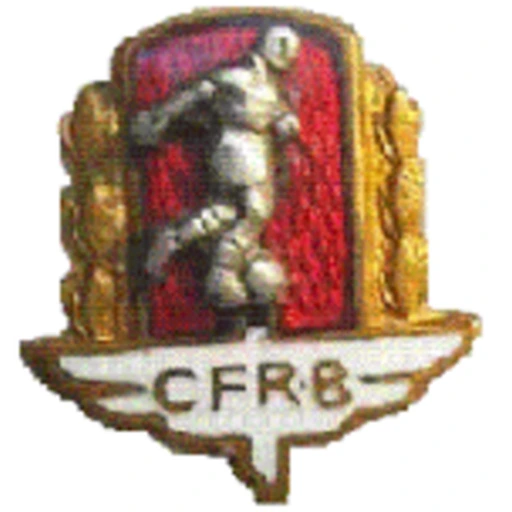
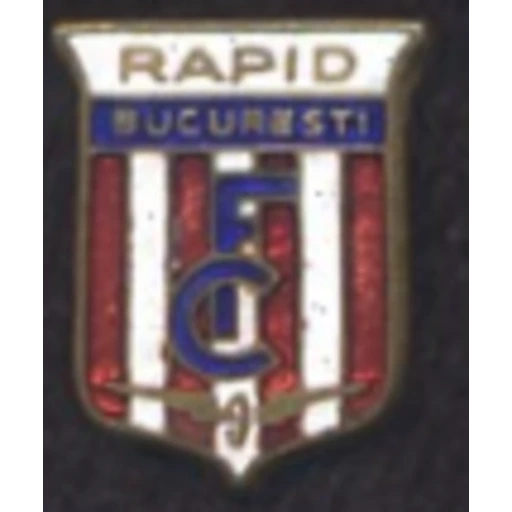
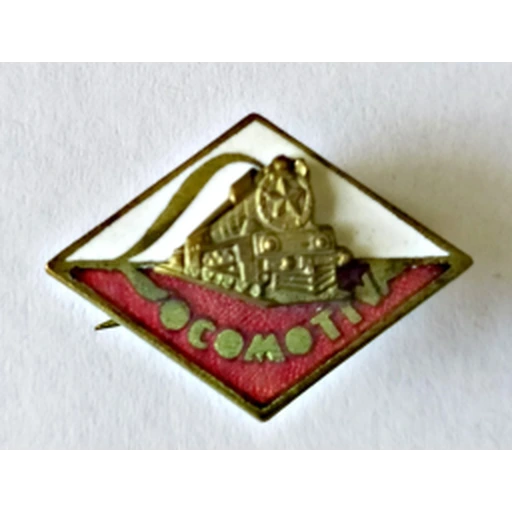
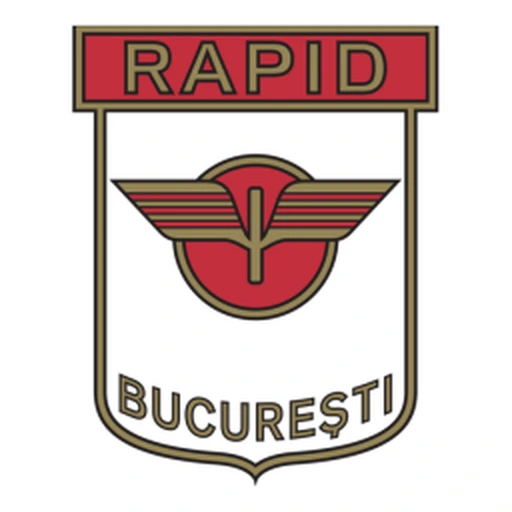
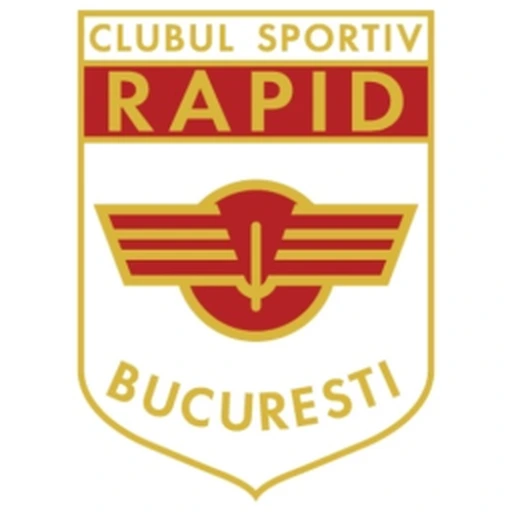
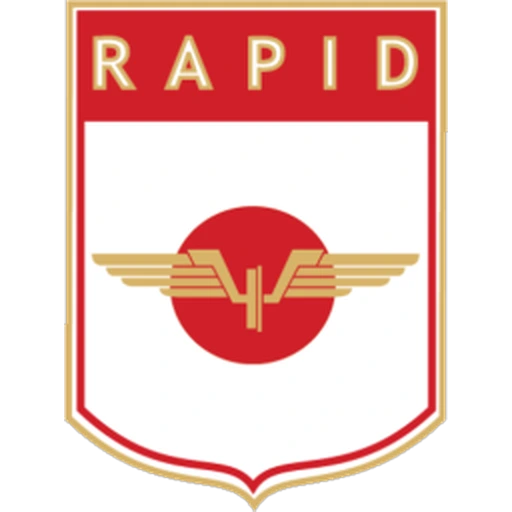
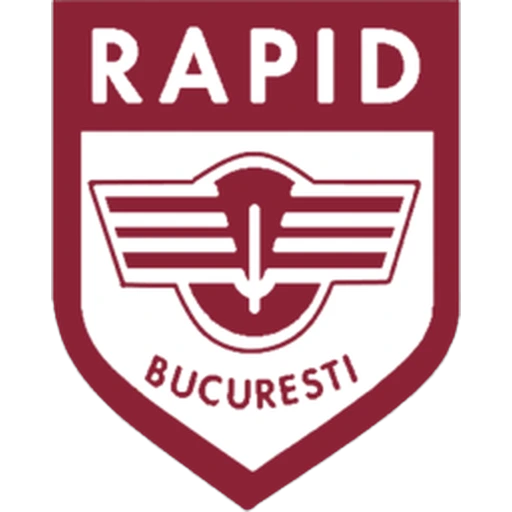
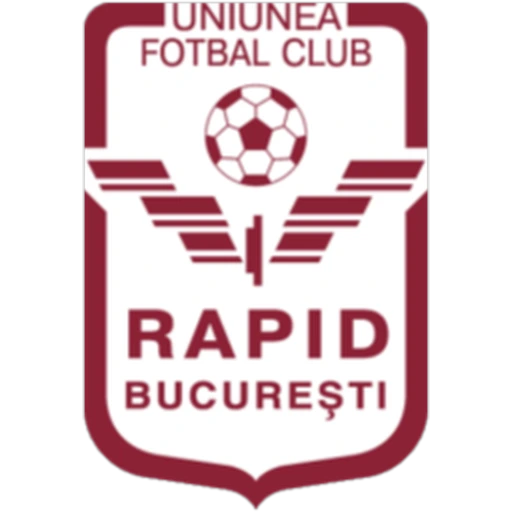
The crest of F.C. Rapid București reflects the club's proud railway heritage and its deep roots in the Giulești district of Bucharest. Throughout more than a century of history, Rapid's badge has evolved considerably, yet it has consistently preserved the club's traditional burgundy and white colours and its strong association with Romania's railway community.
The club's first emblem, introduced in 1923, featured a locomotive engineer within a decorative badge bearing the initials "CFR" (Căile Ferate Române – Romanian Railways). The design symbolised the club's origins as the football team of the national railway workers.
Between 1938 and 1942, Rapid adopted a shield displaying vertical burgundy-and-white stripes together with the club's initials. This version established the colour scheme that would become synonymous with Rapid throughout its history.
Following the Second World War, the club briefly used a diamond-shaped crest featuring a steam locomotive, reflecting its continued identity as the railway workers' club. During the 1960s, Rapid introduced a simplified shield incorporating the famous winged railway wheel, a symbol that would remain central to the club's identity for decades.
Throughout the 1980s and 1990s, the crest underwent several modernisations. Different shield shapes and typography were introduced, but each version retained the iconic winged railway emblem and the club's burgundy colours. These badges accompanied Rapid during one of the most successful periods in its history.
In 1999, Rapid briefly adopted a more elaborate commemorative crest featuring decorative elements celebrating the club's long tradition before introducing a cleaner and more modern shield in 2001. This badge combined the classic winged railway symbol with a stylised eagle and the club's founding year, creating a distinctive identity that remained in use for fifteen years.
The current crest, introduced in 2016, modernises the previous design while preserving its historic symbolism. The updated badge features a cleaner burgundy shield, the traditional winged railway wheel, and the club's founding year 1923, presenting a contemporary identity that remains firmly rooted in Rapid's railway heritage.
Today, Rapid București's crest stands as one of the most recognisable symbols in Romanian football. Combining more than a century of tradition with modern design, it proudly represents the club's historic connection to the railway workers, the Giulești neighbourhood and one of the country's most passionate football communities.
FC Rapid Bucuresti Club History
Founded in 1923, F.C. Rapid București is one of Romania's oldest, most historic and passionately supported football clubs. Established by workers of the Romanian Railways (Căile Ferate Române – CFR) in the Grivița railway workshops of Bucharest, the club quickly became a symbol of the city's working-class community. Wearing its traditional burgundy and white colours, Rapid proudly carries the nicknames "Feroviarii" (The Railwaymen) and "Giuleștenii", reflecting its deep roots in the Giulești district.
During its early decades, Rapid developed into one of Romania's leading clubs, winning several Cupa României titles before and after the Second World War. The club gained a reputation for exciting attacking football and strong local support, becoming one of the country's most respected football institutions.
Although domestic league titles proved difficult to secure for many years, Rapid remained a regular contender in Romanian football. The club's greatest league success finally arrived in the 1998–99 season when Rapid won its first Romanian championship in 32 years. Under coach Mircea Lucescu, the club combined experienced internationals with talented young players to reclaim the national title. Rapid added further league championships in 2002–03 and 2006–07, firmly establishing itself among Romania's elite.
Rapid also enjoyed memorable campaigns in European competition. The club reached the UEFA Cup quarter-finals in 2005–06, defeating several strong opponents before being eliminated by fellow Romanian club Steaua București on away goals after an all-Romanian quarter-final. This remains one of the greatest European achievements in the club's history.
Like many Romanian clubs, Rapid experienced severe financial difficulties during the 2010s. Mounting debts led to insolvency, relegation and eventually bankruptcy in 2016. Determined supporters refused to let the club disappear, and several successor teams were established before FC Rapid 1923 emerged as the recognised continuation of Rapid's football tradition.
Beginning in the lower divisions, Rapid achieved successive promotions and completed a remarkable return to Liga I in 2021. The club also returned to its spiritual home, the newly rebuilt Giulești Stadium, where one of Romania's most passionate fan bases once again created the famous atmosphere for which Rapid is renowned.
Rapid's greatest rivalry is with FCSB/Steaua București, while matches against Dinamo București form another of Romania's classic Bucharest derbies. Encounters with Petrolul Ploiești and Universitatea Craiova are also fiercely contested and attract large crowds.