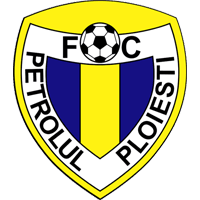
The crest of F.C. Petrolul Ploiești has evolved alongside the club's long and distinguished history, while consistently preserving its famous yellow and blue colours. Throughout the decades, the badge has reflected both the club's identity as "The Oilmen" and its close connection to the city of Ploiești, one of Europe's most important oil-producing centres.
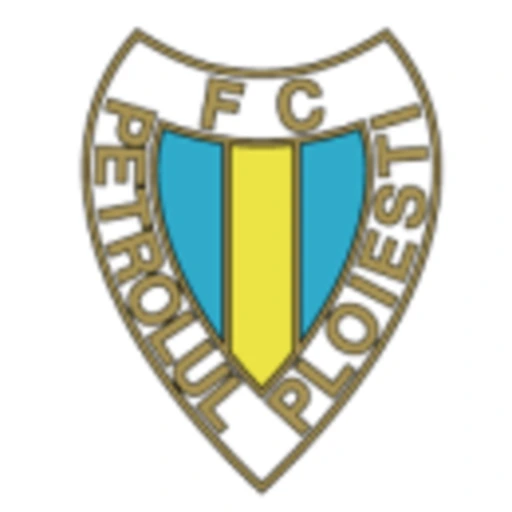
The earliest modern crest, introduced around 1980, featured a traditional shield with vertical yellow and blue stripes framed by the club's name. The simple design reflected Petrolul's established identity and became closely associated with one of the club's successful domestic periods.
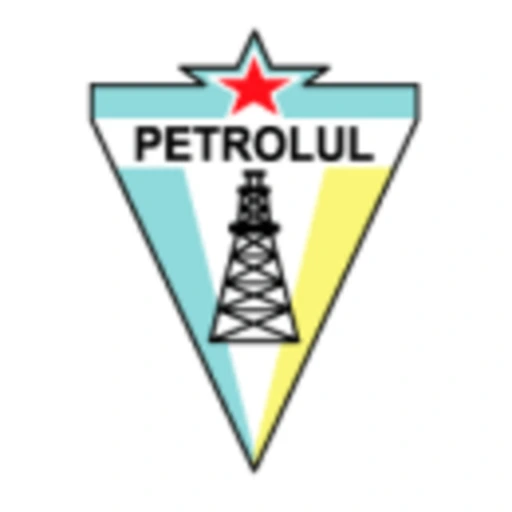
In 1990, Petrolul adopted a striking triangular badge inspired by the city's petroleum industry. The emblem displayed an oil derrick beneath the name "Petrolul", topped by a red star, symbolising the club's historic connection with Romania's oil sector. This remains one of the most distinctive crests in the club's history.
Around 2000, the club returned to a more traditional shield design featuring yellow-and-blue vertical stripes and a football at the top of the badge. This version modernised the classic Petrolul identity while maintaining the club's historic colours.
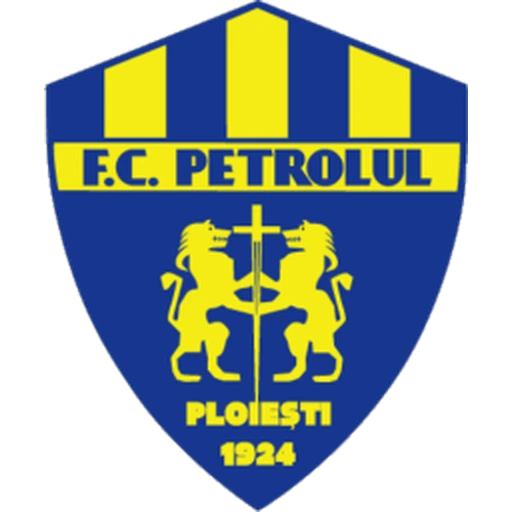
Between 2004 and 2005, a short-lived redesign introduced a darker blue shield featuring two golden wolves beneath the club's name and the founding year 1924. The wolves reflected the club's famous nickname, "Lupii Galbeni" (The Yellow Wolves), although this design remained in use for only a brief period.
Since 2010, Petrolul has used a modern crest that returns to the club's traditional appearance. The badge features a yellow-and-blue striped shield, a football above the crest and the words "F.C. Petrolul Ploiești" surrounding the emblem. The clean design successfully combines the club's historic identity with a contemporary look and has accompanied Petrolul during its return to Romanian football's highest level.
FC Petrolul Ploiesti Club History
Founded in 1952, F.C. Petrolul Ploiești is one of Romania's most historic and successful football clubs. Although the club officially adopted the name Petrolul Ploiești after relocating from Bucharest in 1952, its origins date back to 1924, when Juventus București was established. Following the move to the oil-producing city of Ploiești, the club embraced its new identity and became closely associated with Romania's petroleum industry, earning the nickname "Găzarii" (The Oilmen).
Petrolul quickly established itself as one of Romania's leading clubs during the 1950s and 1960s. The club enjoyed its golden era by winning the Romanian league championship in 1957–58 and lifting the Cupa României on several occasions. Known for its attractive football and passionate support, Petrolul became one of the country's most respected provincial clubs.
Throughout the following decades, Petrolul remained a familiar presence in Romania's top division, alternating periods of success with occasional relegations. The club continued to produce talented players and maintained one of the country's most loyal fan bases, with the Ilie Oană Stadium becoming one of Romanian football's most atmospheric venues.
After winning promotion back to Liga I in 2011, Petrolul enjoyed another successful period under coach Cosmin Contra. The club won the Cupa României in 2012–13, defeating CFR Cluj in the final, and qualified for the UEFA Europa League, where memorable victories against clubs such as Vikingur Gøta, Vitesse Arnhem, and Flamengo's compatriot Swansea City?(actually, Petrolul defeated Vikingur Gøta, Vitesse Arnhem, and later competed against Swansea City in the group stage qualifiers?) More importantly, Petrolul became a regular participant in European competition during this period, restoring its status among Romania's elite.
Despite these successes, severe financial problems led the club into insolvency and eventual bankruptcy in 2016. The original company was dissolved, but supporters quickly founded a phoenix club, preserving Petrolul's identity, colours and traditions. Starting in the lower divisions, the new club steadily climbed back through the Romanian football pyramid.
In 2022, Petrolul secured promotion to Liga I, completing an impressive return to the top flight. Playing once again at the modern Stadionul Ilie Oană, the club continues to enjoy passionate support from one of Romania's most dedicated fan bases.
Petrolul's greatest rivalry is with Astra Giurgiu (formerly Astra Ploiești) in the Derby of Prahova, while matches against Rapid București, Dinamo București, and Steaua/FCSB have also become major fixtures throughout the club's history.