Stadium:Chorten Arena (formerly Stadion Miejski w Białymstoku)
Capacity:22,372
1932-1946
1973-1980
1980-2006
1999-2003
2006-2021
2021-2024
2014-Present
SSA Jagiellonia Białystok Crest History
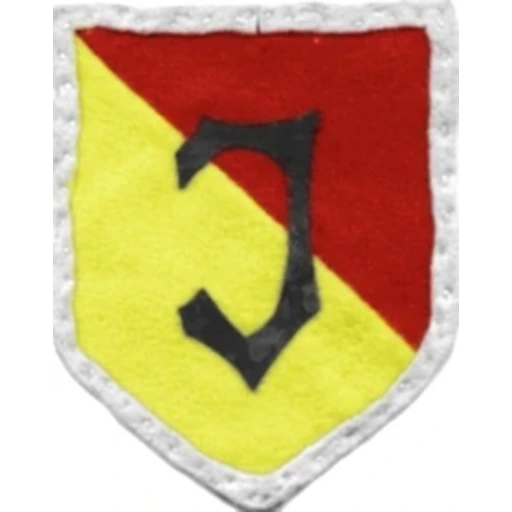
Jagiellonia Białystok originally used a simple shield featuring the stylised letter "J" on a diagonal red-and-yellow background. The colours represented the club's identity from its earliest years and have remained synonymous with Jagiellonia throughout its history. Although modest in design, the original crest laid the foundation for one of Poland's most recognisable football emblems.
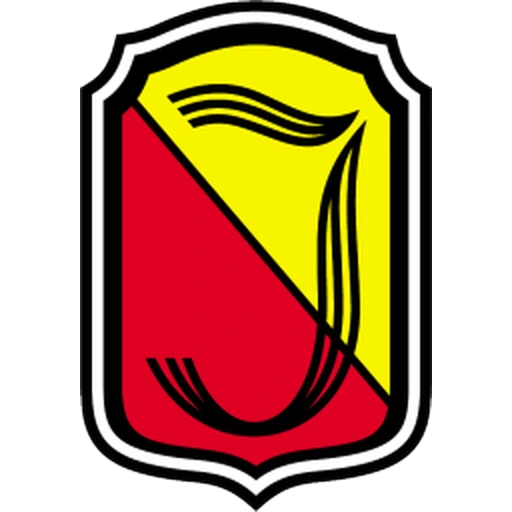
Following the Second World War and several decades of organisational changes, the club introduced a new shield in 1973. The familiar red-and-yellow diagonal division was retained, while the stylised "J" became larger and more decorative. A black border gave the crest greater prominence, creating a stronger visual identity as Jagiellonia established itself within the Polish football pyramid.
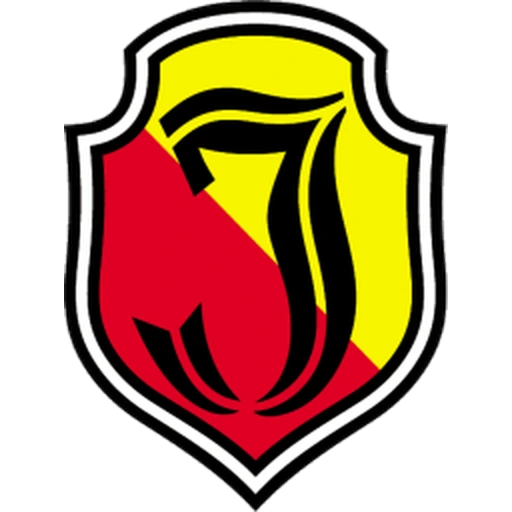
In 1980, the shield was refined once again. The badge adopted a slightly more rounded shape, while the elegant "J" monogram was modernised with smoother lines and improved proportions. Although subtle, the redesign created a more balanced appearance that remained the club's primary crest for more than twenty-five years.
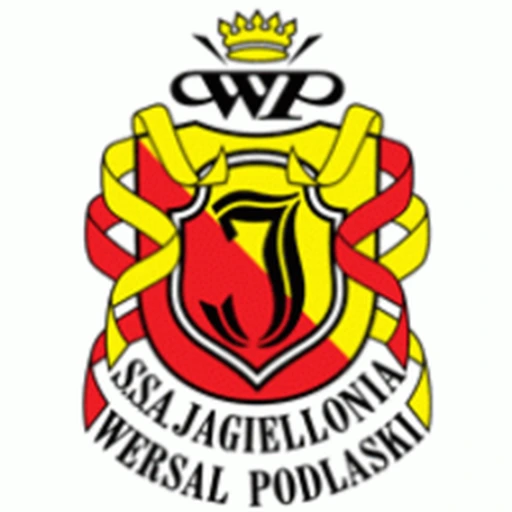
Between 1999 and 2003, Jagiellonia briefly experimented with a more elaborate emblem. The crest incorporated a decorative ribbon, a crown and the initials "CWP", symbolising the club's links with Club of Business Supporters (Club Wspierających Piłkę) during a period of organisational restructuring. While visually distinctive, this version was used alongside the traditional badge and never replaced it in the hearts of supporters.
In 2006, the club returned to its traditional identity with a simplified shield. The stylised "J" was enlarged and placed on a cleaner red-and-yellow background, while the heavy black outline created a bold and instantly recognisable appearance. This redesign coincided with Jagiellonia's return to the Ekstraklasa and became closely associated with the club's rise in Polish football.
The crest received a subtle refinement in 2021. The shield shape became slightly more rounded, the typography and monogram were redrawn with cleaner lines, and the colours were refreshed while preserving the club's historic identity. The update improved consistency across digital platforms and merchandise without altering the traditional design.
Following the club's historic success in 2024, when Jagiellonia won its first-ever Polish Championship, a gold championship star was added above the crest. The badge itself remained unchanged, ensuring continuity while proudly commemorating the greatest achievement in the club's history.
Today, Jagiellonia's crest remains one of the most distinctive in Polish football. Featuring the iconic red-and-yellow shield, the elegant "J" monogram and the championship star.
SSA Jagiellonia Białystok Club History
Founded in 1920, Jagiellonia Białystok is one of the oldest football clubs in north-eastern Poland and the most successful club in the history of the Podlaskie region. Originally established as a team for soldiers of the 42nd Infantry Regiment stationed in Białystok, the club adopted the name Jagiellonia in honour of the historic Jagiellonian dynasty, one of Poland's most influential royal houses. Throughout its history, the club has become a symbol of regional pride and identity.
For much of the twentieth century, Jagiellonia competed in the lower divisions of Polish football, gradually establishing itself as the leading club in the region. Political and economic changes after the Second World War brought several reorganisations, but the club continued to develop despite limited resources and long periods outside the country's top division.
Jagiellonia earned promotion to the Ekstraklasa for the first time in 1987, marking a historic milestone. Although the club's initial stay in the top flight was brief, it laid the foundations for future success. After several years of fluctuating between divisions, Jagiellonia secured promotion again in 2007, beginning the most successful era in its history.
The club quickly established itself as a competitive force in Polish football. In 2010, Jagiellonia won its first major trophy, defeating Pogoń Szczecin to lift the Polish Cup. A few months later, the club added the Polish Super Cup, confirming its emergence among Poland's leading teams and qualifying for European competition for the first time.
Throughout the 2010s, Jagiellonia became a regular contender for the Ekstraklasa title. The club finished runner-up in 2017 and 2018, narrowly missing out on its first league championship, while consistently qualifying for UEFA Europa League qualifying rounds. During this period, Jagiellonia earned a reputation for attractive attacking football, excellent scouting and developing talented players.
The greatest achievement in the club's history came during the 2023–24 season, when Jagiellonia Białystok won its first-ever Polish Championship (Ekstraklasa). The historic title secured qualification for European competition and represented the culmination of years of steady progress, transforming the club from a regional outsider into one of Poland's elite football institutions.
The club's biggest rivalry is with Legia Warszawa, while matches against Widzew Łódź, Lech Poznań and Raków Częstochowa have become increasingly significant due to regular battles for league positions and European qualification. The regional Podlasie Derby against ŁKS Łomża also carries historical importance, although the clubs have rarely met in recent decades due to competing at different levels.