Stadium:Heinz von Heiden Arena (formerly Niedersachsenstadion and AWD-Arena)
Capacity:49,200
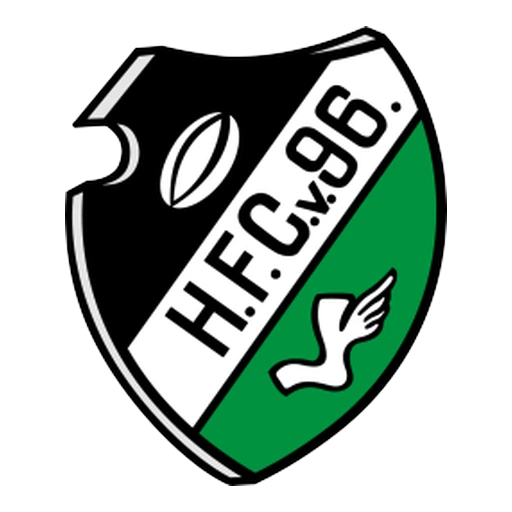
1896-1905
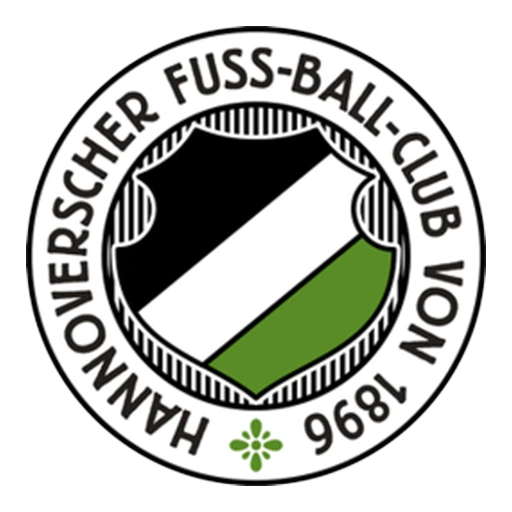
1905-1913
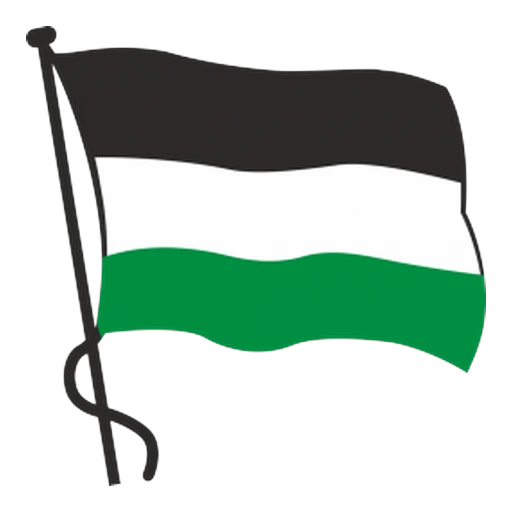
1913-1931
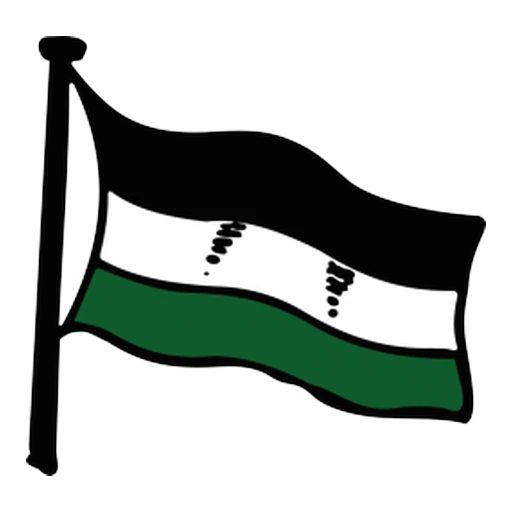
1931-1962
1962-1968
1968-1974
1974-1997
1987-1992
1992-1999
1999-2003
2003-2005
2005-2007
2007-Present
Hannover 96 Crest History
Founded in 1896 as Hannoverscher Fußball-Club 1896, the club's first crest was a traditional heraldic shield featuring the initials "H.F.C. 96" set against black, white and green sections. A white bird, symbolising the club's early sporting identity, appeared in the lower part of the shield, while the design reflected the ornate style common among German football clubs at the end of the nineteenth century.
In 1905, Hannover 96 adopted a circular badge displaying the full club name "Hannoverscher Fußball-Club von 1896" around a central shield in the club's black, white and green colours. The redesign gave the club a cleaner and more unified identity while retaining its traditional colour scheme.
A significant change followed in 1913, when Hannover abandoned traditional badges in favour of a club flag featuring horizontal black, white and green stripes. The flag remained the club's principal symbol for almost fifty years, with only minor refinements to its proportions and detailing introduced during the 1930s. This unusual approach made Hannover one of the few German clubs to use a flag rather than a conventional crest as its primary emblem.
In 1962, the club introduced the now-famous number "96" as the central element of its identity. The first design consisted of a bold black "96" enclosed within a simple green ring, replacing the flag as the club's official badge. Six years later, in 1968, the emblem was modernised with the addition of a green square background and a diagonal black slash through the numerals, creating a more distinctive and contemporary appearance.
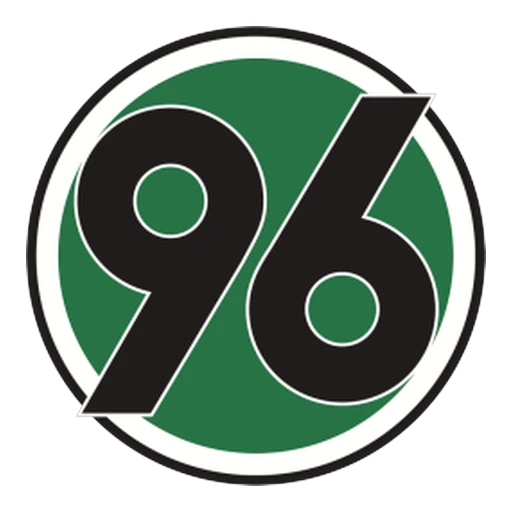
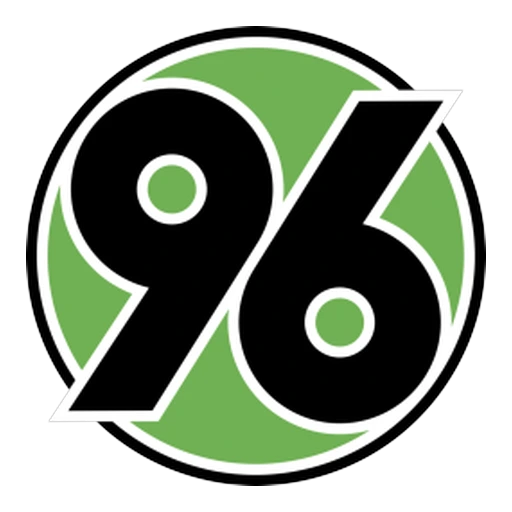
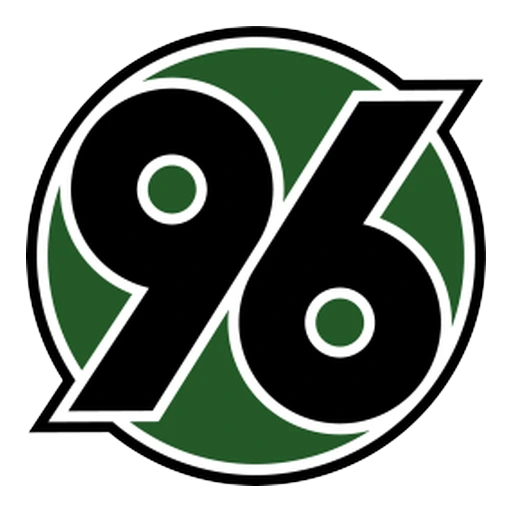
Further refinements followed in 1974, when the square background was removed in favour of a circular badge that placed greater emphasis on the bold "96". Throughout the 1980s and 1990s, the club experimented with several variations, adjusting the shade of green, the thickness of the outlines and the proportions of the numerals while preserving the overall concept. These gradual updates improved the crest's appearance across merchandise and modern printing without altering its instantly recognisable identity.
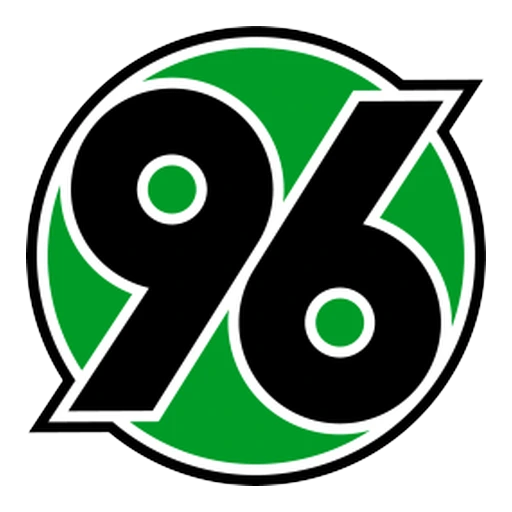
The current crest, introduced in 2007, represents a refined evolution of the modern "96" badge. Featuring brighter green colouring, cleaner outlines and improved typography, it enhances clarity across digital media while preserving the iconic circular design that has defined Hannover 96 for more than half a century.
Hannover 96 Club History
Founded on 12 April 1896 as Hannoverscher Fußball-Club 1896, Hannover 96 is one of Germany's oldest football clubs. Originally established as a rugby and athletics club, football quickly became its principal sport, and by the early twentieth century Hannover had developed into one of the strongest clubs in northern Germany. The club's distinctive red shirts earned it the nickname Die Roten (The Reds), while its long history established Hannover 96 as one of the country's traditional football institutions.
Hannover 96 enjoyed its first golden era during the 1930s and 1950s, winning the German Championship for the first time in 1938 after defeating Schalke 04 in one of the greatest upsets of the era. The club repeated the achievement in 1954, overcoming 1. FC Kaiserslautern to claim its second national title. These successes cemented Hannover's place among Germany's leading clubs in the years before the introduction of the Bundesliga.
When the Bundesliga was founded in 1963, Hannover 96 became one of its sixteen founding members. Although the club remained competitive during the league's early years, it struggled to establish itself among Germany's dominant sides and experienced several promotions and relegations over the following decades. Despite these fluctuations, Hannover maintained a strong reputation as one of northern Germany's most respected football clubs.
A memorable chapter in the club's history arrived in 1992, when Hannover 96 became the first club from the 2. Bundesliga to win the DFB-Pokal. Under manager Michael Lorkowski, Hannover defeated five Bundesliga clubs before overcoming Borussia Mönchengladbach on penalties in the final, producing one of the greatest cup runs in German football history.
After several years outside the top flight, Hannover returned to the Bundesliga in 2002 under manager Ralf Rangnick. The club enjoyed an extended stay in Germany's highest division, highlighted by consecutive fourth-place finishes under Mirko Slomka in 2011 and 2012, securing qualification for the UEFA Europa League. During this period, Hannover reached the Europa League quarter-finals in 2011–12, establishing itself once again as a competitive force in German football.
Following relegation from the Bundesliga in 2016, Hannover earned immediate promotion the following season but struggled to maintain its top-flight status and returned to the 2. Bundesliga in 2019. Since then, the club has remained one of the division's most ambitious and best-supported teams, continuing to pursue a return to the Bundesliga while drawing large crowds to the Heinz von Heiden Arena.
Hannover's fiercest rivalry is with Eintracht Braunschweig in the Lower Saxony Derby (Niedersachsenderby), one of Germany's oldest and most intense regional rivalries. Matches against Hamburger SV and Werder Bremen also carry considerable significance, reflecting the club's long-standing place among the traditional powers of northern German football.