Alemannia Aachen Crest History
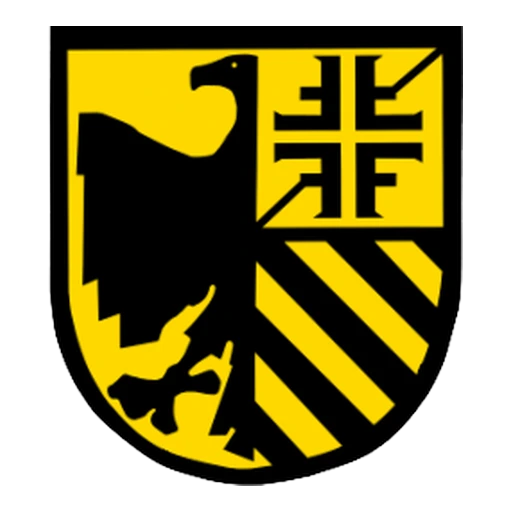
Founded in 1900 as FC Alemannia Aachen, the club's first official crest was a heraldic shield inspired by the historic coat of arms of the city of Aachen. The badge combined the Imperial Eagle, the black-and-yellow stripes of the Duchy of Jülich and the crossed hunting horns of the Burgraviate of Aachen, reflecting the city's rich medieval heritage. The club's traditional black-and-yellow colours were established from the outset and have remained a defining part of Alemannia Aachen's identity ever since.
During the 1920s and 1930s, Alemannia Aachen gradually introduced shield-shaped crests incorporating the club's distinctive black and yellow colours. The name "Alemannia", chosen to represent the historic Latin name for Germany, became increasingly prominent within the badge, while cleaner geometric layouts gave the club a stronger and more recognisable identity.
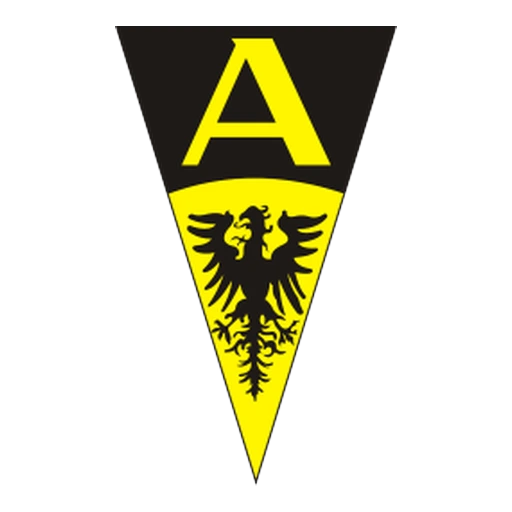
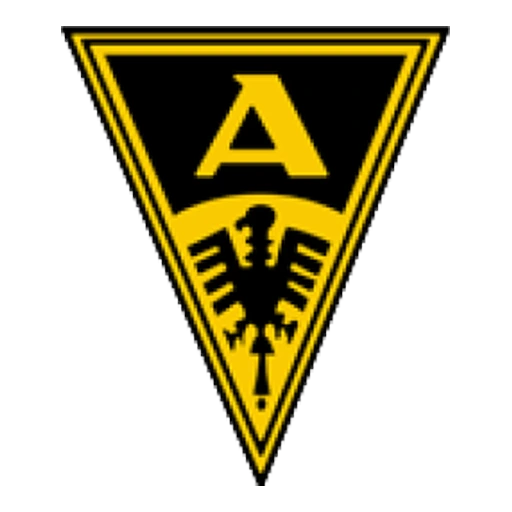
Following the Second World War, the club refined its visual identity through several subtle redesigns. Throughout the 1950s and 1960s, the crest adopted a more structured shield design featuring the "A" monogram and the club's traditional colours. Although the artwork was modernised, the badge retained its historic appearance and strong connection to the club's heritage.
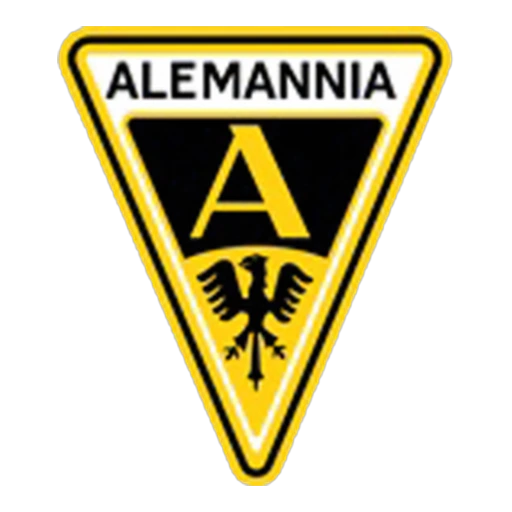
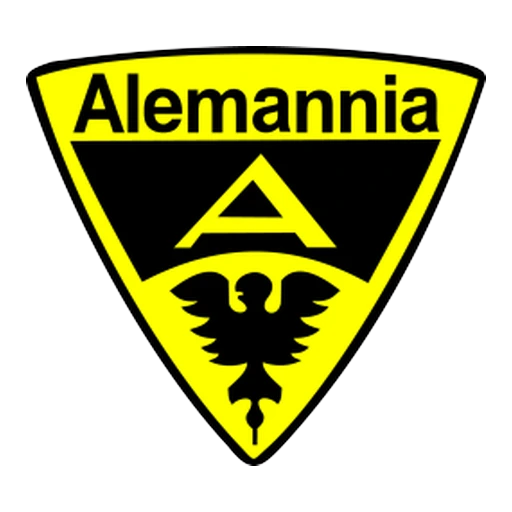
A significant update arrived during the 1990s, when Alemannia Aachen introduced a cleaner triangular crest featuring the club name "Alemannia" across the top and a bold black "A" as the central element. The simplified design modernised the club's visual identity while preserving its traditional colours and instantly recognisable shape.
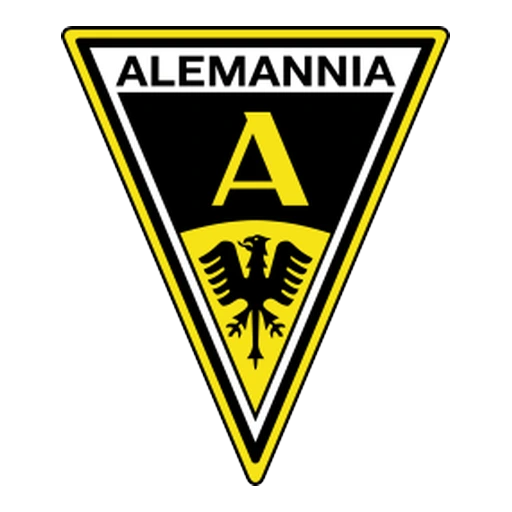
The current crest represents a careful refinement of this 1990s design. Minor adjustments to the typography, colours and proportions have improved reproduction across print and digital media, but the badge remains faithful to the version introduced more than three decades ago. Unlike many clubs that have undergone complete visual rebrands, Alemannia Aachen has retained its traditional triangular shield and distinctive black-and-yellow identity throughout the modern era.
Alemannia Aachen Club History
Founded on 16 December 1900, Alemannia Aachen is one of Germany's oldest football clubs. Established by a group of students from the Kaiser-Wilhelm-Gymnasium in Aachen, the club initially competed in regional competitions before gradually establishing itself as one of the strongest sides in western Germany. Named after the Latin word "Alemannia", referring to the historic German lands, the club adopted its distinctive black-and-yellow colours from its earliest years, creating an identity that has endured for more than a century.
Following the Second World War, Alemannia Aachen became a leading force in the Oberliga West, the highest regional division in West Germany. During the 1950s and 1960s, the club regularly challenged some of the country's strongest teams and enjoyed its greatest domestic success by reaching the German Championship Final in 1969, where it finished runners-up after losing to Bayern Munich. In the same year, Alemannia became one of the founding members of the Bundesliga's predecessor competitions before establishing itself among Germany's leading clubs.
The club also enjoyed memorable success in European competition. During the 1969–70 Inter-Cities Fairs Cup, Alemannia Aachen reached the quarter-finals, defeating several established European sides and enhancing its growing reputation beyond Germany. Although major trophies remained elusive, the club became renowned for its passionate supporters and formidable home atmosphere at the original Tivoli Stadium.
Financial difficulties and inconsistent performances during the 1970s and 1980s saw Alemannia fall into the lower divisions. Despite these setbacks, the club remained one of Germany's best-supported traditional clubs, regularly attracting large crowds and preserving its strong regional identity. A resurgence arrived in the early 2000s under manager Jörg Berger, culminating in an unforgettable run to the 2004 DFB-Pokal Final. Although Alemannia lost 3–2 to Werder Bremen, the finalists qualified for the UEFA Cup, where they reached the Round of 32 after memorable victories over Lille and AEK Athens.
In 2006, Alemannia Aachen returned to the Bundesliga for the first time in 36 years after winning promotion from the 2. Bundesliga. Although the club's stay in the top flight lasted only one season, it marked a significant milestone in its modern history. Two years later, Alemannia moved into the newly built New Tivoli, replacing the historic Tivoli Stadium that had been the club's home for more than 80 years.
The following decade proved challenging as financial problems and successive relegations saw Alemannia Aachen fall from professional football into the Regionalliga. Despite these difficulties, the club retained one of Germany's most passionate fanbases, with supporters continuing to fill the Tivoli in large numbers. Promotion back to the 3. Liga in 2024 marked an important step in the club's revival, restoring Alemannia Aachen to the professional ranks and renewing optimism for one of Germany's most historic football institutions.
Alemannia Aachen's fiercest rivalry is with Borussia Mönchengladbach, a fixture rooted in decades of competition between two of North Rhine-Westphalia's most historic clubs. Although the rivalry has become less frequent due to the clubs competing in different divisions, meetings between the sides continue to generate significant interest among supporters.
The club also shares a long-standing regional rivalry with Fortuna Köln, with matches between the two clubs often attracting large travelling support. Encounters against 1. FC Köln and Bayer 04 Leverkusen also carry regional significance, while fixtures against Rot-Weiss Essen, MSV Duisburg, and Rot-Weiß Oberhausen have developed into fierce contests through years of competition in the lower divisions. More recently, matches against Preußen Münster have become increasingly competitive following both clubs' return to professional football.