Historical Crests FC Dordrecht
Name: FC Dordrecht
Nickname(s): Sheep Heads
Founded: 1883
Stadium: Riwal Hoogwerkers Stadion (Dordrecht)
Capacity: 4,235
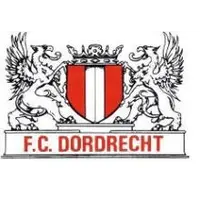
1972-1979
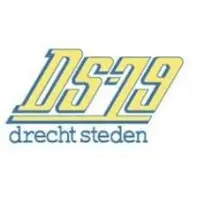
1979-1990
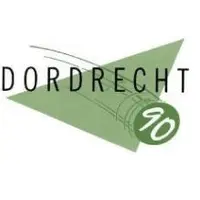
1990-1991
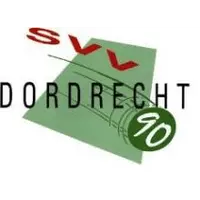
1991-1992
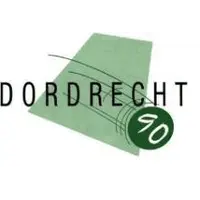
1992-1996
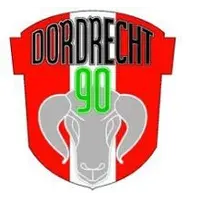
1996-2002
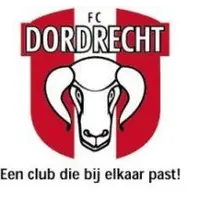
2002-2012
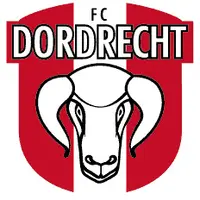
2012-Present
FC Dordrecht Crest History
The club's earliest emblems, used during the DFC era, were based on traditional monograms and football-style shields. These badges reflected the heritage of one of the oldest football clubs in the Netherlands and were generally linked to the city's historic red-and-white colours.
A major transformation occurred in 1972, when the professional section separated from DFC and adopted the name FC Dordrecht. New crest designs were introduced to distinguish the professional club from the amateur organisation while retaining references to the city's identity.
The most dramatic visual change arrived in 1979, when investor Nico de Vries professionalised the club and renamed it DS'79 (Drechtsteden '79). Alongside the new name came a complete rebranding. The traditional red-and-white colours were abandoned in favour of a bold yellow-and-blue identity, and the crest was redesigned to reflect the club's new ambitions and regional focus.
Another significant redesign followed in 1990, when the club became Dordrecht '90. The visual identity changed once again, with new badges incorporating the club's revised name and a green-and-white colour scheme introduced under new ownership. These colours marked another departure from the club's traditional appearance.
During the 1990s, several different Dordrecht '90 crests were used. The club also briefly competed as SVV/Dordrecht '90 following a merger with SVV Schiedam in 1991, resulting in additional badge variations before the merger was dissolved. The frequent changes mirrored a turbulent period in the club's history.
A new chapter began in 2002, when the club restored the historic name FC Dordrecht. A redesigned crest was introduced featuring a more traditional identity rooted in the city of Dordrecht. The badge incorporated the club's modern green-and-white colours while re-establishing a stronger connection with local symbolism.
One of the most distinctive elements of the modern crest is the ram's head, referencing the famous Dordrecht nickname Schapenkoppen ("Sheep Heads"). The symbol originates from a local legend and has become one of the most recognisable aspects of the club's identity.
The current badge continues to feature the ram's head together with the club's name and green-and-white colours.
FC Dordrecht Club History
Founded on 16 August 1883 as the Dordrechtsche Cricket Club (DCC), FC Dordrecht traces its origins to one of the oldest football institutions in the Netherlands. Football was added to the club's activities in 1891, and as the sport rapidly grew in popularity, the organisation eventually became known as Dordrechtsche Football Club (DFC). As a result, FC Dordrecht today can claim roots stretching back to the nineteenth century and remains one of the oldest football clubs in Dutch football.
During the amateur era, DFC established itself as one of the leading clubs in the Netherlands. The club enjoyed considerable success before the introduction of professional football and won the KNVB Cup in 1914 and 1932, achievements that remain among the most important honours in its history.
When professional football was introduced in the Netherlands in 1954, DFC became part of the new professional system. The club spent much of the following decades competing in the Eerste Divisie and gradually developed a reputation as a respected provincial club with a strong football tradition.
A major turning point occurred in 1972, when the professional section separated from the amateur club DFC and adopted the name FC Dordrecht. The amateur branch continued independently as DFC, while the professional organisation embarked on its own path within Dutch football.
Another transformation followed in 1979, when businessman Nico de Vries sought to create a stronger regional identity. The club was renamed DS'79 (Drechtsteden '79) and adopted a completely new image. The change reflected ambitions to build a club representing the wider Drechtsteden region rather than only the city of Dordrecht.
The club enjoyed one of its greatest sporting achievements in 1983, winning the Eerste Divisie title and securing promotion to the Eredivisie. Although top-flight football proved difficult to sustain, the championship remains one of the highlights of the club's professional history.
The early 1990s brought further restructuring. In 1991, the club merged with SVV Schiedam and competed briefly as SVV/Dordrecht '90. While the merger initially brought success, including Eredivisie football, it ultimately proved short-lived. The club later returned to the name Dordrecht '90, continuing independently once again.
(A second Eerste Divisie championship arrived in 1994, earning another promotion to the Eredivisie. Like previous top-flight adventures, however, the club found it difficult to compete consistently against the larger Dutch clubs and soon returned to the second tier.
In 2002, the historic name FC Dordrecht was restored. The return was welcomed by supporters and symbolised a renewed focus on the club's identity and traditions. Since then, FC Dordrecht has largely competed in the Eerste Divisie while remaining one of the most recognisable and historic clubs outside the Eredivisie.
One of the most distinctive aspects of the club's identity is the nickname Schapenkoppen ("Sheep Heads"). The name originates from a famous local Dordrecht legend and has become deeply embedded in the culture of both the club and the city.
FC Dordrecht plays its home matches at Stadion Krommedijk, which has been associated with professional football in Dordrecht since 1948. The ground is one of the most traditional venues in Dutch football and remains an important symbol of the club's history.
The club's main rivalries are with nearby South Holland clubs such as Excelsior Rotterdam, Sparta Rotterdam, ADO Den Haag and other regional opponents. These matches often carry extra significance due to geographic proximity and decades of competition.
FC Dordrecht
Your Dynamic Snippet will be displayed here... This message is displayed because you did not provide enough options to retrieve its content.