Nickname(s):Furacão(The Hurricane), Rubro-Negro(The Red and Black)
Founded:1904
Stadium:Ligga Arena(Arena da Baixada)
Capacity:42,372
1912-1924
1914-1920
1920-1924
1924-1936
1934-1938
1936-1937
1937-1938
1938-1945
1945-1948
1948-1950
1950-1970
1970-1989
1989-1996
1997-2001
2002-2018
2016-Present
CA Paranaense Crest History
The crest history of Club Athletico Paranaense reflects both the club’s origins in the merger of two Curitiba teams and its gradual development into one of Brazil’s most distinctive football identities. The earliest designs belonged to the two predecessor clubs, while after the creation of Athletico in 1924, the combination of red and black, horizontal stripes and the CAP monogram became the foundation of its visual identity.
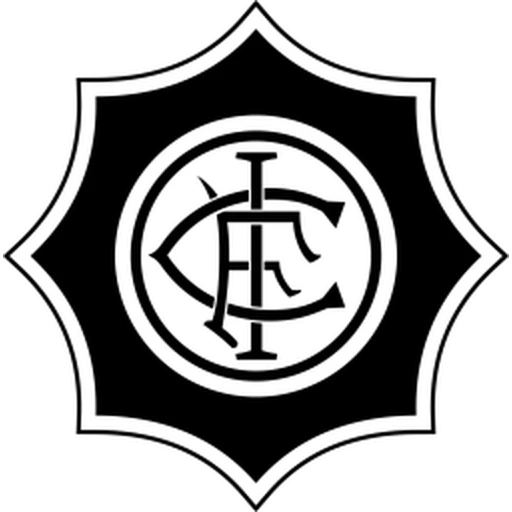
The earliest crest shown, used from 1912 to 1924, belonged to International Foot-Ball Club, one of the two clubs that later formed Athletico Paranaense. It was a black, ornamental shield containing a white circular centre and an elaborate intertwined monogram. This explains why 1912 sometimes appears when tracing Athletico’s history, although the present club itself was founded in 1924.
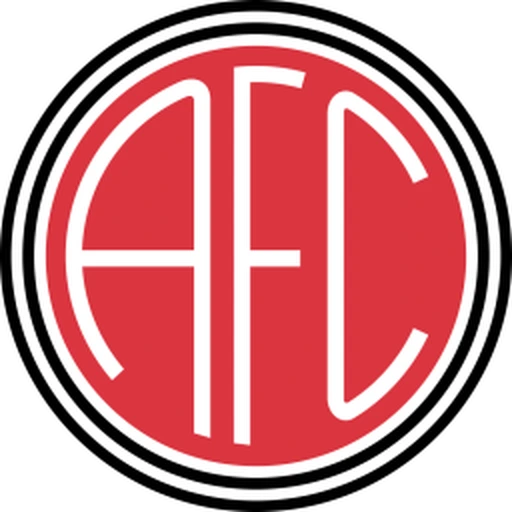
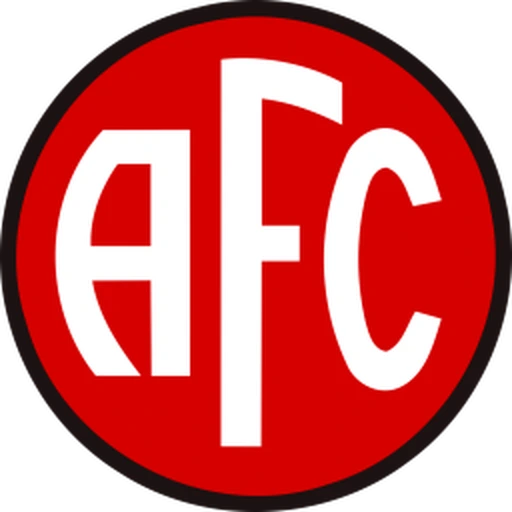
The other predecessor was América Futebol Clube, represented here by two crests. Between 1914 and 1920, América used a circular red emblem surrounded by black and white rings, with the large white letters AFC dominating the centre. The 1920–1924 version simplified this concept into a red circle with a black border and a more compact white AFC monogram.
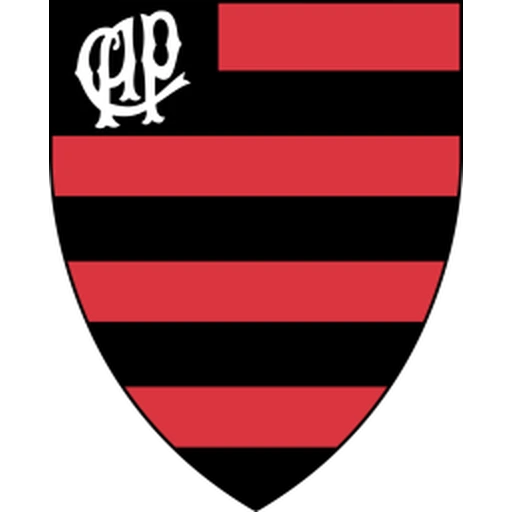
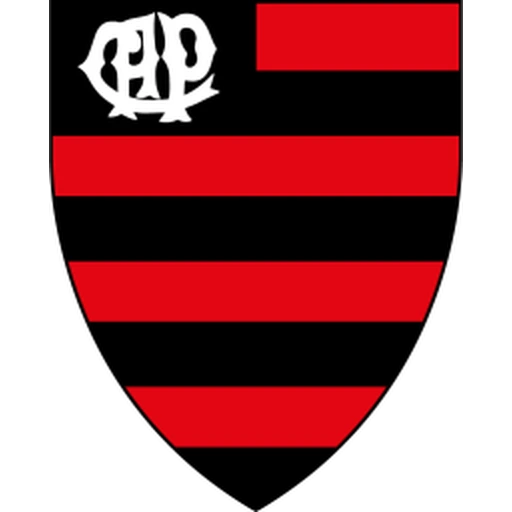
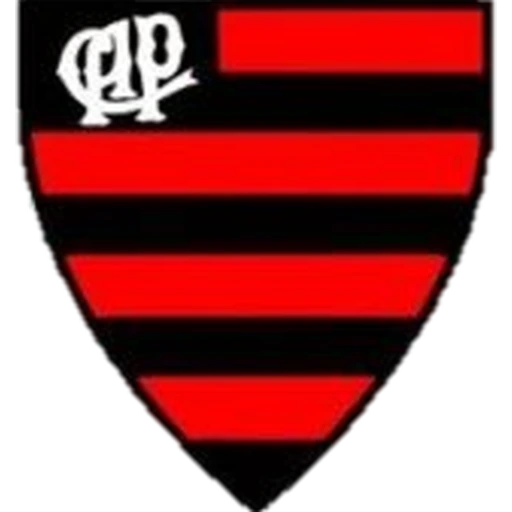
In 1924, International and América merged to create Club Athletico Paranaense. The first Athletico crest, used from 1924 to 1936, introduced the visual language that would define the club for decades. A pointed shield was filled with alternating red and black horizontal stripes, while an ornate white CAP monogram appeared in the upper-left corner.
The 1934–1938 version retained the same striped shield but strengthened the colours and adjusted the proportions. The monogram remained positioned in the upper-left corner, establishing a combination that became immediately associated with Athletico.
A brief redesign appeared in 1936–1937. The shield received a white outer border, the red and black horizontal stripes became narrower and the monogram was replaced by a different stylised arrangement of the club’s initials.
For 1937–1938, Athletico returned to the familiar CAP monogram and simplified the outline. The shield became broader and the alternating horizontal bands were given greater visual prominence.
Between 1938 and 1945, the same basic composition continued with only subtle alterations to the shape of the shield, stripe proportions and monogram. The 1945–1948 version followed the same formula, demonstrating how firmly the red-and-black striped identity had already become established.
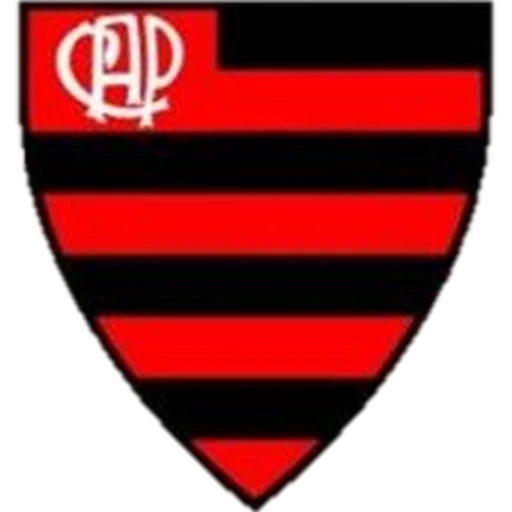
The 1948–1950 crest introduced another small variation. The upper-left section behind the white CAP monogram became red rather than black, while the remaining horizontal bands continued alternating between red and black.
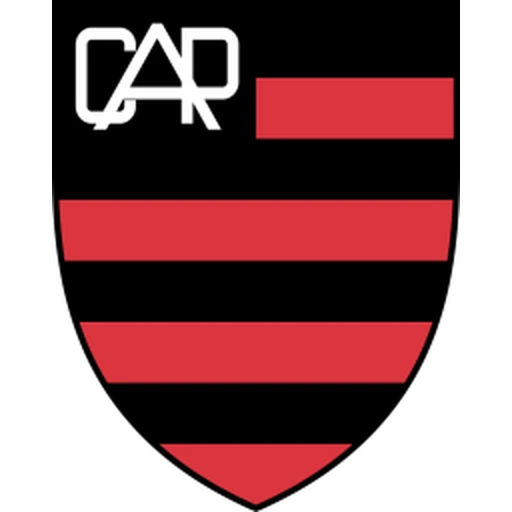
A more noticeable stylistic change came between 1950 and 1970. The shield became cleaner and more rounded, the horizontal bands were regularised and a simplified geometric CAP monogram replaced the older ornamental lettering. Despite these changes, the fundamental red-and-black identity remained intact.
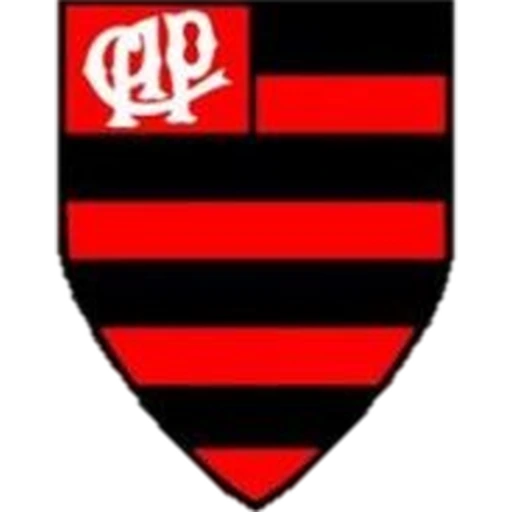
For 1970–1989, Athletico returned to the traditional ornate white CAP monogram. The striped shield became more compact and symmetrical, producing a design closely related to those used during the club's early decades.
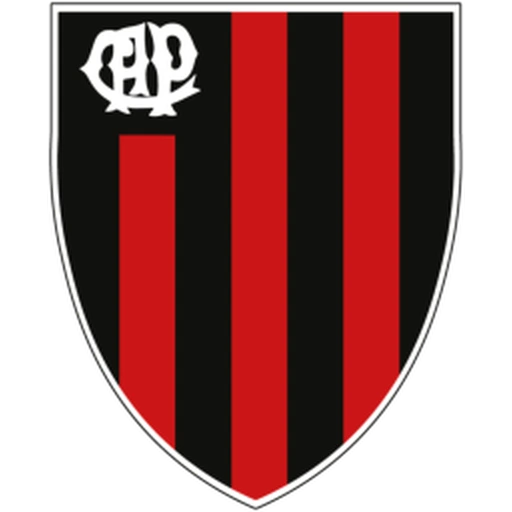
The 1989–1996 crest represented a significant departure. Athletico rotated the traditional visual pattern by introducing vertical red and black stripes inside a long shield. The white CAP monogram remained in the upper-left corner, preserving a connection with earlier designs.
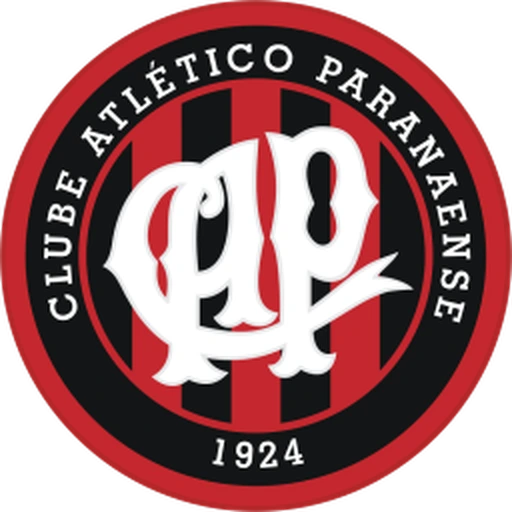
Another radical redesign followed in 1997. The 1997–2001 emblem abandoned the traditional shield altogether and adopted a circular badge. A large white CAP monogram occupied the centre over vertical red-and-black stripes, while an outer black ring carried the words “Clube Atlético Paranaense” and the foundation year 1924.
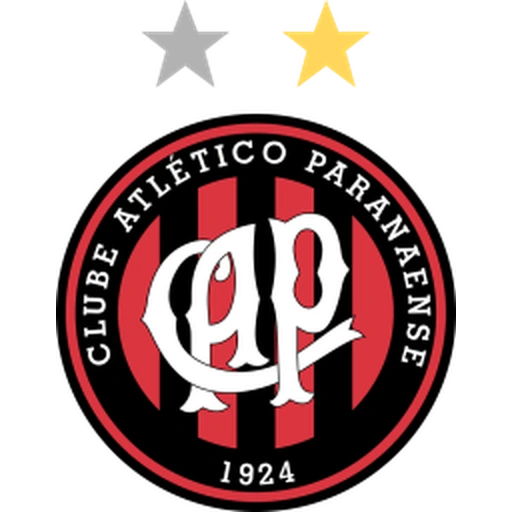
The circular concept was refined for 2002–2018. The badge became more compact and the surrounding ring thinner, while the red-and-black striped centre and large white monogram remained. Stars were also displayed above the crest during parts of this period to commemorate important achievements.
In 2018, the club restored the historical spelling “Athletico” with an h, reconnecting its official name with its original 1924 identity. At the same time, an entirely new visual identity was introduced for use from 2019.
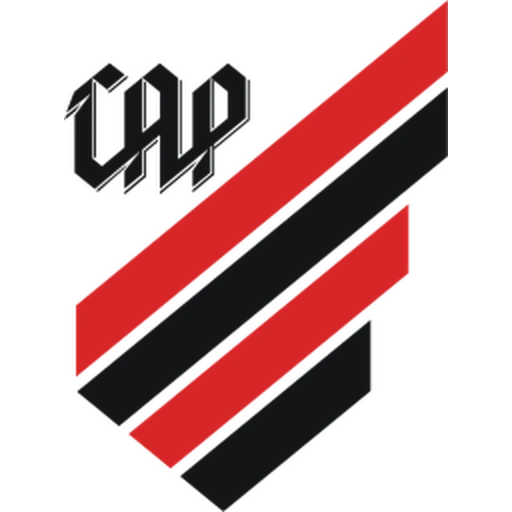
The 2019–Present crest is one of the most radical modernisations in Brazilian football. The traditional shield and circular badge disappeared completely. In their place came a minimalist geometric symbol consisting of four rising diagonal red-and-black bands, accompanied by a sharply stylised black CAP monogram. The diagonal forms are designed to evoke both forward movement and the appearance of a hurricane, directly referencing the club’s famous nickname, Furacão.
CA Paranaense Club History
Club Athletico Paranaense was founded on 26 March 1924 in Curitiba, Paraná, through the merger of two local clubs, International Foot-Ball Club and América Futebol Clube. International had been founded in 1912 and América in 1914, explaining why the club's historical identity can be traced back further than its official 1924 foundation. The new organisation adopted red and black as its colours and quickly became one of the leading football clubs in the state of Paraná.
Athletico made an immediate impact. In 1925, only a year after its foundation, the club won its first Campeonato Paranaense. Further state championships followed as Athletico established itself alongside Coritiba as one of the dominant forces in Paraná football.
The club's famous nickname, Furacão — The Hurricane, originated during the 1949 Campeonato Paranaense. Athletico produced an exceptionally powerful attacking campaign and swept aside many of its opponents, leading the local press to describe the team as a Furacão. The nickname became permanently associated with the club and remains central to its identity today.
Throughout much of the twentieth century, Athletico's success was concentrated primarily at state level. The club accumulated numerous Campeonato Paranaense titles while its rivalry with Coritiba developed into one of southern Brazil's great football derbies. Matches between the two clubs became known as the Atletiba.
Athletico also became closely connected with its historic home in Curitiba. The club's ground at Baixada do Água Verde had originally been associated with predecessor International and developed over the decades into the stadium now known as the Arena da Baixada, currently commercially named Ligga Arena.
The club experienced significant difficulties during the late 1980s and early 1990s, including periods outside the highest level of Brazilian football. A major institutional transformation began in the mid-1990s, when Athletico embarked upon an ambitious programme of sporting, financial and infrastructural modernisation.
A crucial moment came in 1995, when Athletico won the Campeonato Brasileiro Série B, earning promotion back to the top flight. Rather than simply attempting to survive in Série A, the club began developing into one of the most professionally structured organisations outside Brazil's traditional group of giants.
The old Baixada stadium was largely demolished and reconstructed, with the new Arena da Baixada opening in 1999. The modern stadium became a symbol of Athletico's transformation and later underwent another major redevelopment ahead of the 2014 FIFA World Cup, when it hosted several tournament matches.
The sporting breakthrough arrived in 2001. Led by a team featuring players such as Alex Mineiro, Kléberson and Adriano Gabiru, Athletico won the Campeonato Brasileiro Série A for the first time. The triumph represented the greatest achievement in the club's history to that point and established Athletico as a genuine national force.
Athletico came close to further major success in the following years. The club finished runner-up in the 2004 Campeonato Brasileiro and then reached the Copa Libertadores final in 2005, its first appearance in the final of South America's most prestigious club competition. Athletico ultimately lost the final to São Paulo, but the campaign demonstrated how dramatically the club's status had changed.
The following decade brought periods of inconsistency, including relegation from Série A in 2011. Athletico responded quickly, however, winning promotion the following season and rebuilding another competitive team. By the second half of the 2010s, the club was entering the most successful international period in its history.
In 2018, Athletico captured its first major continental trophy by winning the Copa Sudamericana. After drawing with Colombian side Junior in both legs of the final, Athletico won the deciding penalty shoot-out in Curitiba. The victory gave the Furacão its first CONMEBOL title.
The club also made an important symbolic change in 2018, officially restoring the historical spelling Club Athletico Paranaense, with an h, which had been used at its foundation. A radically redesigned crest and wider visual identity accompanied the change.
Success continued in 2019, when Athletico won the Copa do Brasil for the first time, defeating Internacional in the final. This strengthened the club's reputation as one of Brazil's most successful tournament teams of the period.
Another continental triumph followed in 2021. Athletico won its second Copa Sudamericana, defeating fellow Brazilian club Red Bull Bragantino in the final in Montevideo. The achievement made Athletico one of the competition's multiple winners and confirmed its growing importance in South American football.
In 2022, Athletico returned to the Copa Libertadores final for the second time in its history. After eliminating Estudiantes and Palmeiras during the knockout rounds, the Furacão faced Flamengo in the final in Guayaquil. A first-half red card left Athletico with ten players, and Flamengo eventually won 1–0.
Athletico Paranaense’s greatest rivalry is with fellow Curitiba club Coritiba, with their matches forming the famous Atletiba derby, one of the most important rivalries in southern Brazilian football. First contested in 1924, the rivalry developed around the battle for supremacy in Paraná and has produced numerous decisive Campeonato Paranaense encounters as well as important national-league matches. Athletico also has a major rivalry with Paraná Clube, traditionally known as the Paratico, although Paraná’s decline through the Brazilian divisions has reduced the frequency of the fixture in recent years. Matches against other major southern Brazilian clubs can also be highly competitive, but Coritiba remains unquestionably Athletico’s principal and most emotionally significant rival.