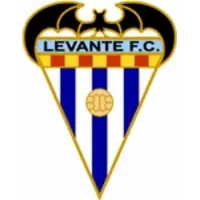
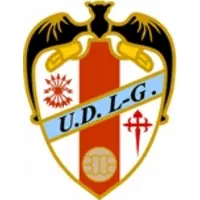
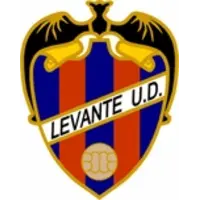
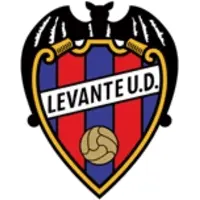
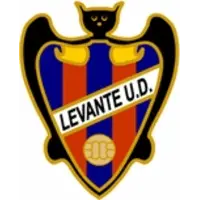
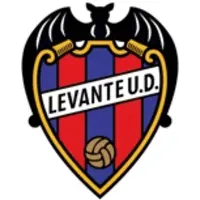
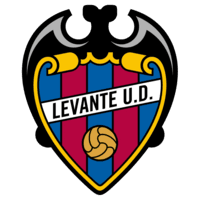
Levante Unión Deportiva inherited a visual identity shaped by both its predecessors and the traditions of the city of Valencia.
Prior to the merger, both Levante FC and Gimnástico FC used their own badges, reflecting the football culture of early twentieth-century Valencia. Following the devastating effects of the Spanish Civil War, the two clubs united to form Levante UD. The new organisation required a fresh visual identity that would honour the heritage of both institutions while establishing a new club capable of representing the city on the national stage.
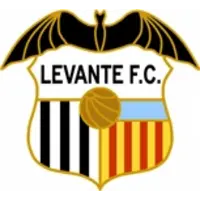
The most significant element adopted in the new crest was the bat, a symbol deeply associated with Valencia and its history. For centuries, the bat has appeared on the city's coat of arms and has become one of the most recognisable emblems of Valencian identity. As a result, both Levante UD and Valencia CF feature a bat in their crests, reflecting their shared connection to the city and region. While many football clubs use animals as mascots or decorative symbols, Levante's bat is rooted directly in local history and civic tradition.
The shield beneath the bat prominently displayed Levante's blue-and-maroon colours, inherited from the club's predecessors and retained as a link to its origins. These colours have remained central to the club's identity throughout every major redesign.
Throughout the second half of the twentieth century, the crest underwent a series of refinements as football branding evolved. The overall structure remained largely unchanged, with designers focusing on improving proportions, simplifying details and enhancing visual balance. The bat continued to occupy the crest's highest position, symbolically watching over the shield and reinforcing the club's connection to Valencia.
As Levante established itself within professional Spanish football, further updates modernised the badge for use across merchandise, publications and digital media. These changes generally involved cleaner lines, sharper outlines and more consistent typography. However, the club deliberately avoided radical redesigns, recognising the importance of preserving the symbols that supporters associated with Levante's identity.
The modern crest retains all of the key elements that have defined Levante UD for decades. The bat remains positioned above the shield, while the blue-and-maroon stripes continue to dominate the badge. The club's name is displayed prominently across the centre, creating a design that is both distinctive and immediately recognisable within Spanish football.
Levante UD Club History
Levante Unión Deportiva is one of the most historic football clubs in the Valencian Community and proudly holds the distinction of being the oldest football club in the city of Valencia. Originally founded as Levante Football Club in 1909, the club predates its city rival Valencia CF by a decade, as Valencia would not be established until 1919. Although Levante has often operated in the shadow of its more decorated neighbour, the club has built a proud identity and a unique place within Spanish football.
The origins of Levante are closely tied to Valencia's maritime districts and Mediterranean culture. The club's name refers to the eastern region of the Iberian Peninsula and evokes the Levant, the area of Spain's eastern coastline facing the Mediterranean Sea. The name also recalls the Levante wind, which blows from the east, and Levante Beach in La Malvarrosa, where the club played some of its earliest matches. These connections helped shape Levante's identity as a club deeply rooted in Valencia's coastal communities.
During its early decades, Levante developed into one of the leading football clubs in the city. However, the outbreak of the Spanish Civil War had a profound impact on football throughout the country. In the aftermath of the conflict, Levante FC merged with Gimnástico FC in 1939 to form Levante Unión Deportiva. The merger combined the sporting traditions of both institutions and laid the foundations for the modern club that exists today.
One of the most remarkable achievements in the club's early history came during the Spanish Civil War. In 1937, Levante FC won the Copa de la España Libre, a competition organised in Republican-controlled territory. Although the tournament's historical status has been the subject of debate, it remains one of the most celebrated accomplishments associated with the club's heritage and an important part of Levante's identity.
A particularly notable chapter in the club's history occurred in the early 1980s when legendary Dutch footballer Johan Cruyff joined Levante. Although injuries limited his impact on the pitch, Cruyff's arrival brought unprecedented international attention to the club. One of the greatest players in football history, Cruyff spent part of the final stage of his playing career in Valencia before retiring a few years later. His association with Levante remains one of the most famous episodes in the club's history.
The club's fortunes improved significantly during the twenty-first century. Levante secured promotion to La Liga on multiple occasions and gradually established itself as a competitive top-flight side. One of the greatest achievements in the club's modern history came during the 2011–12 season, when Levante finished sixth in La Liga and qualified for European competition for the first time. The following season, the club competed in the UEFA Europa League and reached the round of 16, marking the most successful period in its history on the continental stage.
The club's most significant rivalry is with Valencia CF. Matches between the two sides are known as the Derbi Valenciano, Derbi del Turia or Derbi Valentino. The rivalry is one of the most passionate in Spanish football and reflects the deep-rooted football culture of Valencia.