Historical Crests SSC Napoli
Name: SSC Napoli
Nickname(s): I Ciuccuarelli (The Little Donkeys), I Partenopei (The Parthenopeans), Gli Azzurri (The Blues)
Founded: 1926
Stadium: Stadio Diego Armando Maradona (Napoli)
Capacity: 54,726
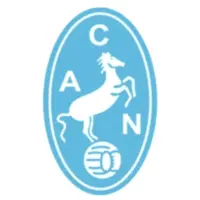
1926-1927
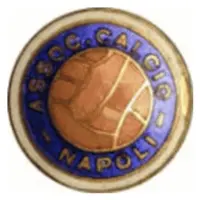
1927
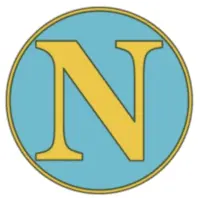
1927-1964
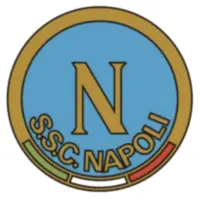
1964-1980
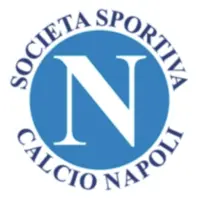
1980-2002
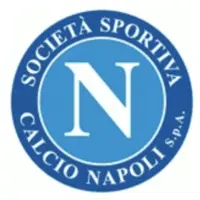
2002-2004
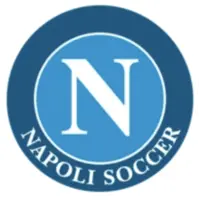
2004-2006
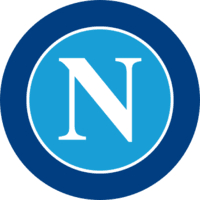
2006-2025
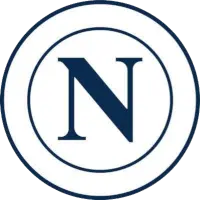
2025-Present
SSC Napoli Crest History
The earliest badge in the club's history belonged to Associazione Calcio Napoli, founded in 1926. This crest featured a rampant horse standing above a football, surrounded by the initials "ACN". The horse was an ancient symbol associated with the Kingdom of Naples and reflected the city's historical identity. Although the design remained in use for only a relatively short period, it remains one of the most distinctive and unusual emblems ever adopted by the club.
During the club's formative years, Napoli gradually moved away from the horse symbol and began embracing the visual identity inherited from Internazionale Napoli, one of the clubs involved in the creation of the modern organisation. Internazionale Napoli had used a simple badge centred around the letter "N", and this design would eventually become the foundation of Napoli's future identity.
By the mid-twentieth century, the club had adopted the now-famous circular crest containing a large "N". The design was elegant, instantly recognisable and perfectly suited to the club's growing status within Italian football. Unlike many clubs that relied on coats of arms, animals or elaborate heraldic imagery, Napoli built its identity around a single letter representing both the club and the city.
Throughout the 1950s and 1960s, several variations of the circular badge appeared. The basic concept remained unchanged, but typography, borders and colour shades were refined. During this period, the "N" was sometimes displayed in gold rather than white, particularly on official club materials and commemorative designs.
The 1970s and 1980s saw further refinements rather than major redesigns. The circular crest remained dominant, though different shades of blue were introduced and graphic details were modernised. This badge became closely associated with the club's rise to national prominence and the arrival of Diego Maradona in 1984.
One of the most famous versions of the crest was used during the Maradona era, when Napoli won its first Serie A titles and established itself among Europe's elite clubs. Although minor variations existed, the simple white "N" inside a blue circle became synonymous with the most successful period in the club's history.
During the 1990s and early 2000s, Napoli experimented with several alternative badge designs. Some versions featured the club's full name surrounding the central emblem, while others introduced metallic effects, shadows and modern graphic elements. Despite these changes, the core identity remained unchanged: the letter "N" continued to dominate every version of the crest.
Following the club's bankruptcy in 2004 and rebirth as Napoli Soccer, a temporary crest was introduced featuring a stylised version of the letter "N". While supporters accepted the badge during the club's rebuilding years, many regarded it as a departure from the traditional identity associated with Napoli's greatest successes.
After reclaiming the historic name Società Sportiva Calcio Napoli in 2006, the club gradually returned to a more traditional visual identity. The classic circular badge featuring the white "N" on a blue background was restored, reaffirming continuity with the club's history and reconnecting modern Napoli with its most successful eras.
In 2025, Napoli unveiled a refined version of its historic emblem, simplifying the design while preserving the iconic "N" that has represented the club for generations. The traditional blue-filled circle was replaced by a predominantly white badge, featuring a dark blue serif letter N enclosed within two thin concentric blue rings. The redesign gave the crest a more elegant and minimalist appearance, drawing inspiration from classic heraldic and sporting emblems while embracing modern branding principles.
SSC Napoli Club History
Founded on 1 August 1926 as Associazione Calcio Napoli, Napoli is one of the most successful and passionately supported clubs in Italian football. The club was created through the reorganisation of football in Naples, particularly following the merger and transformation of earlier local clubs, including Internazionale Napoli.
The club adopted the famous sky-blue colours that remain synonymous with Naples today. Napoli's supporters are often known as the Partenopei, a nickname derived from Parthenope, the siren of Greek mythology whose legend is closely linked to the origins of the city.
During its early decades, Napoli gradually established itself within Italian football. The club became a founding member of Serie A in 1929 and spent most of its history in the top division. Although major trophies initially proved elusive, Napoli regularly competed against the strongest clubs in the country and developed a large and devoted following.
The first major success arrived in 1962, when Napoli won its first Coppa Italia. The achievement was particularly significant because the club was competing in Serie B at the time, becoming the first team outside the top flight to win the competition.
Throughout the 1970s, Napoli emerged as a serious force in Italian football. Players such as José Altafini, Antonio Juliano and later Giuseppe Savoldi helped establish the club among the leading sides in the country. The opening of the Stadio San Paolo in 1959, later renamed the Stadio Diego Armando Maradona, provided the club with one of Italy's most iconic football venues.
The defining moment in Napoli's history arrived in 1984, when the club signed Diego Armando Maradona from Barcelona. His arrival transformed not only Napoli but also Italian football. Maradona became the symbol of the city and led the club into the most successful era in its history.
Under Maradona's leadership, Napoli won its first Serie A title in 1986–87, completing a historic league and cup double by also winning the Coppa Italia. For many supporters, the triumph represented more than a sporting achievement; it was a victory for southern Italy against the traditional powerhouses of the north.
Success continued during the following years. Napoli won the UEFA Cup in 1989, the first major European trophy in the club's history, and captured a second Serie A title in 1989–90. The club also added a Supercoppa Italiana during this golden era, establishing itself among Europe's elite.
Following Maradona's departure in 1991, Napoli entered a prolonged period of decline. Financial problems, poor performances and administrative instability gradually pushed the club away from the top of Italian football. Although talented players continued to emerge, the club struggled to replicate the success of the Maradona years.
The crisis reached its peak in 2004, when Napoli was declared bankrupt. The club ceased operations and was forced to restart under the name Napoli Soccer, beginning again in Serie C1. For a club of Napoli's stature, the collapse was one of the most dramatic events in modern Italian football.
A new era began when film producer Aurelio De Laurentiis acquired the club. Under his ownership, Napoli quickly rebuilt. Promotion to Serie B was secured in 2006, followed by a return to Serie A in 2007. The club also reclaimed its historic name, Società Sportiva Calcio Napoli, restoring continuity with its proud past.
The following decade saw Napoli re-establish itself among Italy's strongest clubs. Players such as Edinson Cavani, Ezequiel Lavezzi, Marek Hamšík, Gonzalo Higuaín, Dries Mertens and Lorenzo Insigne became central figures in a period of consistent success. Multiple Coppa Italia and Supercoppa Italiana victories followed, while Napoli regularly competed in the UEFA Champions League.
One of the most important moments in modern club history arrived in 2023, when Napoli won its third Serie A title, ending a 33-year wait for the Scudetto. Led by coach Luciano Spalletti and inspired by stars such as Victor Osimhen and Khvicha Kvaratskhelia, Napoli produced one of the most dominant seasons in the club's history. The title sparked celebrations across Naples on a scale rarely seen in world football.
The club added a fourth Serie A championship in 2025, confirming Napoli's return as one of the dominant forces in Italian football and strengthening its position among the country's most successful clubs.
Napoli's fiercest rivalry is with Roma, in a fixture known as the Derby del Sole ("Derby of the Sun"). Other major rivalries exist with Juventus, Inter, Milan and Lazio, though the rivalry with Juventus has become particularly intense due to the historic north-south divide within Italian football.
.
SSC Napoli Pins
Your Dynamic Snippet will be displayed here... This message is displayed because you did not provide enough options to retrieve its content.