Historical Crests SSC Bari
Name: SSC Bari
Nickname(s): I Galletti (The Cockerels)
Founded: 1908
Stadium: Stadio San Nicola (Bari)
Capacity: 58,270
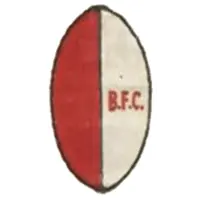
1924-192?
192?-1944
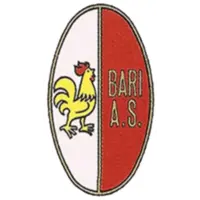
1944-1979
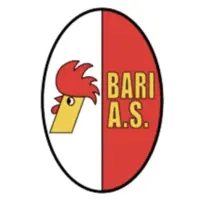
1979-1990
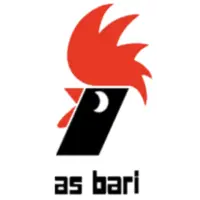
1990-2007
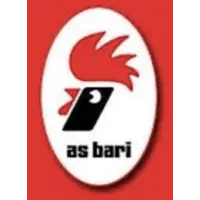
2007-2011
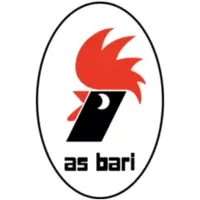
2011-2014
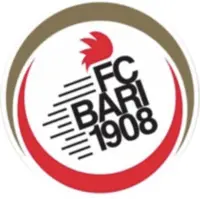
2014-2016
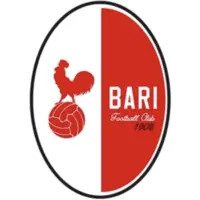
2016-2018
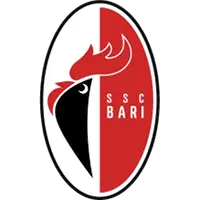
2018-Present
SSC Bari Crest History
The earliest known crests used during the 1920s and 1930s were relatively simple and reflected the traditions of early Italian football. These designs typically featured monograms, shields and the red-and-white colours taken from the city's coat of arms. Following the creation of Unione Sportiva Bari in 1928, the club increasingly embraced civic symbolism as part of its identity.
During the post-war decades, Bari gradually adopted the cockerel as its principal symbol. The bird became closely associated with the club and gave rise to the nickname I Galletti, which remains widely used today. The cockerel was unusual within Italian football and helped Bari develop a visual identity that was immediately recognisable throughout the country.
The badge used between 1944 and 1979 featured a traditional heraldic design built around the club's colours and the famous rooster. This emblem established many of the visual themes that would define Bari's identity for the remainder of the twentieth century.
A major redesign arrived in 1979. The new crest modernised the image of the cockerel and introduced a cleaner graphic style more suited to contemporary football branding. The bird became more prominent within the design, reinforcing its status as the club's defining symbol.
During the 1990–2007 period, Bari adopted one of the most recognisable badges in its history. The crest featured a large stylised rooster enclosed within a shield, combined with the club's red-and-white colours. This version accompanied Bari through several memorable Serie A campaigns and became closely associated with the club's modern identity.
In 2007, the club introduced a redesigned badge featuring a more modern interpretation of the cockerel. The shield became sleeker and more contemporary, while retaining the traditional colours and symbolism. This crest remained in use until the financial difficulties that affected the club in the following decade.
Following ownership and organisational changes, new versions appeared between 2011, 2014 and 2016. While the graphic style evolved, each design preserved the rooster and the red-and-white colours. The redesigns reflected the club's successive corporate reorganisations but sought to maintain continuity with Bari's historic identity.
A completely new chapter began in 2018 following the bankruptcy and refoundation of the club as Società Sportiva Calcio Bari.
SSC Bari Club History
Founded on 15 January 1908 as Bari Foot-Ball Club, Bari is one of the oldest football clubs in southern Italy and the most successful football institution in the region of Apulia. Established by a group of local and foreign merchants led by Floriano Ludwig, the club quickly became the sporting representative of the city. From its earliest years, Bari adopted the red-and-white colours of the city's coat of arms, colours that continue to define the club's identity today.
The modern club emerged in 1928 when several football organisations from the city merged to form Unione Sportiva Bari. The merger created a stronger and more competitive club capable of competing at national level and marked the beginning of Bari's rise within Italian football.
One of the club's best early campaigns came in 1946–47, when Bari achieved a seventh-place finish in Serie A, which remains among the highest league finishes in its history. During these decades, Bari developed a passionate support base that extended throughout the region and established itself as the leading football club of Apulia.
A golden period arrived during the 1980s and 1990s. Bari achieved several promotions to Serie A and became a competitive top-flight side. The club reached the Coppa Italia Final in 1984 and gained a reputation for attractive football and passionate support.
An important international success followed in 1990, when Bari won the Mitropa Cup, the club's only major international trophy. The victory remains one of the most significant achievements in Bari's history.
The 1990s also saw the emergence of several notable players. Most famously, Antonio Cassano, born in Bari, rose through the club's youth system before becoming one of Italy's most gifted footballers. Another memorable moment came in 1995–96, when striker Igor Protti finished as Serie A's top scorer despite Bari suffering relegation.
Since 1990, Bari has played its home matches at the Stadio San Nicola, one of the largest and most distinctive stadiums in Italy. Designed by renowned architect Renzo Piano for the 1990 FIFA World Cup, the stadium quickly became a symbol of the club and the city.
A new high point arrived in 2009, when Bari returned to Serie A under coach Giampiero Ventura. The team impressed during its first season back in the top flight and became known for its attractive attacking football. However, financial instability soon began to undermine the club's progress.
Economic difficulties eventually culminated in bankruptcy proceedings during the 2010s, placing the future of the club in serious doubt. The most dramatic collapse occurred in 2018, when Bari was excluded from Serie B and forced to restart from Serie D.
The club was subsequently refounded as Società Sportiva Calcio Bari and acquired by the De Laurentiis family, owners of Napoli through Filmauro. Under the presidency of Luigi De Laurentiis, Bari began a rapid rebuilding process aimed at restoring the club to its historic position within Italian football.
The recovery proved successful. Bari secured promotion from Serie D in 2019, returned to Serie B in 2022, and immediately re-established itself as one of the strongest clubs in the division.
Historically, Bari's fiercest rivalry is with Lecce, with matches between the two clubs forming the Derby di Puglia, one of the most passionate rivalries in southern Italy. Strong rivalries also exist with Taranto and Foggia, creating some of the most intense fixtures in the region.
SSC Bari
Your Dynamic Snippet will be displayed here... This message is displayed because you did not provide enough options to retrieve its content.