Historical Crests Sparta Rotterdam
Name: Sparta Rotterdam
Nickname(s): The Castle Lords
Founded: 1888
Stadium: Het Kasteel (Rotterdam)
Capacity: 11,926
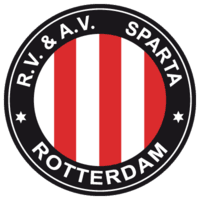
1888-1976
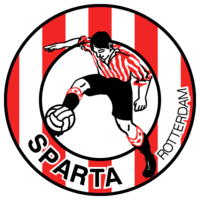
1976-1990
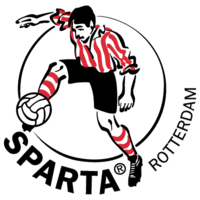
1990-2014
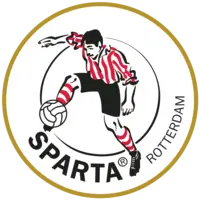
2014-Present
Sparta Rotterdam Crest History
Throughout its history, Sparta Rotterdam's crest has reflected the club's status as the oldest professional football club in the Netherlands and its deep connection to the city of Rotterdam. While the badge has evolved over more than a century, it has consistently preserved the symbols that represent the club's tradition, prestige and historic identity.
The earliest Sparta emblems were relatively simple and centred around the club's name and colours. Like many football clubs in the late nineteenth and early twentieth centuries, Sparta used traditional monograms and basic shield designs to identify itself. The club's famous red-and-white colours quickly became an essential part of its visual identity.
A defining feature of Sparta's visual identity became the image of the Spartan warrior. Inspired by the warriors of ancient Sparta, the symbol reflected ideals of courage, discipline, honour and sporting excellence. Over time, the Spartan figure became the club's most recognisable emblem and distinguished Sparta from virtually every other football club in the Netherlands.
As football branding modernised during the 1980s and 1990s, Sparta refined its crest while preserving its historical identity. The badge adopted a cleaner and more professional appearance, making the Spartan warrior the unmistakable focal point of the design. The club's traditional red-and-white colours continued to frame the emblem.
The modern crest features a stylised Spartan warrior enclosed within a circular badge. The design combines the club's historic symbolism with a contemporary presentation, ensuring the badge remains effective across merchandise, media and digital platforms.
The current badge continues to feature the iconic Spartan figure together with the club name and traditional red-and-white colours.
Sparta Rotterdam Club History
Founded on 1 April 1888, Sparta Rotterdam is the oldest professional football club in the Netherlands and one of the most historic institutions in Dutch sport. Established by a group of students in Rotterdam, Sparta played a pioneering role in the development of football in the country and remains one of the founding pillars of Dutch football culture.
In its early years, Sparta was heavily influenced by English football, which at the time was the leading force in the sport. The club adopted its famous red-and-white colours from English side Sunderland, creating an identity that has endured for more than a century.
During the amateur era, Sparta became one of the dominant clubs in Dutch football. The club won the Dutch national championship six times, establishing itself as one of the country's most successful teams before the introduction of professional football. These championship-winning teams helped shape the early history of Dutch football and secured Sparta's place among the nation's traditional giants.
When professional football was introduced in 1954, Sparta successfully adapted to the new era and remained a leading force. The club won the KNVB Cup several times and continued to challenge for honours throughout the following decades.
One of Sparta's greatest achievements came in 1959, when the club won its sixth and most recent Dutch championship. The title remains one of the proudest moments in the club's long history.
Throughout the 1960s, Sparta remained among the strongest clubs in the Netherlands. Remarkably, from its foundation in 1888 until 2002, the club had never been relegated from the highest level of Dutch football. This extraordinary record highlighted Sparta's consistency and status as one of the country's traditional football powers.
The historic streak eventually ended in 2002, when Sparta suffered its first-ever relegation from the top flight. The event marked the end of an era but also demonstrated how dramatically Dutch football had evolved. Despite the disappointment, the club retained its strong identity and loyal support.
Sparta returned to the Eredivisie several times during the twenty-first century and continued to play an important role in Dutch football. The club became known for developing young talent and preserving its historic traditions while adapting to the modern game.
One of Sparta's most iconic features is its stadium, Het Kasteel ("The Castle"). Opened in 1916, it is one of the most historic football grounds in the Netherlands. The stadium is famous for its distinctive façade featuring two red-brick towers, which give the ground its famous nickname. Het Kasteel remains one of the most recognisable and beloved stadiums in Dutch football.
The club's biggest rivalries are with fellow Rotterdam clubs SBV Excelsior and Feyenoord. Matches against both clubs carry significant local importance and form part of the long football tradition of Rotterdam. While Feyenoord has grown into one of the Netherlands' largest clubs, Sparta continues to take pride in being the city's oldest football institution. Encounters with Excelsior are also fiercely contested due to the clubs' shared history and proximity.
Sparta Rotterdam
Your Dynamic Snippet will be displayed here... This message is displayed because you did not provide enough options to retrieve its content.