Historical Crests Sheffield United FC
Name: Sheffield United FC
Nickname(s): The Blades
Founded: 1889
Stadium: Bramall Lane (Sheffield)
Capacity: 32,702
Sheffield United FC Crest History
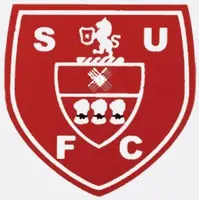
Reflecting the club’s famous nickname, “The Blades,” crossed swords have formed the centrepiece of Sheffield United’s identity for almost fifty years and remain one of the most recognisable symbols in English football.
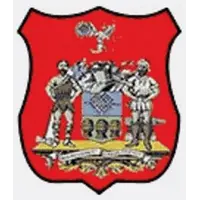
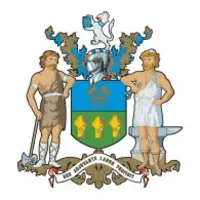
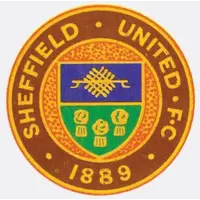
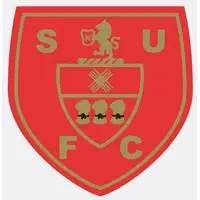
A significant development came in 1965 when Sheffield United adopted the coat of arms of the City of Sheffield as its official crest. The civic arms reflected the club’s deep connection to the city and remained on the club’s shirts until 1977. The use of the city’s heraldry followed a common tradition among English football clubs during the mid-twentieth century.
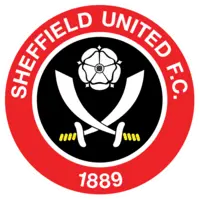
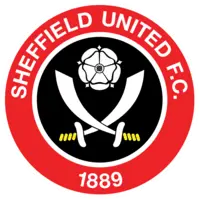
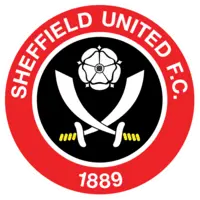
A major transformation arrived in 1977 when the club introduced a completely new badge that would become one of the most iconic crests in English football. The design featured two white crossed swords, or blades, representing the club’s nickname and Sheffield’s historic association with the steel and cutlery industries. Above the blades sat a white Yorkshire Rose, symbolising the club’s county heritage, all displayed on a black background.
The central emblem was enclosed within a red circular ring carrying the words “Sheffield United” around the top and “1889,” the club’s foundation year, beneath. The badge successfully combined local identity, club heritage and a distinctive visual style, quickly becoming synonymous with Sheffield United.
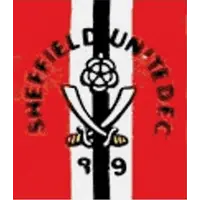
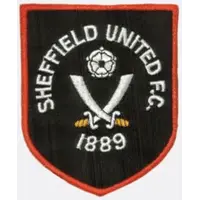
Although the crest remained largely unchanged, several minor variations appeared over the following decades. Between 1987 and 1990, shirts featured a simplified black embroidered version of the badge. Following the formation of the Premier League, an alternative design was used between 1992 and 1999, featuring an all-white crest placed on a black shield with a red border. While these adaptations modernised the appearance of the badge, the core elements of the crossed blades and Yorkshire Rose remained intact.
In 2000, Sheffield United reverted to the traditional circular design first introduced in 1977. The return to the original format was widely welcomed by supporters and reinforced the strong connection between the club and one of the most recognisable badges in English football.
Sheffield United FC Club History
Sheffield United Football Club was founded in 1889 as an offshoot of Sheffield United Cricket Club. The club was established to provide sporting activity during the cricket off-season and quickly became one of the leading football teams in England. Nicknamed “The Blades,” Sheffield United takes its identity from Sheffield’s world-famous steel and cutlery industry, which has long been central to the city’s history and character.
Since its formation, Sheffield United has played its home matches at Bramall Lane. Originally a cricket ground, Bramall Lane became one of football’s most historic venues and remains the club’s home more than a century later. The stadium is recognised as one of the oldest professional football grounds in the world and has played a significant role in the development of the game.
The club enjoyed considerable success during the late nineteenth and early twentieth centuries. Sheffield United won the Football League Championship in 1897–98, securing the only league title in the club’s history. The Blades also became one of the dominant cup teams of the era, winning the FA Cup four times in 1899, 1902, 1915 and 1925. These achievements established Sheffield United as one of England’s leading clubs during football’s formative years.
For much of the twentieth century, the club remained a regular presence in the top divisions of English football. Although major trophies became less frequent after the 1925 FA Cup triumph, Sheffield United continued to enjoy periods of success and developed a reputation for producing talented players and competitive teams.
Like many historic clubs, Sheffield United experienced fluctuations between divisions during the post-war era. The club enjoyed several promotions and memorable campaigns while maintaining a strong connection with its supporters and local community.
In the modern era, the Blades have alternated between the Premier League and the Football League, achieving promotion to the top flight on several occasions. One of the most notable recent periods came under manager Chris Wilder, who guided the club from League One back to the Premier League and earned widespread praise for an innovative style of play that exceeded expectations at the highest level.
The club’s fiercest rivalry is with Sheffield Wednesday. Matches between the two sides are known as the Steel City Derby and are among the oldest and most passionate rivalries in English football. The fixture reflects the historic division of loyalties within the city of Sheffield and remains the most important match in the club’s calendar.
Sheffield United FC
Your Dynamic Snippet will be displayed here... This message is displayed because you did not provide enough options to retrieve its content.