Skip to Content

Historical Crests SBV Excelsior

Name: ​SBV Excelsior
Nickname(s): De Kralingers
Founded: 1902
Stadium: Van Donge & De Roo Stadion (Rotterdam)
Capacity: 4,400

2002-2021
2021-Present

Excelsior Rotterdam Crest History
As football branding became more professional during the 1970s and 1980s, Excelsior adopted cleaner and more structured designs. The club increasingly focused on incorporating the initials SBV Excelsior (Sportclub Excelsior Rotterdam) and creating a stronger visual identity that could be used across merchandise and media.
A major redesign arrived in the 1990s, introducing a more modern shield featuring the club name and the traditional red-and-black colour scheme. The badge provided a clearer and more contemporary appearance while maintaining the club's historic identity.
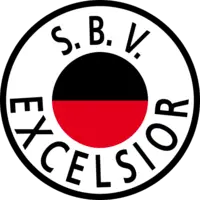
The most recognisable modern crest emerged in the 2000s. The design featured a circular football-inspired emblem incorporating the initials SBV, the name Excelsior, and the year of foundation. The red-and-black colours remained dominant, while the circular shape created a distinctive and professional appearance that became closely associated with the club's modern era.
The current crest from 2021 continues to feature the club's traditional red-and-black colours, the name Excelsior, and references to the club's long history in Rotterdam. The design reflects both the club's professional ambitions and its enduring connection to the local community.

Excelsior Rotterdam Club History
Founded on 23 July 1902, Excelsior Rotterdam is one of the oldest football clubs in the Netherlands. Based in the Kralingen district of Rotterdam, the club was established by a group of local young men who wanted to create their own football team. 
The introduction of professional football in 1954 brought new opportunities and challenges. Excelsior became part of the Dutch professional league system and spent much of the following decades alternating between the Eredivisie and Eerste Divisie. 
Throughout the 1960s and 1970s, Excelsior established itself as a respected professional club. The team became known for its attractive football and ability to compete against larger opponents despite having one of the smallest budgets in Dutch football.
A significant development occurred in 1979, when Excelsior entered into a close partnership with fellow Rotterdam club Feyenoord. The relationship provided financial stability and helped strengthen player development opportunities. Although the partnership occasionally generated debate among supporters, it played an important role in the club's long-term survival.
Throughout the 1990s and 2000s, Excelsior became known as one of Dutch football's classic "yo-yo clubs," regularly moving between the Eredivisie and Eerste Divisie. Despite these fluctuations, the club maintained its identity and continued to compete with determination.
Excelsior plays its home matches at Van Donge & De Roo Stadion, traditionally known as Stadion Woudestein. The compact stadium is one of the smallest in Dutch professional football, creating an intimate atmosphere that reflects the club's community-oriented character.
The club's most important rivalry is with Sparta Rotterdam, another historic club from the city. Matches between the two are known as the Rotterdam Derby and carry considerable local significance. Encounters with Feyenoord also attract attention due to the clubs' long-standing relationship and shared city identity.

SBV Excelsior

Your Dynamic Snippet will be displayed here... This message is displayed because you did not provide enough options to retrieve its content.