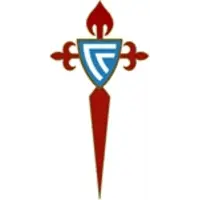
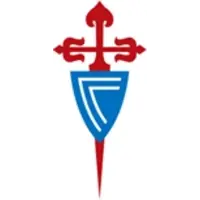
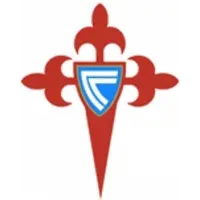
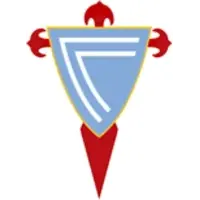
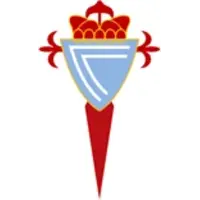
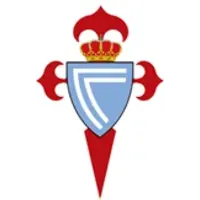
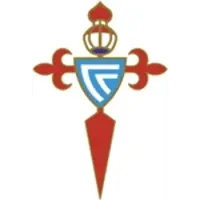
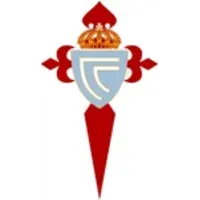
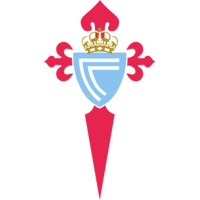
RC Celta de Vigo's earliest badges were relatively modest in design, following the conventions of Spanish football crests during the early twentieth century.
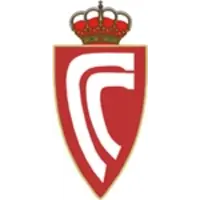
The original emblem featured a crimson shield decorated with stylized“C” letters representing Club Celta and was topped by the royal crown of Spain. Upon its formation, the club received royal patronage from King Alfonso XIII, granting it the prestigious title “Real” and allowing the crown to become part of its official identity. This royal distinction immediately set Celta apart and established one of the defining features of the club’s crest.
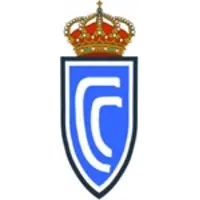
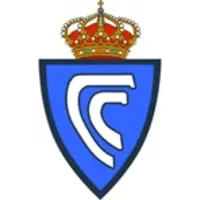
During the following years, the badge underwent a significant transformation as the club embraced the sky-blue colour that would become synonymous with its identity. Inspired by the colours of Galicia, the new palette strengthened the connection between the club and the region it represented. The sky-blue shield soon became one of the most recognizable symbols in Galician football.
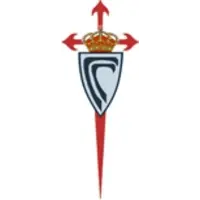
A major evolution came when the crest incorporated the Cross of Saint James (Cruz de Santiago), one of the most important symbols in Galician history and culture. The red cross, associated with Saint James the Apostle and the famous pilgrimage route to Santiago de Compostela, provided the badge with a distinctive appearance unlike any other in Spanish football. The symbol is also shared with other historic Galician clubs, reflecting a sense of regional solidarity and tradition.
Like many Spanish clubs with royal patronage, Celta’s crest was affected by political developments during the Second Spanish Republic (1931–1936). During this period, royal titles and monarchical symbols were removed from public institutions. As a result, the club temporarily lost both the title “Real” and the royal crown from its crest, competing under a simplified identity that reflected the political realities of the era.
Following the Spanish Civil War and the establishment of the Spanish State, the royal title and crown were restored. The club once again became Real Club Celta de Vigo, and the crown returned to its position atop the badge. This restoration re-established the traditional visual identity that supporters had come to associate with the club.
Throughout the second half of the twentieth century, Celta made a series of refinements to its crest rather than introducing radical redesigns. The proportions of the shield, the styling of the crown and the shape of the Cross of Saint James were periodically adjusted to improve clarity and visual balance. Despite these updates, the essential composition of the badge remained unchanged.
RC Celta de Vigo Club History
RC Celta de Vigo was founded in 1923 through the merger of two of Galicia’s leading football clubs, Real Vigo Sporting and Real Fortuna de Vigo. The merger was driven by a desire to create a stronger team capable of competing with Spain’s most successful clubs while representing the entire Galician region. The new club adopted the name Real Club Celta de Vigo, with “Celta” chosen as a tribute to Galicia’s Celtic heritage, a cultural influence that continues to shape the club’s identity today.
The club adopted its famous sky-blue colours, which reflected the colours of the Galician flag and earned the team the nickname Os Celestes(“The Sky Blues”).
A significant milestone came in 1928, when Celta became one of the founding members of the Segunda División. Four years later, in 1932, the club achieved promotion to La Liga for the first time, marking its arrival among Spain’s football elite. Although the following decades were characterized by periods of promotion and relegation, Celta gradually established itself as a respected force within Spanish football.
Throughout the mid-twentieth century, the club developed a reputation for producing talented players and entertaining teams. The construction and development of the Estadio Municipal de Balaídos provided Celta with a permanent home and became a central part of the club’s identity. Balaídos remains one of the most iconic stadiums in Galicia and continues to host the club today.
One of the most memorable periods in the club’s history arrived during the late 1990s and early 2000s, when a generation of talented players helped establish Celta as one of Spain’s most exciting teams. Featuring stars such as Aleksandr Mostovoi, Valery Karpin and Claude Makélélé, Celta earned the nickname “EuroCelta” due to its impressive performances in European competition.
The club enjoyed several memorable UEFA Cup campaigns and reached the UEFA Champions League for the first time in 2003–04, one of the greatest achievements in its history. Although major trophies remained elusive, this era firmly established Celta as a respected club both in Spain and across Europe.
A defining feature of Celta’s identity is the concept of afouteza, a Galician word that translates roughly as courage, bravery and perseverance in the face of adversity. More than a slogan, afouteza has become a philosophy that reflects the club’s spirit and the unwavering loyalty of its supporters. It embodies the determination that has carried Celta through both triumphs and setbacks throughout its history.
Unlike many clubs that primarily represent a single city, Celta has long positioned itself as a symbol of all Galicia. The club actively promotes Galician culture and language, incorporates regional symbolism into its identity and serves as a sporting ambassador for the region. This broader cultural role has helped create a strong emotional bond between the club and supporters across Galicia.
The club’s fiercest rivalry is with Deportivo de La Coruña in the Galician Derby (Derbi Galego). One of the most passionate regional rivalries in Spanish football, the fixture represents the historic competition between Galicia’s two largest football clubs. While Deportivo has traditionally enjoyed greater trophy success, Celta has built its reputation on consistency, regional identity and a deep-rooted connection with its supporters.