Historical Crests Rayo Vallecano
Name: Rayo Vallecano
Nickname(s): Los Franjirrojos (The Red Sashes)
Founded: 1924
Stadium: Estadio de Vallecas (Madrid)
Capacity: 14,708
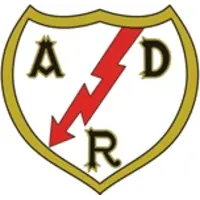
1924-1947
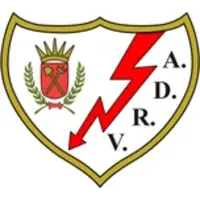
1947-1970s
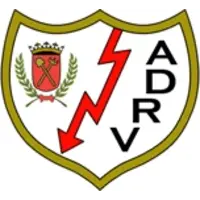
1970s-1995
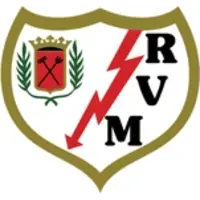
1995-2009
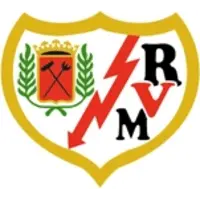
2009-2012
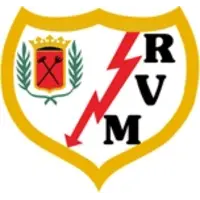
2012-Present
Rayo Vallecano Crest History
The badge of Rayo Vallecano is closely tied to the identity of Vallecas, the working-class district of Madrid. The most recognizable feature of the crest is the bold red diagonal stripe or lightning bolt running across the shield. This symbol mirrors the famous red sash worn on the club’s white shirts. The diagonal stripe was adopted on the kit around 1949–1950, reportedly inspired by Club Atlético River Plate and introduced following an agreement involving Atlético de Madrid. The lightning bolt subsequently became inseparable from both the club’s shirt and its crest.
The earliest versions of the crest appeared shortly after the club’s foundation as Agrupación Deportiva El Rayo in 1924. These early badges already featured the basic shield shape and the diagonal lightning bolt (rayo), a visual reference to the club’s name and identity. Over time, the crest evolved while preserving these core elements.
A major development occurred after the club adopted the name Rayo Vallecano in 1947. The badge increasingly incorporated symbols associated with Vallecas, reinforcing the connection between the club and its local community. The coat of arms of Vallecas became a prominent feature in the upper section of the shield, highlighting the club’s roots in one of Madrid’s most distinctive neighborhoods.
As the badge developed through the twentieth century, additional details were incorporated. The initials RVM (Rayo Vallecano de Madrid) appeared on the shield, while a gold outline and heraldic styling gave the crest a traditional Spanish football appearance.
The current crest, in use since 2012, is a refined version of the traditional design. It features a white shield with a gold border, the iconic red lightning bolt crossing diagonally from top left to bottom right, the Vallecas coat of arms in the upper section and the initials RVM arranged vertically. The modern version improves clarity and digital reproduction while remaining faithful to the historic badge.
Rayo Vallecano Club History
Founded on 29 May 1924, as Agrupación Deportiva El Rayo at the home of Prudencia Priego, wife of the club's first president, Julián Huerta. In its earliest years, Rayo competed in local and regional competitions, gradually developing a loyal following in Vallecas, which at the time was still a separate municipality before becoming part of Madrid.
A defining moment in the club's history came in 1949, when Rayo adopted the famous red diagonal sash that remains one of the most recognizable kits in world football. Inspired by Argentine giants Club Atlético River Plate and introduced following an agreement involving Atlético Madrid, the sash became the symbol of the club and earned the team the nickname Los Franjirrojos (“The Red Sashes”).
Throughout much of the twentieth century, Rayo alternated between the lower divisions of Spanish football. The club's first major breakthrough came in 1956 with promotion to the Segunda División, while an even greater achievement followed in 1977, when Rayo reached La Liga for the first time in its history. This promotion marked the arrival of Vallecas on Spain’s biggest footballing stage.
Unlike Madrid’s larger clubs, Rayo Vallecano has never been defined by wealth or trophies. Instead, its reputation has been built on its strong neighborhood identity. The club has traditionally represented the working-class communities of Vallecas and has often been associated with social activism, solidarity and community engagement. This unique character has made Rayo one of the most admired clubs in Spanish football despite its comparatively modest resources.
The club enjoyed one of its greatest periods during the late 1990s and early 2000s. After finishing high enough in La Liga to qualify for Europe, Rayo participated in the 2000–01 UEFA Cup, reaching the quarter-finals in what remains one of the most memorable campaigns in the club’s history. The achievement demonstrated that a small neighborhood club could compete on the continental stage.
The club plays its home matches at the Estadio de Vallecas, which has been the heart of football in the neighborhood for generations. The stadium is renowned for its intimate atmosphere and close connection between players and supporters, reflecting the club’s deeply rooted community spirit.
The club maintains several important rivalries. The most notable are with fellow Madrid clubs Real Madrid CF and Atlético de Madrid, while matches against Getafe CF and CD Leganés also carry regional significance due to geographical proximity.
Rayo Vallecano de Madrid
Your Dynamic Snippet will be displayed here... This message is displayed because you did not provide enough options to retrieve its content.