Historical Crests PSV Eindhoven
Name: PSV Eindhoven
Nickname(s): The Farmers
Founded: 1913
Stadium: Philips Stadium (Eindhoven)
Capacity: 35,000
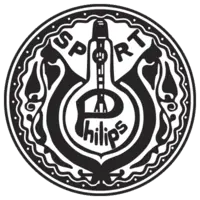
1913-1955
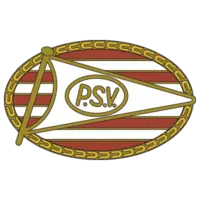
1955-1980
1980-1996
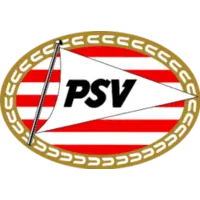
1996-2013
2013-2014
2014-Present
PSV Eindhoven Crest History
The first PSV logo was closely linked to the club's industrial roots. It consisted of a circular emblem featuring a light bulb, a direct reference to Philips and its role as one of the world's leading electronics manufacturers. The lamp contained the word "Philips", while the word "Sport" appeared above it. This badge clearly reflected PSV's origins as a company sports club founded by Philips employees.
As the club developed, the crest evolved into a more football-oriented design. The circular emblem was replaced by an oval-shaped badge featuring a flag. Within the flag appeared another oval containing the letters PSV, creating the foundation of the visual identity that supporters still recognise today. This redesign helped establish PSV as an independent football institution while maintaining links to its Philips heritage.
Throughout much of the twentieth century, the crest underwent a series of refinements. The oval shape and flag became permanent features, while the club gradually strengthened the use of its traditional red-and-white colours. The design became increasingly associated with PSV's rise to become one of the dominant clubs in Dutch football.
The modern version of the badge was introduced in the mid-1990s. The redesign retained the traditional oval and flag but refined every element of the crest. The outer oval adopted the familiar horizontal red-and-white stripes, while the letters PSV inside the flag became larger, bolder and more prominent. The laurel wreath surrounding the badge was also refined, giving the crest a more elegant and prestigious appearance.
This version quickly became one of the most recognisable club logos in Europe and accompanied PSV during a period of major domestic and international success, including numerous Eredivisie titles and regular UEFA Champions League participation.
In 2014, a subtle but meaningful addition was made to the badge. The text "EST. 1913" was added at the bottom of the laurel wreath, commemorating the club's founding year and reinforcing PSV's historical identity during its centenary celebrations.
PSV Eindhoven Club History
Founded on 31 August 1913, PSV Eindhoven (Philips Sport Vereniging) is one of the most successful football clubs in the Netherlands and one of the most respected names in European football. The club was established by the Philips electronics company as a sports association for its employees, creating a unique connection between football, industry and the city of Eindhoven that remains visible today.
PSV won its first major honour in 1929, claiming the Dutch national championship. The title marked the beginning of the club's rise as one of the country's leading football institutions. Additional championships followed during the 1930s and 1950s, establishing PSV as a permanent force in Dutch football.
The introduction of professional football in the Netherlands in 1954 helped accelerate PSV's growth. Backed by the stability and support associated with Philips, the club became one of the strongest and best-organised teams in the country.
A golden era began in the 1970s under coach Kees Rijvers. PSV assembled a talented squad featuring players such as Willy van der Kuijlen, widely regarded as one of the greatest players in Dutch football history. The club won multiple domestic trophies and achieved international success by winning the UEFA Cup in 1978, defeating SC Bastia in the final. It was PSV's first major European trophy and confirmed the club's growing stature.
The greatest achievement in PSV's history arrived in 1988. Under legendary coach Guus Hiddink, PSV won the European Cup, defeating Benfica in the final. The triumph completed a historic continental treble, as PSV also secured the Eredivisie title and the KNVB Cup during the same season. The victory made PSV only the second Dutch club to win Europe's most prestigious club competition.
Throughout the 1990s, PSV remained one of the dominant forces in Dutch football. The club won numerous league titles and became renowned for developing and attracting world-class talent. Players such as Romário, Ronaldo, Jaap Stam, Ruud van Nistelrooy, Phillip Cocu and Arjen Robben all played important roles in strengthening PSV's international reputation.
The club continued to enjoy success during the 2000s. Under Guus Hiddink, PSV reached the UEFA Champions League semi-finals in 2005, narrowly missing out on a place in the final. This remains one of the club's greatest achievements in the modern Champions League era.
The club's home is the Philips Stadion, which has been associated with PSV since its foundation. Located in the heart of Eindhoven, the stadium is one of the most iconic football venues in the Netherlands and symbolises the enduring relationship between the club, Philips and the city.
PSV forms part of Dutch football's traditional "Big Three", alongside Ajax and Feyenoord. The club's fiercest rivalries are with these two giants, particularly Ajax, with matches often playing a decisive role in the Eredivisie title race. PSV also contests the Brabant Derby against regional rivals such as NAC Breda, Willem II and FC Eindhoven.
PSV Eindhoven
Your Dynamic Snippet will be displayed here... This message is displayed because you did not provide enough options to retrieve its content.